It’s 6 AM, your bedroom is freezing, and the central furnace just kicked on for the third time this hour. You know what that does to the utility bill. So you’re thinking about a small space heater for just the room you’re in. But you’ve heard conflicting things—some say they’re cheap to run, others say they’ll wreck your electric bill. You want the truth, not marketing fluff.
This article cuts through the noise. You’ll learn exactly how ceramic heaters work, what they cost to run, and whether they actually save you money compared to turning up the thermostat. We’ll also bust a few myths that refuse to die, like the idea that a higher wattage always means more heat. By the end, you’ll know if a ceramic space heater is the right tool for your home.

Amazon Basics
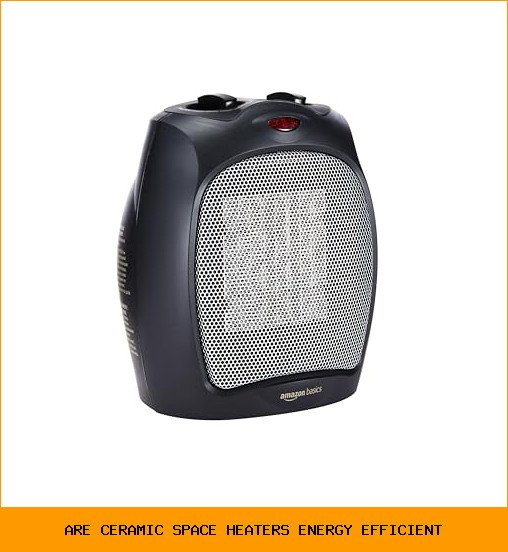
Amazon Basics Ceramic Space Heater, Portable Indoor Heating Solution, With Overheat and Tip-Over Protection, Thermostat, Non-Oscillating, 1500W, 7.52"D x 6.34"W x 9.45"H, Black
- CUSTOMIZABLE HEATING OPTIONS: Choose from three settings to suit your needs - High (1500W), Low (900W), or Fan Only for air circul…
- COMPACT & PORTABLE: Weighing just 3 lbs and sized at 7.5“L x 6.3”W x 9.5“H, this space heater is easy to move and perfect for your…
- Built-in Tip-Over Protection, Overheat Protection, and a Power Indicator Light for safe operation.
A solid example of this tech is the Amazon Basics Ceramic Space Heater. It’s a compact 1500W unit with three settings and safety cutoffs, which makes it a practical baseline for understanding how these devices behave in the real world.
How Ceramic Heating Actually Works (And Why It Feels Different)
Ceramic heaters use a heating element made of—you guessed it—ceramic plates. Electricity runs through the element, it gets hot, and a fan blows air across the plates. That’s the whole system. No coils glowing red, no oil to heat up first. The fan pushes warm air into the room almost instantly.
The key difference from an old coil heater is the thermal mass. Ceramic holds heat well. When the fan runs, it pulls heat off the plates quickly. When the thermostat cycles off, the plates cool down fast. That means less residual heat escaping into the room after the unit shuts off. It also means the surface of the heater doesn’t get as dangerously hot as a metal coil unit.
But here’s the trade-off: it’s loud. A fan is required. The Amazon Basics model runs at about 43 dB, which is a low hum, but it’s not silent. If you’re a light sleeper, you’ll hear it cycling on and off all night. That’s not a dealbreaker, but it’s worth knowing before you buy.
Myth #1: More Watts Always Means More Heat
This is the most common mistake people make. They see a 1500W heater and assume it’s twice as powerful as a 750W model. That’s true for the electrical draw, but not for the heat output you actually feel.
Here’s the physics: 1 watt of electricity equals 3.41 BTUs of heat. So a 1500W heater produces about 5,118 BTUs per hour. A 750W heater produces about 2,559 BTUs. That’s a hard number. But the question is whether your room needs that much heat.
For a small 100-square-foot room with decent insulation, 750W is often enough to take the chill off. For a larger 250-square-foot room, you’ll need the full 1500W. Crank a 1500W heater in a tiny bathroom and it will cycle on and off constantly, wasting energy on short bursts. The right size matters more than the maximum wattage.
Most ceramic heaters, including the Amazon Basics model, offer a low setting (900W) and a high setting (1500W). The low setting is not a gimmick. It uses 40% less power and is often the smarter choice for maintaining a comfortable temperature in a small space, rather than blasting high heat and letting it cycle.
Myth #2: Space Heaters Are Always Cheaper Than Central Heating
People love this myth. The idea is that heating one room with a 1500W heater must be cheaper than heating the whole house with a furnace. Sometimes it is. Often it isn’t.
Let’s do the math with real numbers. Suppose your electric rate is $0.15 per kilowatt-hour (kWh). A 1500W heater running for one hour uses 1.5 kWh. That costs $0.225 per hour. Run it 8 hours a day, and that’s $1.80 per day, or about $54 a month.
Now compare that to your central system. If you have a natural gas furnace, it’s usually much cheaper per BTU than electric resistance heat. Gas rates vary, but a typical furnace might cost $0.60 per hour to run for the whole house. If you’re heating a 2,000-square-foot home, that’s a bargain compared to running five separate electric heaters.
The real savings come from a strategy called ‘zone heating.’ You turn the thermostat down to 60°F for the whole house, then use a ceramic heater in the living room where you actually sit. The furnace runs less, and you use the heater for a few hours. That works. But if you try to heat every room with space heaters, your bill will climb fast.
So the honest answer is: a ceramic heater saves money only if you use it to warm the space you occupy, not to replace the furnace for the entire house.
Efficiency Ratings: What the Numbers Really Tell You
Here’s a fact that surprises people: all electric resistance heaters are 100% efficient. Every single watt of electricity becomes heat. There is no loss. A ceramic heater, a coil heater, and an oil-filled radiator all convert electricity to heat at the same rate.
So why buy ceramic? It’s not about efficiency—it’s about response time and comfort. Ceramic heats up in minutes. Oil-filled radiators take 30 minutes to warm up. Ceramic also cools down faster, which means less overheating. The ‘efficiency’ you read about on product pages is marketing language for ‘heats quickly,’ not ‘uses less electricity.’
That said, there is one real efficiency difference: fan-forced heaters distribute heat more evenly. A coil heater that relies on natural convection leaves cold spots near the floor. The fan in a ceramic unit pushes warm air out and circulates it, so you feel warmer at a lower thermostat setting. That’s a legitimate advantage.
One more thing to check: the thermostat. A heater with a good thermostat will cycle off when the room reaches the set temperature. A cheap one just runs until you turn it off. The Amazon Basics model has an adjustable thermostat, which is essential for not wasting power. Without it, you’re paying for heat you don’t need.
Comparing Ceramic Heaters to Other Types
To make a smart choice, you need to see how ceramic stacks up against the competition. Here’s a straightforward comparison based on typical behavior, not brand claims.
| Heater Type | Heat Up Time | Noise Level | Surface Temp | Best For |
|---|---|---|---|---|
| Ceramic Fan | 2-5 minutes | Low hum (40-50 dB) | Warm, not scalding | Quick warmth in small rooms |
| Oil-Filled Radiator | 20-30 minutes | Silent | Hot, but no exposed element | Overnight heating, large rooms |
| Infrared | Instant (line of sight) | Silent | Very hot surface | Heating a person, not a room |
| Coil Fan | 1-2 minutes | Loud (50-60 dB) | Extremely hot, fire risk | Workshops, garages |
Ceramic heaters sit in a sweet spot. They’re faster than oil-filled radiators, safer than coil heaters, and quieter than most fan units. The trade-off is that they don’t hold heat after shutdown. The room cools down quickly once you turn it off. Oil-filled radiators keep radiating heat for an hour after shutdown, which is better for whole-night use.
Practical Ways to Cut Costs with a Ceramic Heater
You can do a few things to make your heater work harder for less money. None of these require buying a fancier unit.
- Set the thermostat on the heater to 68°F, not ‘high.’ Let it cycle.
- Use the low (900W) setting for rooms under 120 square feet.
- Place the heater near where you sit, not in the center of the room. Warm the person, not the air.
- Close the door to the room. This is the single most effective trick.
- Run it for 20 minutes to warm the space, then turn it off and let residual heat linger.
- Check the filter on the back of the unit. Dust clogs reduce airflow and make the fan work harder.
One thing I’ll warn you about: don’t use a heater in a bathroom or laundry room unless it’s specifically rated for wet locations. The Amazon Basics manual clearly states it’s not for high-moisture environments. Moisture and electrical heating elements don’t mix. That’s a safety issue, not a performance one.
Real Questions People Ask About Ceramic Heaters
Do ceramic space heaters use a lot of electricity?
It depends on the wattage and runtime. A 1500W heater uses 1.5 kWh per hour. At $0.15/kWh, that’s about 22 cents an hour. Running it 8 hours a day costs roughly $54 a month. A 900W setting cuts that to about $32 a month. So no, they don’t use ‘a lot’ if you run them strategically. They use exactly what you ask of them.
Is it cheaper to run a space heater or turn up the thermostat?
For a single room, the space heater is usually cheaper. Example: your furnace heats 2,000 square feet. You only need 200 square feet warm. The furnace burns fuel for the whole house. The heater only heats the one room. But if you need three rooms warm, the furnace wins. It’s a math problem, not a preference.
Can a ceramic heater heat an entire house?
Technically yes, but you shouldn’t. You’d need one per room, and the combined wattage would trip breakers and destroy your bill. A single 1500W heater is designed for one room up to about 200 square feet. Beyond that, it runs constantly without reaching the set temperature, which is wasteful.
Are ceramic heaters safe to leave on overnight?
Modern units with tip-over and overheat protection are reasonably safe. The Amazon Basics model has both safety features. But you should still follow basic rules: keep it 3 feet away from anything flammable, don’t run it on an extension cord, and don’t leave it on while you’re not home. The safety features reduce risk, they don’t eliminate it.
Why does my heater keep turning on and off?
That’s the thermostat working correctly. It cycles the heating element on when the room drops below the set temperature, and off when it reaches it. If it cycles too frequently, the thermostat might be set too low, or the room is too large for the heater’s capacity. If it never turns off, the room is too big or the door is open.
What to Do With This Information
You now have the facts to make a smart call. Here’s the short version you can act on today.
- Buy a 1500W ceramic heater with a thermostat and multiple settings. The Amazon Basics model fits this profile.
- Use the low setting for small rooms. It saves 40% power and is often sufficient.
- Zone heat: lower the central thermostat and heat only the room you’re in.
- Don’t trust ‘efficiency’ marketing. All electric heaters convert 100% of electricity to heat. The difference is speed and comfort.
- Check the room size. Over 200 square feet, a single heater will struggle.
- Keep the unit clean and dust-free for consistent airflow.
- Never use it in bathrooms or damp spaces unless the label says it’s safe.
Ceramic heaters aren’t magic. They’re a tool. Used right, they keep you warm for less money than heating the whole house. Used wrong, they’re an expensive way to mimic a furnace. The choice is yours, but you’re no longer guessing.



