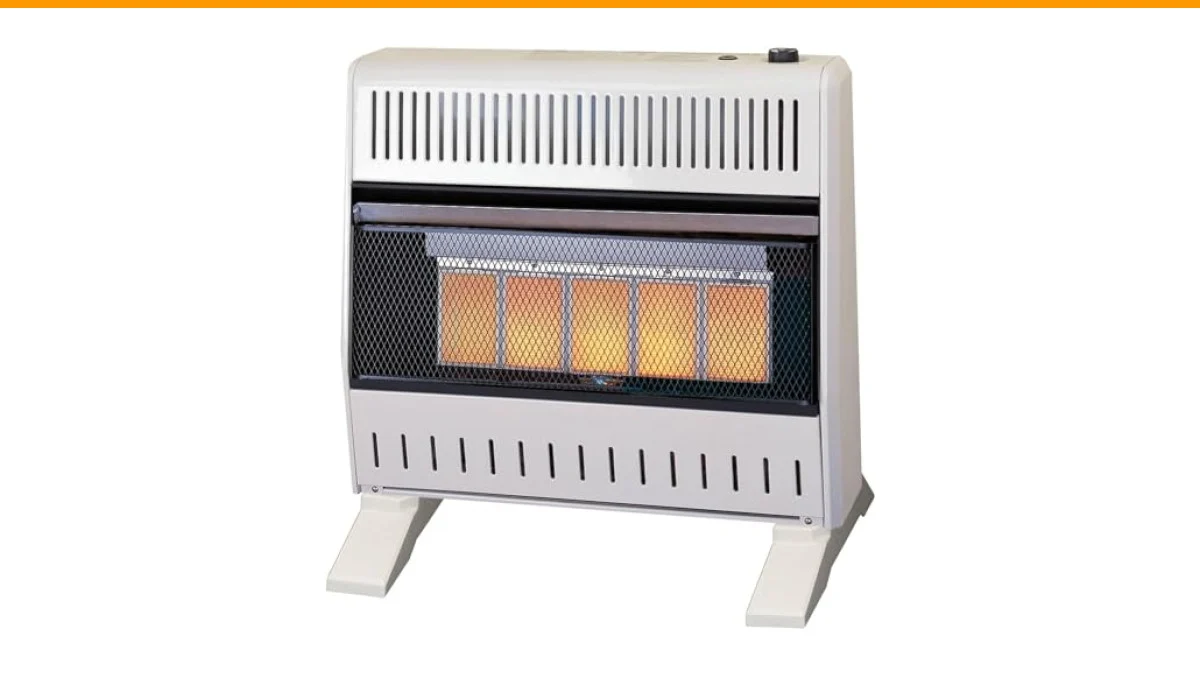
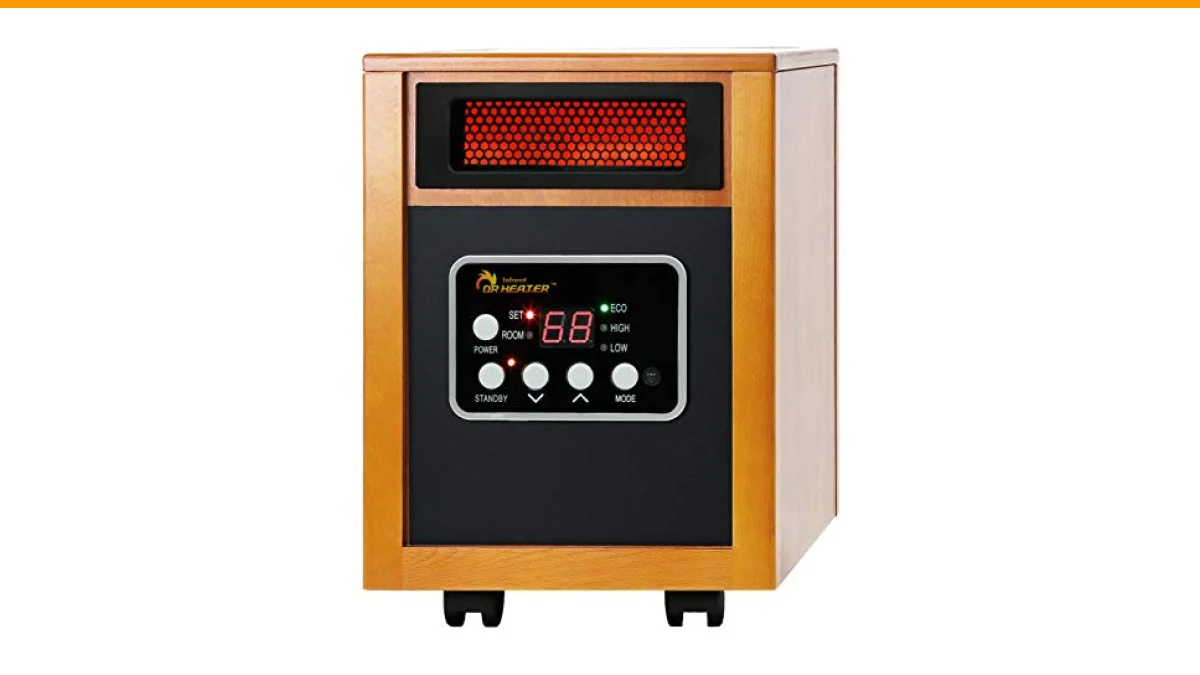
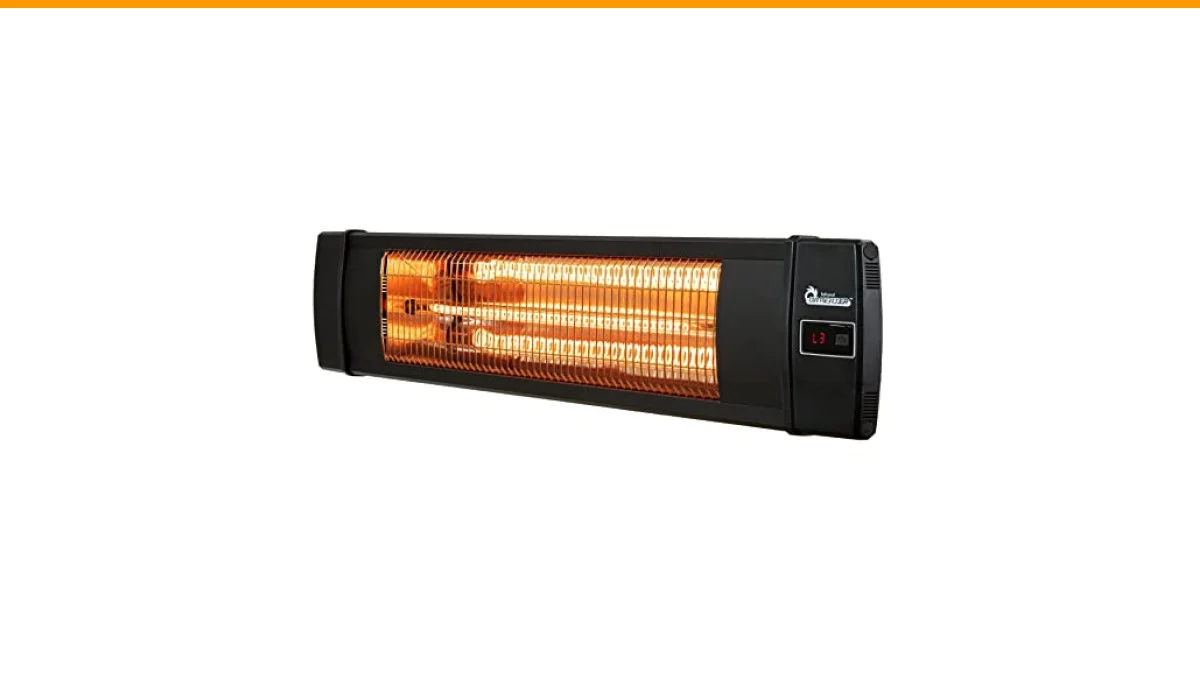
Basements are the worst rooms to heat. Cold air sinks, concrete floors suck warmth out of the room, and most forced-air systems barely reach down there. A portable infrared heater fixes that problem fast. It warms objects and people directly instead of trying to heat all the air in a leaky space.
Picking the right one comes down to a few practical things. You want enough BTU output for the square footage, a thermostat that holds a steady temperature, and safety features that work in a room with low ceilings or clutter. Noise matters too if the basement doubles as a bedroom or office. Power draw is another factor, since most basement circuits share a breaker with other rooms.
We looked at five infrared heaters that get used in basements. The Dr Infrared DR-968 is our top pick for most people. The Ballu Mica is the best smart option, and the Heat Storm Phoenix is the one to grab if floor space is tight. Keep reading for the full breakdown, a space heater guide, and answers to the questions buyers actually ask.
Here is a quick spec comparison of the five heaters to help you narrow down your choice.
| Features | Dr Infrared DR-968 | Ballu Mica | Heat Storm Phoenix | Heat Storm WiFi | EdenPURE CopperPLUS |
|---|---|---|---|---|---|
| Heating Technology | Quartz tube + PTC | Mica far-infrared panels | HMS heat exchanger | HMS heat exchanger | Copper PTC elements |
| Wattage / BTU | 1500W / 5200 BTU | Not specified | 750-1500W / 5200 BTU | 750-1500W / 5200 BTU | 1000-1500W |
| Mounting Options | Caster wheels | Stand or wall mount | Floor or wall mount | Wall mount only | Portable floor unit |
| Smart Features | Remote control | WiFi, Alexa, remote | Remote control | WiFi, touchscreen, remote | 24 heat settings |
| Best Use Case | Large finished basements | Smart home setups | Small rooms, tight spaces | Permanent wall installs | Zone heating large areas |
Dr Infrared Heater DR-968 Review

DR. INFRARED HEATER
Dr Infrared Heater DR-968 Portable Space Heater, 1500-Watt, Cherry
- Can heat up a large room with Auto Energy Saving Model With High and Low Feature. Tip-over protection and Overheat protection.Heat…
- Dual Heating Systems featuring infrared quartz tube + PTC with 12-Hour automatic shut-off timer. Amperage: 12.5 Amps
- IR Remote Control, High Pressure Low Noise Blower with Noise level 39 dB super quiet. Heating can cover for a large room.
This is the heater most people picture when they think of a infrared space heater. The DR-968 has been around for years, and it shows in the design. It’s a rolling cabinet-style unit built for large rooms, which makes it a natural fit for a finished basement. The dual heating system pairs an infrared quartz tube with a PTC element, and the result is 5200 BTU of output. That’s enough to take the chill off a 1,000-square-foot space if the basement is reasonably insulated.
The blower is the standout feature. It moves warm air across the room at 39 dB, which is about as loud as a quiet conversation. You can watch TV or take a nap next to it without noticing the sound. The electronic thermostat runs from 50 to 85 degrees, and the 12-hour auto shut-off timer is handy if you use the basement as a guest room. Caster wheels mean you can roll it from the main area into a storage nook without lifting anything.
Two things bug me about this heater. The filter needs regular cleaning, and the unit is 19 pounds, so dragging it up stairs is a chore. The thermostat also reads the temperature at the unit, not across the room. If the heater sits in a cold corner, the rest of the basement may run a few degrees cooler than the display suggests. It’s not a dealbreaker, but placement matters. Check the current price on Amazon before you commit.
- Dual infrared quartz and PTC heating for faster warm-up
- 39 dB blower noise level, one of the quietest in its class
- 12-hour auto shut-off timer and tip-over protection
- 72-inch power cord gives you placement flexibility
- 19-pound cabinet with caster wheels for easy moving
Best for: Anyone heating a finished basement between 700 and 1,000 square feet who wants strong output without a loud fan.
Ballu Mica Infrared Space Heater Review

Ballu
Ballu Mica Infrared Space Heater Indoor Use,Large Room Panel Heater with Programmable Thermostat,WiFi App Control,Portable Stand or Wall Mount,Energy Efficient Smart Quiet Heater,Work with Alexa,White
- Your Reliable Companion:Wrapped in a durable all-metal design,the Ballu Mica Infrared Heater uses premium mica panels to provide g…
- 180°Panoramic Heating:Imagine stepping into a room where warmth flows in every direction.With 10-second heat-up and 180°wide cover…
- Ultimate Control at Your Fingertips:Whether you're working, relaxing,or winding down for the night,the Ballu heater makes it easy…
Ballu takes a different approach. The Mica panel uses far-infrared technology instead of a blower, so there’s no fan noise at all. The heat feels gentler and more even, similar to standing near a sunlit window. The 180-degree coverage spreads warmth across a wide area, and the 10-second heat-up time means you aren’t waiting around. This is a strong choice for a basement home office or a workout corner where you want warmth without a fan blowing on you.
What separates the Ballu from the pack is the control options. You get a remote, a digital panel, and WiFi with Alexa voice control. The app lets you schedule heat cycles, which is useful if you only use the basement in the evenings. Ballu claims up to 37% energy cost savings compared to less efficient heaters, thanks to the exposed temperature sensor and aluminum heating element. The all-metal build feels solid, and the 2-year warranty is better than most. For a broader look at infrared options, see this infrared heater for home roundup.
Here’s the honest part. The Ballu doesn’t list a wattage or BTU rating in the product data, so you can’t easily compare its raw output to the 1500W competitors. The mica panel design also takes longer to heat a large, open basement than a blower-style unit. It works best as a supplemental heater or in a defined zone, not as the sole heat source for a 1,000-square-foot open floor plan. And the wall-mount option requires some DIY skill.
- Mica far-infrared panels with no fan and no noise
- WiFi app control plus Alexa voice commands
- 180-degree panoramic heating with 10-second warm-up
- Stand or wall-mount installation for flexible placement
- All-metal body backed by a 2-year warranty
Best for: Smart-home users who want quiet, even heat in a basement office or den and don’t mind a slower warm-up.
Heat Storm Phoenix Infrared Heater Review

Heat Storm
Heat Storm Phoenix Infrared Space Heater with Attachable Feet, Remote Control, Energy Efficient-750-1500 Watts, White Floor or Wall - HS-1500-PHX
- This portable 1500 watt infrared heater has the power to heat up a small room or office with its 5200 BTU heat output. Two power m…
- Our patented heat exchanger with HMS Technology combines with humidity in the room to provide soft, safe heat without reducing oxy…
- Small convenient size makes this perfect for any room in the house. Hang it on the wall or set it on the ground thanks to removabl…
The Phoenix is the smallest and most versatile heater on this list. It’s a 1500W unit with 5200 BTU of output, but the form factor is what sells it. You can set it on the floor with the attachable feet or hang it on the wall using the mounting points on the back. That flexibility makes it a great fit for basements where floor space is already tight with boxes, a washer, or a workbench.
Heat Storm’s HMS technology uses a patented heat exchanger that works with the humidity already in the room. The result is soft heat that doesn’t dry out the air or burn off oxygen. The grill stays cool to the touch, which matters in a basement with kids or pets running around. Two power modes let you choose between 1500W for fast heat and 750W for maintaining temperature. The built-in thermostat and LED display show the ambient temperature, and the remote lets you adjust settings from across the room.
The trade-off is coverage. This heater is rated for small rooms and offices, not a full open basement. If your basement is over 500 square feet, you’ll need two units or a larger heater. The 1-year warranty is also shorter than the Ballu’s. And the wall-mount option means the cord placement is fixed, so plan around your outlet locations. Still, for a compact basement bedroom or laundry area, it’s hard to beat.
- Dual 750W and 1500W power modes for flexible output
- HMS heat exchanger works with room humidity
- Cool-to-touch grill and tip-over safety shut-off
- Floor or wall-mount installation with removable feet
- LED thermostat display and included remote control
Best for: Small basement rooms, laundry areas, or workshops where floor space is at a premium.
Heat Storm HS-1500-PHX-WIFI Review

Heat Storm
Heat Storm HS-1500-PHX-WIFI Infrared Heater, Wifi Wall Mounted
- (Wall Mounted Heater Only.) Wi-Fi enabled makes it possible for you to control the temperature from your phone!
- Tip-Over safety shut off, Touch screen with digital thermostat, and remote included.
- Space saving wall mount design means you don't lose floor space. Perfect for bedrooms, kitchens, offices and more
This is the wall-mounted version of the Phoenix, and it’s built for permanent installation. The WiFi module lets you control the temperature from your phone, which is genuinely useful in a basement. You can warm the room before you head down to work out or watch a movie. The touchscreen digital thermostat and included remote give you three ways to adjust settings.
The space-saving design is the main draw. When you install it over an outlet, the cord tucks inside the heater housing. That keeps the wall clean and eliminates a tripping hazard. The unit stays cool to the touch, and Heat Storm says the wall behind it stays cool too, which matters if you’re mounting it on drywall or paneling. It uses the same HMS heat exchanger as the Phoenix, so the heat quality is identical.
One important note: this version does not include feet. It’s wall-mount only. If you want the option to move it around, buy the standard Phoenix instead. The WiFi setup also takes a few minutes and isn’t as intuitive as some smart-home devices. And like the Phoenix, it’s best for small to medium rooms, not a full open basement. For unfinished spaces, check out this unfinished basement heater guide.
- WiFi-enabled for phone-based temperature control
- Wall-mount only design saves floor space
- Cord hides inside the heater when mounted over an outlet
- Touchscreen thermostat plus included remote
- Cool-to-touch grill and tip-over safety shut-off
Best for: Homeowners who want a permanent, space-saving heater in a basement bedroom, office, or kitchenette.
EdenPURE CopperPLUS Infrared Heater Review

EdenPURE
EdenPURE CopperPLUS Infrared Heaters for Indoor Use Portable 1000 Sq Ft | 1500W Energy Efficient Indoor Heating, Tip Over Protection, Quiet Remote 24 Settings - Portable Wheels Home Office & Bedroom
- ADVANCED COPPER PTC TECHNOLOGY: Designed with over 3.5 square feet of copper surface, the CopperPLUS enhances heat transfer for re…
- ENERGY COST SAVINGS: Use zone heating for only the rooms you're using instead of the entire home, saving you hundreds on electrici…
- LIFETIME WASHABLE FILTER INCLUDED: Never buy replacement filters! Washable dust/hair filter saves hundreds of dollars annually ver…
EdenPURE built the CopperPLUS around a simple idea: copper moves heat better than most materials. The unit has over 3.5 square feet of copper surface, which helps it transfer warmth efficiently without overheating. The 24 precision heat settings range from 40 to 90 degrees, so you can dial in an exact temperature. High mode runs at 1500W for large rooms, and low mode drops to 1000W for smaller spaces. The auto-reset memory keeps your preferred settings after a power outage.
The washable filter is a practical touch. Most heaters in this class require replacement filters every few months, and those costs add up. EdenPURE includes a lifetime washable filter, so you just rinse it periodically. The safety package is also solid: dual overheat sensors, automatic tip-over shut-off, and a touch-safe front grill. It’s cETL approved and designed to stay cool around kids and pets.
The catch is availability. This model is listed as available with a future date, so you may need to wait or check for restocks. It’s also a portable floor unit with no wall-mount option, which limits placement in tight basements. And at 1500W, it draws the same power as the other full-size heaters, so don’t expect miracle savings on your electric bill. Zone heating helps, but the wattage is the wattage.
- Copper PTC heating element with 3.5 square feet of copper surface
- 24 heat settings from 40 to 90 degrees Fahrenheit
- Lifetime washable filter, no replacements needed
- Dual overheat sensors and tip-over shut-off
- Auto-reset memory retains settings after power loss
Best for: Buyers who want precise temperature control and low maintenance in a large basement, and who can wait for availability.
How We Chose These Products
We started with the specs that matter in a basement: heat output, safety features, noise level, and power draw. Basements are different from living rooms. They’re often colder, damper, and poorly insulated. A heater that works fine upstairs may struggle downstairs. We prioritized units with at least 1500W of output or a proven heating technology that compensates for lower wattage.
Safety was non-negotiable. Every heater on this list has tip-over protection and overheat shut-off. We also looked at cool-to-touch grills and housing, since basements often have kids, pets, or storage items nearby. Noise level mattered too. A loud fan ruins a basement movie room or home office. Finally, we weighed real-world usability: cord length, mounting options, filter maintenance, and warranty coverage. No single heater wins on every metric, so we ranked them by how well they solve the most common basement heating problems.
Buying Guide: What Really Matters
Infrared heaters don’t work like space heaters that warm the air. They emit electromagnetic waves that heat objects and people directly. That’s why they feel warm almost instantly, even in a cold room. The downside is that the effect fades when you step out of the line of sight. In a basement, that means you want a heater with a blower or a wide coverage angle to spread the warmth around. Panel-style heaters like the Ballu work best in enclosed zones. Blower-style units like the Dr Infrared DR-968 move heat across a larger area.
Wattage is the next thing to check. A 1500W heater draws 12.5 amps, which is close to the limit for a standard 15-amp basement circuit. If you plan to run other appliances on the same breaker, you may trip it. Some heaters offer a 750W low mode to reduce the load. That’s a smart feature for older homes with limited electrical capacity. Always check what else is on the circuit before you plug in a 1500W unit.
Finally, think about how you use the basement. If it’s a guest room, prioritize quiet operation and a thermostat with a timer. If it’s a workshop, look for durable construction and a cool-to-touch grill. If it’s a home gym, you want fast heat-up and even coverage. And if the basement is unfinished, focus on heaters with safety certifications and tip-over protection, since the space may have uneven floors or exposed joists.
Our Top Recommendation
The Dr Infrared Heater DR-968 is our top pick for most basements. It combines strong 5200 BTU output with a quiet 39 dB blower, a wide thermostat range, and a 12-hour timer. The caster wheels make it easy to move between zones, and the dual heating system warms up faster than panel-only designs. It’s not the cheapest option, and the filter needs cleaning, but it handles the cold, drafty reality of a basement better than the rest.
If you want smart controls and silent operation, the Ballu Mica is the runner-up. It’s ideal for a basement office or den where fan noise would be distracting. For tight spaces, the Heat Storm Phoenix offers the best flexibility with its floor-or-wall design. And if you need a permanent wall-mounted solution with WiFi, the Heat Storm HS-1500-PHX-WIFI is the one to get. The EdenPURE CopperPLUS is a solid choice for precise temperature control, but check availability before you plan around it.
Frequently Asked Questions
Can an infrared heater heat an entire basement?
It depends on the size and insulation. A single 1500W infrared heater can handle a finished basement up to about 1,000 square feet if the space is reasonably sealed. Unfinished basements with concrete walls and open joists lose heat faster, so you may need two units or a larger heater. Zone heating works better than trying to warm the whole space at once.
Will an infrared heater dry out the air in my basement?
Infrared heaters don’t burn oxygen or strip humidity the way some forced-air heaters do. The Heat Storm models actually use the room’s humidity to improve heat transfer. That said, any heater can lower relative humidity slightly as the room warms. In a damp basement, that’s usually a good thing. Just monitor it if you have wood furniture or musical instruments down there.
What size circuit do I need for a 1500W infrared heater?
A 1500W heater draws 12.5 amps. Most basement circuits are 15 amps, which leaves only 2.5 amps for anything else on that line. If you run a freezer, sump pump, or power tools on the same circuit, you’ll likely trip the breaker. Check your breaker panel and consider a dedicated circuit if you plan to run the heater continuously.
Are infrared heaters safe to leave on overnight in a basement?
All five heaters on this list have tip-over and overheat protection, which makes them safer than older space heaters. Still, no heater is designed to run unattended for days. If you use one overnight, keep it clear of curtains, boxes, and furniture. Choose a model with an auto shut-off timer, like the Dr Infrared DR-968, and set it for 8 to 12 hours. That gives you warmth without the worry.