Cold showers in January are a special kind of punishment. So is watching your gas bill climb while a 50-gallon tank warms water nobody is using. Homeowners who switch to outdoor tankless units usually do it for two reasons: endless hot water and lower utility costs. The challenge is picking the right unit without getting buried in BTU ratings, GPM figures, and installation jargon.
A good outdoor natural gas tankless water heater matches your household’s peak hot-water demand, handles your local climate, and fits your existing gas line. It should also have a heat exchanger that won’t corrode in five years. That’s the short version. The long version involves temperature rise math, freeze protection specs, and knowing whether you need a condensing unit or a standard non-condensing model.
We reviewed five outdoor units currently available on Amazon, from a budget-friendly 110,000 BTU option to a high-efficiency Rheem with an 8.4 GPM flow rate. Each pick includes real trade-offs, not just marketing highlights. The best rated natural gas models tend to share a few traits: solid copper heat exchangers, reliable freeze protection, and flow rates that match actual household demand. Here’s how they stack up.
Use this comparison table to see the key differences at a glance before diving into the full reviews.
| Features | Konfino 190K BTU | VELPAX 110K BTU | VELPAX 120K BTU | LiberLive 130K BTU | Rheem RTG 180K |
|---|---|---|---|---|---|
| Flow Rate | 8.1 GPM | 4.76 GPM | 5.26 GPM | 5.3 GPM | 8.4 GPM |
| BTU Input | 190,000 | 110,000 | 120,000 | 130,000 | 180,000 |
| Heat Exchanger | Oxygen-free copper | Oxygen-free copper | Oxygen-free copper | Not specified | Not specified |
| Best Use Case | Large families, cold climates | RV, small homes | Whole-house, 3-4 fixtures | Mid-size homes | Large homes, high demand |
| Certification | Not listed | Not listed | Not listed | CSA certified | CSA certified |
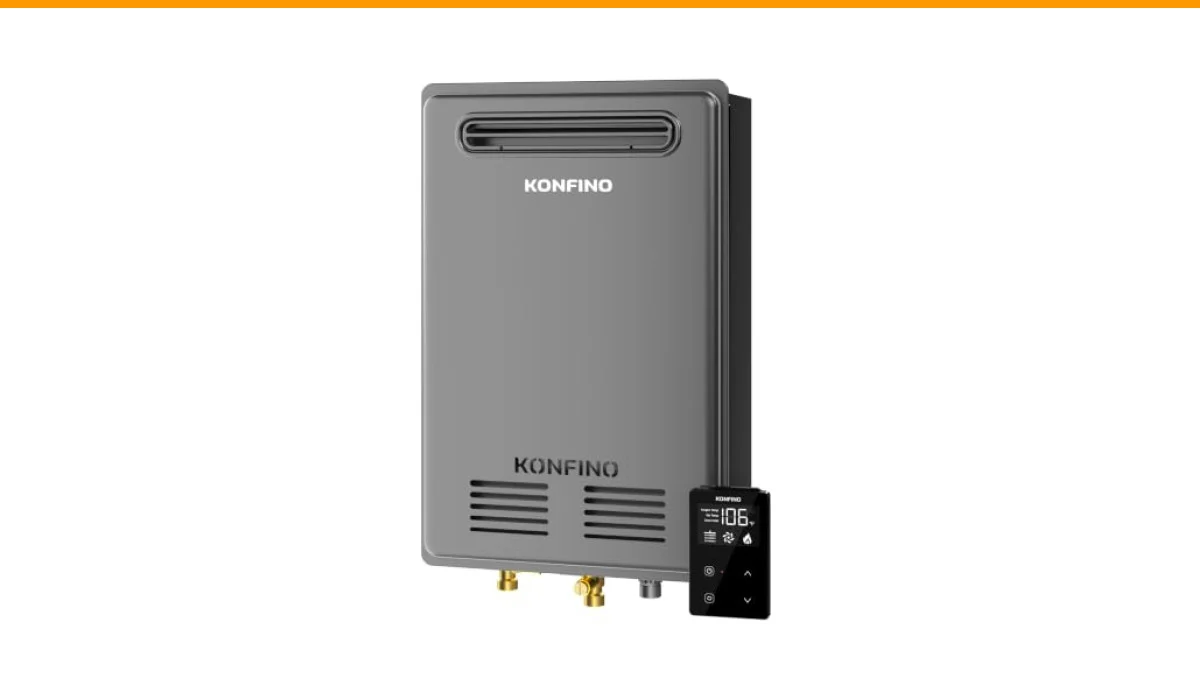
Konfino Outdoor 190K BTU Heater
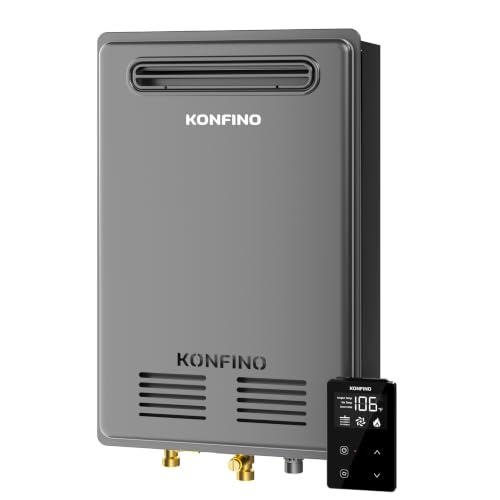
Konfino
Outdoor Natural Gas Tankless Water Heater, 190,000 BTU, 8.1 GPM | Instant Hot Water Heater for 4-6 Water Points, High Efficiency, WiFi Remote, Anti-Freeze, Weatherproof, Energy Saving, Patio
- 8.1 GPM Whole-Home Hot Water: Natural gas heater delivers 190,000 BTU of instant hot water on demand with no 30-minute preheat wai…
- Precise Smart Temperature Control: Adjust from 95°F to 149°F via the wired controller with one-degree accuracy; remote control set…
- Easy Outdoor Wall-Mount Install: Space-saving 24.3 x 15 x 8.3 inch heater installs outdoors and keeps the indoors clutter-free; ru…
The Konfino is the highest-capacity unit in this roundup, and it’s built for households that actually need that power. A family of five with three bathrooms running simultaneously will appreciate the 8.1 GPM flow rate. The 190,000 BTU input means it can handle cold incoming water in northern states without dropping to a trickle. If you’ve ever fought for hot water on a busy morning, this unit solves that problem.
What sets the Konfino apart is its downward blower design. Most tankless heaters pull air from below and exhaust upward, which can cause smoke backflow in windy outdoor locations. The Konfino reverses that flow, and the fan auto-adjusts speed for cleaner combustion. The copper heat exchanger uses staged combustion to hit UEF 0.81, which translates to roughly 20% energy savings compared to older tank-style heaters. The wired remote controller adjusts temperature in one-degree increments from 95°F to 149°F.
Here’s the honest part: Konfino isn’t a household name like Rheem or Rinnai. That matters for warranty support and parts availability five years down the road. The unit also requires a 3/4-inch gas line, which many older homes don’t have. Upgrading from a 1/2-inch line can add several hundred dollars to your install. And while the anti-freeze protection is rated for extreme climates, it relies on electric heating elements that draw power continuously in sub-zero weather. That’s a small but real operating cost.
- 190,000 BTU input with 8.1 GPM max flow rate
- Downward blower prevents smoke backflow in windy areas
- 0.79 GPM minimum activation flow works with weak pressure
- Wired remote with 1°F temperature accuracy
- Electric anti-freeze plus flame failure and overheat protection
Best for: Large families in cold climates who need maximum flow and have the gas line capacity to support 190,000 BTU.
VELPAX 110K BTU Outdoor Heater

VELPAX
Outdoor Natural Gas Tankless Water Heater, 110000 BTU 4.76 GPM Instant Hot Water Heater with Remote Control, 110V 60Hz AC, Low Pressure Startup for Home & RV
- [Powerful Instant Multi Outlet Hot Water] -This VELPAX outdoor tankless water heater runs on Natural Gas(NG), delivering 110,000 B…
- [Smart Remote Control with Long Connection Cable] -This gas tankless water heater comes with an indoor digital remote control pane…
- [Smart Precision Temperature Control with Staged Combustion]-This outdoor gas water heater adopts smart staged combustion technolo…
The VELPAX 110,000 BTU unit is the smallest and most affordable option here. It’s designed for RVs, cabins, small homes, and outbuildings where a full-size tankless heater would be overkill. The 4.76 GPM flow rate supports three to four fixtures, which is plenty for a couple or a small family. The low-pressure startup at 3 PSI makes it a good fit for well water systems or rural properties with weak water pressure.
The 16.4-foot remote control cable is a genuinely useful feature. You can mount the digital panel in your kitchen or bathroom and adjust temperature without walking outside in the rain. Real-time temperature display means you know exactly what you’re getting before you step in the shower. The staged combustion and oxygen-free copper heat exchanger keep temperature fluctuations minimal, even when inlet water temperature swings between seasons.
The trade-off is capacity. This unit won’t run three showers at once in January. If your incoming water is 40°F and you want 110°F output, the temperature rise is 70 degrees. At that rise, the flow rate drops significantly. VELPAX doesn’t publish a temperature rise chart, which makes sizing harder. The 1/2-inch NPT connections are standard, but the unit requires outdoor installation only. Running it in a garage or shed is a carbon monoxide risk. Also, the freeze protection is basic. If you live where pipes burst, you’ll need to drain the unit during extended cold snaps.
- 110,000 BTU input with 4.76 GPM max flow
- Low-pressure startup at 3 PSI for well water systems
- 16.4-foot remote cable for indoor temperature control
- Weather-resistant body rated for rain, snow, and wind
- Standard 1/2-inch NPT connections for easy install
Best for: RV owners, cabin dwellers, and small households with low water pressure who need an affordable outdoor unit.
VELPAX 120K BTU Tankless Heater

VELPAX
Natural Gas Tankless Water Heater,5.26GPM 20L Outdoor,Instant Hot Natural Gas Water Heater with Fahrenheit Digital Display,Multi-Protection
- 【Tankless Water Heater】– This natural gas tankless water heater features steady temperature control and multiple safety protection…
- 【Premium Quality & Durability】– Crafted with a stainless steel body for superior temperature and corrosion resistance, this natura…
- 【Efficient & Energy-Saving】– With a high-performance output of 120,000 BTU per hour, this 5.26 GPM instant natural gas water heate…
This VELPAX model sits in the middle of the lineup with 120,000 BTU and 5.26 GPM. It’s the Goldilocks pick for a three-bedroom home with two bathrooms. The stainless steel body resists corrosion better than painted steel, which matters if you live near the coast. The oxygen-free copper water tank minimizes heat loss and extends service life compared to cheaper aluminum exchangers.
The water servo technology is the standout feature. It uses built-in sensors to regulate flow and gas input simultaneously, keeping temperature within ±1°F. That’s tighter than most budget units manage. The four-stage combustion system adjusts to seasonal temperature changes, so you’re not fiddling with settings when fall arrives. The LED display adjusts from 95°F to 149°F. Installation is straightforward with standard 120V AC power and a compact 23.2 x 14.9 x 6.3 inch footprint.
What’s missing? The unit operates at 3.16 PSI minimum, which is slightly higher than the 110K model. If your well pump struggles, this might not fire reliably. The remote control is wired, not WiFi, so no smartphone app. And while the stainless body is durable, the unit doesn’t carry a CSA certification listed in the product data. Some inspectors want that stamp. Check your local codes before buying.
- 120,000 BTU input with 5.26 GPM max flow
- Water servo technology holds ±1°F temperature stability
- Stainless steel body with oxygen-free copper tank
- Four-stage combustion for year-round consistency
- Compact 23.2 x 14.9 x 6.3 inch wall-mount design
Best for: Mid-size homes with 3-4 fixtures that want precise temperature control and a corrosion-resistant body.
LiberLive 130K BTU Outdoor Heater

LiberLive
Natural Gas Tankless Water Heater, Outdoor Installation, Up to 5.3 GPM 130000 BTU On Demand Residential Natural Gas Instant Hot Water Heater Outdoor with Remote Controller, 110V, CSA Certificated,Gray
- [Advantages of an Outdoor Tankless Natural Gas Water Heater] - It can be installed outdoors to save space and reduce safety risks…
- [Designed for Outdoor Use] - With thickened and corrosion resistant body materials, stainless steel vents, and a powerful DC fan,…
- [Multi-Point Water Supply] - This outdoor tankless water heater delivers up to 5.3 GPM and 130,000 BTUs of hot water and can provi…
LiberLive targets the middle of the market with 130,000 BTU and 5.3 GPM. The CSA certification is the headline here. That stamp means the unit passed independent safety testing, which matters for insurance and code compliance. If your local inspector is strict, this is the budget-friendly option that won’t cause headaches. The IPX4 waterproof rating and force 8 wind resistance make it suitable for exposed outdoor walls.
The built-in chip regulates water flow and gas valve position to keep temperature variance under 1°F. Staged combustion handles seasonal swings without manual adjustment. The gray powder-coated finish blends into most exterior walls better than shiny stainless. The remote controller is wired, and the unit runs on standard 110V power. For a mid-size home with three bathrooms, this unit delivers consistent performance without the premium price of a Rheem.
Two things to know before buying. First, LiberLive doesn’t specify the heat exchanger material in the product data. That’s a red flag for long-term durability. Copper lasts longer than aluminum, and you can’t tell which one you’re getting. Second, the freeze protection is described as ‘freeze protection’ without specifics. In hard winters, that might mean the unit survives light frost but not a week of single-digit temperatures. You’ll want to drain it if you leave town in January. The 5.3 GPM flow rate is solid for the price, but it won’t keep up with three simultaneous showers in cold climates.
- 130,000 BTU input with 5.3 GPM max flow
- CSA certified for safety and code compliance
- IPX4 waterproof and force 8 wind resistant
- Built-in chip maintains ±1°F temperature control
- Staged combustion for consistent year-round output
Best for: Homeowners who need CSA certification and mid-range capacity at a reasonable price point.
Rheem RTG Series 8.4 GPM Heater
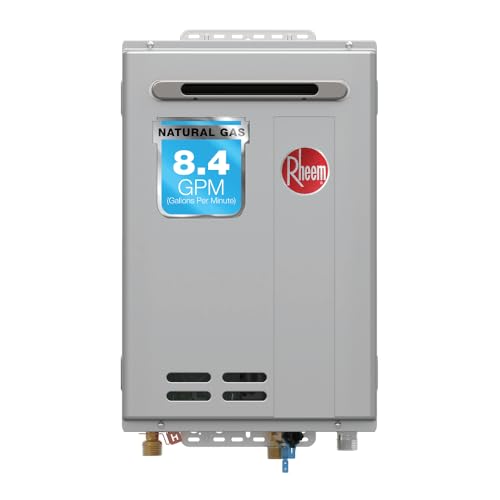
Rheem
Rheem RTG Series 8.4 GPM Natural Gas Tankless Water Heater Outdoor | 180,000 BTUs High Efficiency On Demand, Continuous Hot Water | Non-Condensing
- High Performance Natural Gas Tankless Water Heater delivers endless instant hot water on demand for whole house residential use |…
- Energy Efficient Non-Condensing Gas Tankless Water Heater with 0.82 Uniform Energy Factor (UEF) saves up to 34% on energy costs vs…
- Ideal Whole House Tankless Gas Water Heater for large families and multi-bathroom homes designed for outdoor installation, this hi…
Rheem is the name most plumbers recommend, and the RTG Series shows why. This unit delivers 8.4 GPM at a 35°F temperature rise with 180,000 BTU input. That’s enough for three to four simultaneous showers in most climates. The 0.82 UEF rating is the highest in this roundup, saving up to 34% on energy costs compared to a 50-gallon electric tank. For large families with high hot-water demand, this is the benchmark.
The RTG Series is non-condensing, which means it doesn’t require a condensate drain. That simplifies outdoor installation. The durable metal cabinet handles weather exposure, and the digital LED control panel adjusts temperature with ±1°F precision. Built-in freeze protection, flame failure protection, and a multi-point safety system cover the essentials. Rheem backs the heat exchanger for 15 years and parts for 5 years. That warranty is the best in this group by a wide margin.
Now the drawbacks. Rheem recommends professional installation, and for good reason. The unit requires a qualified installer to maintain the warranty. That adds labor cost. The 180,000 BTU input also demands a 3/4-inch gas line. If your home has 1/2-inch lines, you’re looking at an upgrade. And while the RTG Series is reliable, the non-condensing design is less efficient than condensing alternatives. You’ll save on installation complexity but pay slightly more in gas over 10 years. The unit also doesn’t include WiFi or smart home integration. It’s a workhorse, not a gadget.
- 180,000 BTU input with 8.4 GPM at 35°F rise
- 0.82 UEF efficiency rating saves up to 34% vs electric tanks
- 15-year heat exchanger warranty, 5-year parts warranty
- CSA certified with freeze and flame failure protection
- Non-condensing design eliminates condensate drain needs
Best for: Large families and multi-bathroom homes that want a trusted brand, top efficiency, and the best warranty coverage.
How We Chose These Products
We started with the specs that actually affect daily use: flow rate at realistic temperature rise, BTU input, heat exchanger material, and freeze protection. A unit that claims 8 GPM but drops to 3 GPM in winter isn’t useful. We prioritized models with published performance data and clear installation requirements. Certification mattered too. CSA certification isn’t just a sticker. It means the unit passed independent safety testing, which your insurance company may care about.
We also weighed brand reputation and warranty terms. Rheem and Rinnai have service networks. Smaller brands don’t. That doesn’t make them bad, but it changes the ownership experience. A $200 part is cheap. Waiting three weeks for it in January is not. We balanced price against long-term support and flagged units where the heat exchanger material wasn’t specified. If a manufacturer won’t tell you what’s inside, that’s a data point.
Buying Guide: What Really Matters
Flow rate gets all the attention, but temperature rise is the number that determines whether you’ll actually be happy. Flow rate is measured at a specific temperature rise, usually 35°F. If your incoming groundwater is 40°F in winter and you want 110°F output, that’s a 70°F rise. Your effective flow rate drops by roughly half. A unit rated at 8 GPM might only deliver 4 GPM in January. Check the temperature rise chart before buying, not just the peak GPM number.
Freeze protection is another spec that varies wildly. Some units have electric heating elements that keep internal components above freezing. Others rely on a small trickle of water or a drain-down procedure. In climates where temperatures drop below 20°F for extended periods, electric freeze protection is worth the extra cost. If you live in a mild climate, you can save money with a simpler unit. Just don’t confuse ‘freeze-resistant’ with ‘freeze-proof.’ They’re not the same thing.
Gas line sizing trips up more installations than any other factor. A 190,000 BTU unit needs a 3/4-inch gas line. A 110,000 BTU unit can often run on 1/2-inch. If your home has 1/2-inch lines and you buy a high-BTU unit, you’ll need a plumber to upgrade the line. That can cost several hundred dollars. Check your existing gas line diameter before you buy. The natural gas outdoor tankless guide on our site covers sizing in more detail.
Installation and Maintenance Essentials
Outdoor tankless water heaters are easier to install than indoor units because they don’t need venting. But they still require a dedicated 120V outlet, a gas connection, and water lines. Most homeowners hire a licensed plumber or gas fitter. Permits are usually required, and costs vary by municipality. Budget $500 to $1,500 for professional installation on top of the unit price. If you need a gas line upgrade or a new electrical circuit, add another $300 to $800.
Maintenance is minimal but not zero. The most common failure point is scale buildup in the heat exchanger. Hard water accelerates this. If your water hardness is above 7 grains per gallon, you’ll need to descale the unit annually. That involves flushing the heat exchanger with a vinegar solution using a small pump. It takes about an hour and costs $30 in supplies. Skipping descaling shortens the unit’s life by years.
Freeze Protection and Winterization
Electric freeze protection keeps the unit alive during normal winter operation. It doesn’t protect against power outages or extended deep freezes. If you lose power for 12 hours in January, the unit can freeze and crack the heat exchanger. That’s a $400 repair. If you live in a cold climate, drain the unit before leaving town for more than a few days. The process takes 10 minutes. Close the gas valve, turn off the water supply, open the drain plug, and let it empty. Some units have a freeze protection mode that runs a small burner cycle. Check your manual.
Descaling and Hard Water Care
Hard water is the silent killer of tankless water heaters. Calcium deposits insulate the heat exchanger, forcing the unit to work harder and eventually causing hot spots that crack the metal. A water softener upstream of the heater solves this problem. If you don’t have one, plan on descaling every 6 to 12 months. The best electric tankless units for well water often include scale-reduction features, but gas units rely on you to maintain them. Ignore descaling and you’ll void your warranty.
Outdoor vs Indoor vs Condensing: Which Makes Sense
Outdoor units save indoor space and eliminate venting costs. That’s a real advantage. A condensing unit captures heat from exhaust gases and achieves UEF ratings above 0.90. Non-condensing units like the Rheem RTG top out around 0.82. The trade-off is condensate. Condensing units produce acidic water that must be drained, and the drain line can freeze in winter. For outdoor installation in cold climates, non-condensing is often the practical choice despite lower efficiency.
Indoor units require stainless steel venting, which adds $300 to $600 to the install. They also need a dedicated combustion air supply. If you have a basement or utility room with space, indoor can work. But for most homeowners, outdoor installation is simpler and cheaper. The main risk is freeze damage, which proper winterization prevents. If you’re comparing options, the best indoor natural gas models offer similar performance with different installation constraints.
Altitude derating is another factor. Gas appliances lose efficiency at high elevations because there’s less oxygen for combustion. Most manufacturers publish a derating table. At 5,000 feet, a 190,000 BTU unit might only produce 160,000 BTU. If you live in Denver or Salt Lake City, size up to compensate. Low NOx emissions are also worth checking if your state has air quality regulations. California and parts of Texas require low-NOx units.
Frequently Asked Questions
How do I calculate the right GPM for my household? Add up the flow rates of the fixtures you might run at once. A showerhead is about 2.0 GPM. A kitchen faucet is 1.5 GPM. A washing machine is 2.5 GPM. If you want to run two showers and a faucet simultaneously, you need at least 5.5 GPM at your winter temperature rise. Most families are fine with 5 to 6 GPM. Large families with three bathrooms should look at 8 GPM or higher.
Can I install an outdoor tankless water heater myself? In most jurisdictions, no. Gas connections require a licensed plumber or gas fitter. You can do the water lines and mounting, but the gas hookup needs a permit and inspection. Some manufacturers void the warranty if installation isn’t done by a professional. Check your local codes and the warranty terms before deciding.
What happens if the power goes out? Tankless water heaters need electricity to run the fan, control board, and ignition system. No power means no hot water. That’s different from a tank heater, which stores hot water and can supply some during a short outage. If you live in an area with frequent outages, a small generator or battery backup for the heater circuit is worth considering.
How long do outdoor tankless water heaters last? With annual descaling and proper winterization, most units last 15 to 20 years. The heat exchanger is the limiting factor. Copper lasts longer than aluminum. Hard water without a softener can cut lifespan to 8 or 10 years. Rheem’s 15-year heat exchanger warranty is a good indicator of expected life. Budget brands with unspecified materials may not last as long.
Our Top Recommendation
The Rheem RTG Series 8.4 GPM is our top pick for most homeowners. It has the highest efficiency rating, the best warranty, and a flow rate that handles large families. The 15-year heat exchanger warranty gives you real peace of mind. Yes, it costs more upfront and requires professional installation. But the energy savings and reliability over 15 years justify the investment. For a trusted brand with proven performance, this is the safe choice.
If you need maximum flow and live in a cold climate, the Konfino 190,000 BTU unit is the runner-up. It delivers 8.1 GPM and has a downward blower that handles wind better than most. The trade-off is brand support. If you’re comfortable with a lesser-known name and have the gas line capacity, it’s a strong performer.
Budget-conscious buyers should look at the VELPAX 120K BTU model. It offers 5.26 GPM, stainless steel construction, and precise temperature control for mid-size homes. The LiberLive 130K is the pick if CSA certification is a requirement. And the VELPAX 110K is the right choice for RVs and small cabins where space and price matter more than peak flow. For more options, see our Rinnai RL94EN review and this comparison of outdoor tankless heaters.


