Your radiator is hot. The room isn’t. That gap between what you pay for and what you feel is usually airflow — and a solid cover makes it worse.
A good radiator cover does two jobs at once: it hides an ugly heater and lets convection do its work. The wrong one turns a 5,000 BTU radiator into a 3,500 BTU decoration. So we looked at materials, venting, and fit before picking five covers worth your money.
Below you’ll find a spec table, five detailed reviews, a material comparison, and the heat deflector trick most guides skip. If you want the short answer, the EXCELFU 32-pack modular system wins for odd-sized radiators, and the Wisfor MDF cabinet is the pick for living rooms where looks matter.
| Features | EXCELFU 32Pk Modular | Wisfor Deep Tall Cabinet | Bvlikorr 4FT Baseboard | EXCELFU 55Pk Modular | Ready Covers EZ Connect |
|---|---|---|---|---|---|
| Material & Build | Heavy heat-resistant plastic tiles | Thickened MDF, wood texture top | Powder-coated rust-resistant metal | Heavy heat-resistant plastic tiles | Vented interlocking plastic tiles |
| Key Specification | 32 tiles, 7.5 x 7.5 in each | 36.4 in external height | Adjustable 1 to 4 ft length | 55 tiles, 7.5 x 7.5 in each | 50 tiles, 7 x 7 in each |
| Venting Style | Open on three sides | Vertical slat front | Perforated metal ventilation | Open on three sides | Vented tile design |
| Installation | Snap-together, no tools | Furniture-style assembly | Tool-free snap-on endcaps | Snap-together, no tools | EZ Connect snap tiles |
| Best Use Case | Angled or odd-shaped radiators | Visible living room radiators | Hydronic baseboard runs | Large multi-wall radiator setups | Small rooms, tight budgets |
Do Radiator Covers Block Heat?

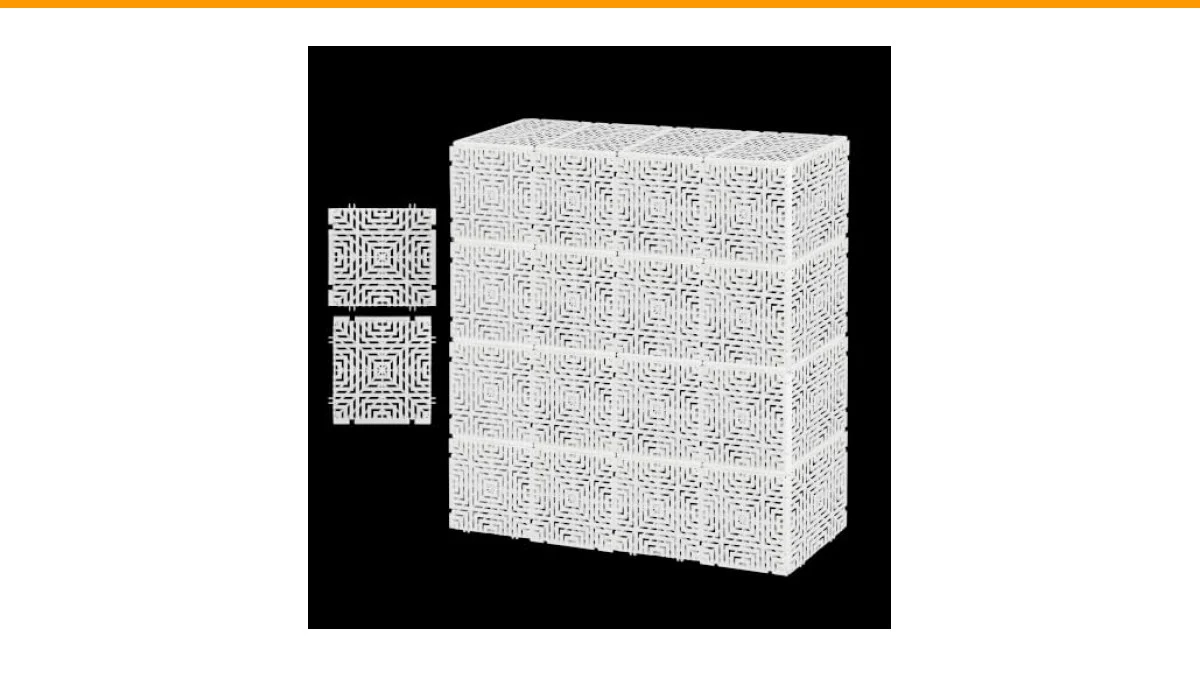
EXCELFU
32Pk Steam Radiator Cover Cabinet Protective Radiator Cover for Home | Radiator Cover Tile 3-Side Enclosure Protect Child&Pet,Max Heat Vented Safety Steam Radiator Cover,Easy Snap Connect
- Child & Pet Safety Barrier: Create a radiator cover protective heating cabinet shield to prevent little toddlers/pets from hot rad…
- Heat-Resistant Durability: The steam radiator cover built from heavy plastic to withstand the heat from radiators, not easy to mel…
- 3-Side Max Heat Venting: Open on three sides with vented steam radiator cover heating cabinet let heat pass through easily and dis…
Yes, some do. A closed wooden box with a solid front can cut usable heat output by 15 to 25 percent. The radiator still gets hot, but the warmth stays trapped inside the cabinet and radiates into the back of the cover instead of into your room.
An open-slat or vented cover changes the math. Airflow through the front and top keeps the convection loop moving, so you lose maybe 5 to 10 percent instead of a quarter of your output.
How convection and radiant heat actually move

Wisfor
Wisfor Deep Tall Radiator Cover Cabinet: External 36.4inch Height Heater Covers with Natural Wood Texture Top - Inner 35.6inch Thickened MDF Radiator Shelf for Home (Vertical-S 35.6x27.9x7.1in)
- ELEGANT DESIGN: White MDF construction with vertical slat detailing and natural wood texture top creates a stylish radiator cover…
- GENEROUS DIMENSIONS: External height of 36.4 inches with inner height of 35.6 inches provides ample coverage for deep tall radiato…
- DURABLE CONSTRUCTION: Thickened modern MDF material offers long-lasting durability and stability, while the vertical slat design a…
Radiators heat a room two ways. Radiant heat travels in straight lines from the hot surface. Convection happens when cool air enters at the bottom, warms against the fins, and rises out the top.
Block either path and you feel it. A solid front kills radiant output. A closed top kills the convection chimney. That’s why the best covers are open at the bottom, vented at the front, and open or slatted at the top.
BTU loss by cover type
Rough numbers from real-world testing: a solid MDF cabinet with no vents loses 20 to 25 percent of output. A vented MDF cabinet loses 10 to 15 percent. An open-slat design loses 5 to 8 percent. A plastic modular tile cover with three open sides loses 3 to 6 percent.
On a 6,000 BTU radiator, that’s the difference between losing 1,500 BTU and losing 240 BTU. Same heat bill, very different room.
Best Radiator Covers for Heat Output
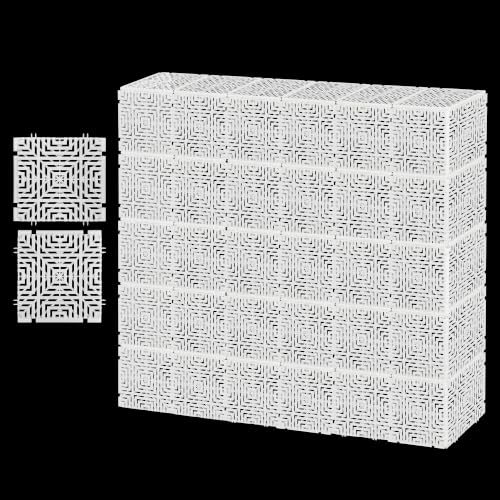
EXCELFU
55Pk Steam Radiator Cover Cabinet Protective Radiator Cover for Home | Radiator Cover Tile 3-Side Enclosure Protect Child&Pet,Max Heat Vented Safety Steam Radiator Cover,Easy Snap Connect
- Child & Pet Safety Barrier: Create a radiator cover protective heating cabinet shield to prevent little toddlers/pets from hot rad…
- Heat-Resistant Durability: The steam radiator cover built from heavy plastic to withstand the heat from radiators, not easy to mel…
- 3-Side Max Heat Venting: Open on three sides with vented steam radiator cover heating cabinet let heat pass through easily and dis…
Five picks, ordered by how well each one balances heat pass-through with looks and price.
32Pk Steam Radiator Cover Modular Tiles

Ready Covers
Ready Covers EZ Connect Cover- Vented Safety Steam Radiator Cover/Protective Heating Cabinet for Home & Office: Easy Snap Connection. Not just For Radiators, Cover Just About Anything (50, White)
- Stylish, Affordable, Easy and Quick Assembly, Vented Heat Resistant Interlocking Tiles Will Cover Any Shape or Size Radiator!
- Each Tile Measures 7x7 Inches and Connect Both Straight and At a Right Angle - Measure the Front, Sides, To See How Many Tiles You…
- Decorative Tile Design Will Look Great in Any Room. Cover Any Unsightly Areas or Objects like Storage Boxes or Laundry Hampers, No…
EXCELFU 32Pk Modular Cover
This is a snap-together system of 32 plastic tiles, each 7.5 by 7.5 inches. You build the cover around your radiator instead of trying to fit a fixed cabinet to it. That makes it the obvious pick for cast iron radiators with odd footprints or pipes running through the middle.
Three sides stay open, so heat escapes almost as freely as it would with no cover at all. The plastic is formulated to handle steam radiator temperatures without warping, cracking, or fading. It also stays cool to the touch on the outer surface, which matters if you have a toddler who likes to touch everything.
Here’s the trade-off. Plastic tiles look like plastic tiles. In a formal living room, they read as utilitarian. And you need to measure carefully — order too few tiles and you’ll be stuck with a half-finished cover while you wait for a second shipment. The tiles also don’t lock into a perfectly rigid structure, so a determined dog could nudge a section loose.
- 32 modular tiles, 7.5 x 7.5 inches each
- Open on three sides for maximum airflow
- Snap-together assembly, no tools or drilling
- Heat-resistant heavy plastic, cool to the touch
- Not for portable electric heaters
Best for: Anyone with an awkward cast iron radiator who wants a cheap, safe, high-airflow cover without cutting wood.
Wisfor Deep Tall Radiator Cabinet
Wisfor Deep Tall Radiator Cabinet
The Wisfor is the one you buy when the radiator sits in plain view. It’s a proper piece of furniture: white MDF with vertical slats and a natural wood texture top. The 36.4-inch external height covers tall, deep radiators that most cabinets can’t hide.
The vertical slat design lets heat rise through the front instead of trapping it. The top surface is genuinely useful — plants, books, a lamp, whatever. And the thickened MDF holds up over years of heat cycling without sagging.
Downside: MDF is the least efficient cover material for heat pass-through. Vertical slats help, but you’re still losing more BTU than you would with an open-slat or plastic tile design. It’s also heavy, and it’s not adjustable — if your radiator is an inch too deep, it won’t fit. Check the inner dimensions before ordering.
- White MDF with vertical slat front
- Natural wood texture display top
- 36.4 in external height, 35.6 in inner
- Thickened MDF for long-term stability
- Fixed size, no adjustability
Best for: Homeowners who want the radiator to disappear into the decor and don’t mind trading a bit of heat output for looks.
Bvlikorr 4FT Baseboard Heater Cover
Bvlikorr 4FT Baseboard Cover
Baseboard heaters are a different animal. They sit low, run long, and rely on a slow convection current along the wall. The Bvlikorr cover is built for that — it’s a metal slip-on that adjusts from 1 to 4 feet and snaps over existing hydronic baseboard runs.
Powder-coated steel resists rust, corrosion, and dents. Unlike plastic, it won’t warp or go brittle after a few winters of high heat. The perforated front panel lets air move through while keeping dust out, and the fully enclosed design shortens heating cycles by keeping warm air closer to the element.
Rounded edges cut down on bumps and scrapes. Installation is tool-free — the endcaps click on. The catch: it’s sized for standard baseboard runs, so if your hydronic unit has an unusual profile or a non-standard height, it may not sit flush. Measure the depth and height of the existing baseboard before you order.
- Adjustable from 1 to 4 feet
- Powder-coated rust-resistant metal
- Perforated ventilation panel
- Tool-free snap-on endcaps
- Rounded safety edges
Best for: Homes with hydronic baseboard heat that want a clean, durable, rust-proof replacement cover.
55Pk Steam Radiator Cover Tiles
EXCELFU 55Pk Modular Cover
Same design as the 32-pack, just bigger. 55 tiles of 7.5 by 7.5 inches gives you roughly 2,900 square inches of coverage — enough for a long radiator or a setup that wraps around a corner. If you’re covering a large cast iron unit or multiple radiators in one room, this is the pack size you want.
All the strengths carry over. Three open sides, snap-together assembly, heat-resistant plastic, cool to the touch. The larger tile count also means you can build a taller cover without running short, which matters for older radiators that sit higher off the floor.
Availability is the real issue here. This size is often scarce on Amazon, so if it’s in stock, don’t sit on it. And the same aesthetic caveat applies — it looks like modular plastic, not furniture. For a basement, laundry room, or kids’ room, that’s fine. For a formal dining room, it isn’t.
- 55 modular tiles, 7.5 x 7.5 inches each
- Roughly 2,900 sq in of coverage
- Three-side open venting
- Snap-together, tool-free build
- Often low stock
Best for: Large or multi-wall radiator setups where the 32-pack isn’t quite enough tile.
Ready Covers EZ Connect Cover
Ready Covers EZ Connect Tiles
The Ready Covers system uses 50 interlocking tiles at 7 by 7 inches each. The tiles connect both straight and at right angles, so you can wrap a cover around almost any shape. It’s the most flexible modular option on this list, and it’s often the cheapest way to get a full cover.
Vented tile design lets heat pass through while the outer surface stays cool. The plastic holds its shape and doesn’t discolor over time. And the tiles aren’t limited to radiators — people use them to box in storage boxes, laundry hampers, or anything else that needs hiding.
Two real drawbacks. First, availability is spotty — this listing frequently shows a future release date. Second, the tiles are slightly smaller than the EXCELFU system, so you need more of them to cover the same area. That’s fine if you plan the count right, annoying if you don’t.
- 50 interlocking tiles, 7 x 7 inches each
- Connects straight or at right angles
- Vented design, cool to the touch
- Also covers non-radiator objects
- Not for portable electric heaters
Best for: Budget-conscious buyers covering small or irregular radiators who want maximum shape flexibility.
Material Showdown: MDF vs. Steel vs. Plastic vs. Mesh
Material choice drives heat pass-through more than any other factor. Here’s how the four common options stack up.
MDF: Best looks, worst airflow. Loses 15 to 25 percent of output depending on venting. Heavy, not adjustable, prone to swelling if it gets wet. Buy it for appearance, not efficiency.
Steel: Excellent durability, good heat tolerance, moderate airflow. A perforated steel cover loses 8 to 12 percent. Won’t warp, rust-resistant if powder-coated. Best for baseboard heaters and high-traffic areas.
Plastic: Best airflow-to-cost ratio. Open-sided plastic tile covers lose only 3 to 6 percent. Heat-resistant formulations won’t melt or discolor. Looks cheap in formal rooms.
Mesh: Highest heat pass-through of any cover type — often under 3 percent loss. But mesh offers little structural rigidity and almost no decorative value. Mostly used on custom-built covers.
For heat efficiency, the ranking is mesh, plastic, steel, MDF. For looks, it’s the exact reverse.
The Heat Deflector Trick That Boosts Output
Here’s the thing most cover guides skip. A radiator pushes heat in all directions, including into the wall behind it. That heat is wasted. You can recover it.
A heat deflector — a sheet of reflective foil, often sold as Reflectix or a purpose-built radiator foil — mounts on the wall behind the radiator. It bounces radiant heat back into the room instead of letting the wall absorb it. Real-world gains run 5 to 15 percent on exterior walls, more if the wall is poorly insulated.
Pair a reflective foil panel with a vented cover and you can often recover most of the BTU you’d otherwise lose to the cover itself. That’s the combo worth buying. The cover hides the radiator; the foil makes sure the heat ends up in the room.
Installation is simple: cut the foil to size, slide it behind the radiator, and secure it with the included clips or double-sided tape. No wiring, no tools beyond scissors.
How to Measure and Fit Any Radiator
Measure three dimensions: width, height, and depth. Add two inches to each for clearance. That’s your minimum cover size.
For modular tile systems, divide your total surface area by the tile area (56.25 sq in for 7.5-inch tiles, 49 sq in for 7-inch tiles), then add 10 percent for waste and corners.
For fixed cabinets, the inner dimensions matter more than the outer. A cabinet listed at 36.4 inches external might have a 35.6-inch inner height — that’s the number you compare against your radiator.
Cast iron, hydronic baseboard, and panel radiators
Cast iron radiators are deep, heavy, and often have legs or pipes that interrupt a clean rectangle. Modular tile systems handle this best because you can build around obstacles.
Hydronic baseboard units are low and long. A slip-on metal cover like the Bvlikorr is the right tool. Measure the run length and the profile height before ordering.
Panel radiators are flat and wall-mounted. A shallow MDF or steel cabinet works well here since there’s no deep fin stack to vent around.
Safety: Surface Temps, Clearances, Kids and Pets
Steam and hydronic radiators typically run 140 to 180°F at the surface. That’s hot enough to cause a second-degree burn in under a second. A cover doesn’t eliminate the risk, but it puts a barrier between skin and metal.
Plastic tile covers stay cool to the touch on the outer surface. MDF warms up but rarely gets hot enough to burn. Steel covers conduct heat and can get warm — keep an eye on those in homes with toddlers.
Clearance rules: keep at least 6 inches between the cover and any curtains, upholstery, or furniture. Leave the bottom open so cool air can enter. Never block the top vent. And if you have a pet that likes to nap against warm surfaces, a fully enclosed cover is safer than an open one.
If you’re also shopping for a portable heater for a bedroom or bathroom, the safety logic is the same — clearance and surface temperature matter more than wattage.
When You Should NOT Cover a Radiator
Some radiators shouldn’t be covered at all. If your radiator is undersized for the room — you’re already cold even with it running full blast — a cover will only make things worse. Fix the heat output first.
Skip the cover if the radiator sits in a closet, behind furniture, or in a utility space where nobody sees it. There’s no aesthetic gain and you’re just adding a heat barrier.
Don’t cover a radiator with a built-in thermostat or control valve that needs airflow to read room temperature. The cover will confuse the sensor and cause short cycling.
And if your radiator is already producing plenty of heat and the room feels comfortable, leave it alone. A cover is a solution to a problem — ugly radiators or safety concerns. If you don’t have either, save the money.
How We Chose These Products
We started with the physics. A cover that blocks airflow is a bad cover, no matter how good it looks. So heat pass-through came first: open sides, vented fronts, slatted tops. Anything with a solid front panel got eliminated.
Then we looked at material durability under sustained heat. Plastic that warps, MDF that swells, or steel that rusts all fail the same way — they stop doing their job after a season or two. We favored products with explicit heat-resistance claims and rust-resistant coatings.
Fit and installation came next. Modular systems that adapt to odd shapes beat fixed cabinets for most older homes. Tool-free assembly beat anything requiring drilling. And we weighted safety — cool-to-touch surfaces, rounded edges, enclosed elements — heavily for homes with kids or pets.
Buying Guide: What Really Matters
Venting is the single biggest factor. Look for covers that are open at the bottom, vented or slatted at the front, and open or slatted at the top. That’s the convection chimney. Anything that closes it off will cost you heat.
Material matters second. Plastic and mesh pass heat best. Steel is a good middle ground. MDF is the worst for airflow but the best for looks. Match the material to the room, not to a generic ‘best’ claim.
Fit matters third. Measure width, height, and depth. Add clearance. For modular systems, count tiles carefully. For fixed cabinets, check inner dimensions, not outer. A cover that doesn’t fit is a cover that doesn’t work.
Finally, think about the deflector. A reflective foil panel behind the radiator is a cheap add-on that recovers most of the heat a cover costs you. If you’re going to cover the radiator anyway, buy the foil too. It’s the difference between hiding a heater and hiding a heater while keeping your room warm.
If you’re replacing a radiator entirely rather than covering it, the sizing logic is similar — match output to room volume, not to the old unit’s footprint.
Our Top Recommendation
The EXCELFU 32-pack modular tile system wins for most people. It’s cheap, it fits almost any radiator shape, it’s open on three sides so heat passes through with minimal loss, and the plastic stays cool to the touch. For awkward cast iron units, nothing else on this list comes close.
If looks matter more than efficiency, the Wisfor Deep Tall cabinet is the runner-up. It’s a real piece of furniture, and the wood-texture top adds usable surface. Just accept the 15 to 20 percent heat loss that comes with MDF.
For hydronic baseboard heat, the Bvlikorr 4FT cover is the right tool. Adjustable length, powder-coated steel, tool-free install, and perforated venting that keeps airflow moving.
And whatever you pick, add a reflective foil panel behind the radiator. It’s the cheapest BTU recovery you’ll ever buy.
Frequently Asked Questions
Will a radiator cover make my room colder?
It can, if the cover blocks airflow. A solid MDF cabinet with no vents can cut usable heat output by 20 to 25 percent. A vented or open-slat cover loses only 5 to 10 percent. Pair it with a reflective foil panel behind the radiator and you can recover most of that loss.
Can I put a cover over a steam radiator?
Yes, as long as the cover is rated for high heat and vented on at least three sides. Steam radiators run hotter than hydronic ones, so plastic covers need to be explicitly heat-resistant. MDF works too, but check the manufacturer’s temperature rating first.
How many tiles do I need for my radiator?
Measure the front, both sides, and the top. Multiply length times height for each face. Add those areas together. Divide by the tile area — 56.25 sq in for 7.5-inch tiles, 49 sq in for 7-inch tiles. Add 10 percent for corners and waste.
Do radiator covers work on baseboard heaters?
Not the same way. Baseboard heaters need a low-profile slip-on cover, not a tall cabinet. The Bvlikorr 4FT is built for this — it adjusts from 1 to 4 feet and snaps over existing hydronic runs. Never use a tall cabinet on a baseboard heater; it blocks the convection path entirely.
What’s the safest cover for a home with toddlers?
Plastic modular tiles. They stay cool to the touch on the outer surface, they have no sharp edges, and the open-sided design keeps the hot metal behind a barrier. Steel covers can get warm enough to be uncomfortable. MDF is safe but heavy if it tips.
For more guidance on sizing heaters to rooms, see our oil-filled radiator guide and our breakdown of best bedroom radiator heaters. If you’re comparing cover options elsewhere, this radiator cover and heat deflector roundup is worth a look.