You step into the shower, turn the handle, and wait. Then you wait a little longer. The water finally warms up, but it’s lukewarm at best. So you crank the dial on the tank. A week later, your energy bill looks like a small mortgage payment.
Most people set their water heater once and never touch it again. Or they fiddle with it randomly, chasing hotter water without understanding the real trade-offs. The best temperature to set water heater isn’t a single magic number for every household. It depends on your family, your pipes, and how much you hate paying for heat that just sits in a basement tank.

Winters Instruments
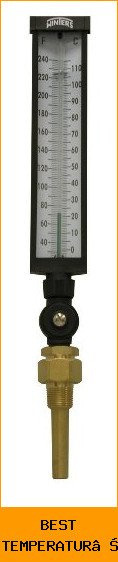
Winters TIM Series Dual Scale Valox Industrial 9IT Thermometer, 3-1/2" Stem, 3/4" NPT with Thermowell, 30-240 F/C Range
- Widely specified in the industrial and commercial plumbing trade
- Includes a separable thermowel
- 3-1/2" Stem
This guide walks through the actual numbers, the safety arguments, and the scenarios where the standard advice falls apart. You’ll know exactly what to set your dial to by the end.
If you want to verify your tank’s actual temperature rather than trust the dial, a simple thermometer attached to the tank’s drain valve or a nearby pipe gives you a real reading. The Winters TIM Series Dual Scale Valox Industrial 9IT Thermometer (available on Amazon) is a common pick for this job. It has a 3-1/2 inch stem and a 30-240 F/C range, with a thermowell for direct insertion into a pipe fitting. It’s not a fancy gadget, but it tells you the truth about your water temperature.
The 120°F Default: Why It Works and Where It Fails
The Department of Energy and most plumbing codes recommend 120°F. That number isn’t pulled from thin air. It’s a compromise between hot enough for daily use and cool enough to slow down bacteria growth and prevent scalding.
At 120°F, you get a comfortable shower for most people. Dishwashers with built-in heaters don’t care, because they boost water temperature internally. Washing machines that use hot water will still clean clothes, though heavily soiled loads might need a pre-treatment.
Where 120°F fails is in a few specific situations. If you have an older dishwasher without a booster heater, you’ll see cloudy dishes and greasy residue. If someone in your home has a compromised immune system or you have a long run of pipe from the tank to the faucet, 120°F might not be enough to prevent bacterial issues in the pipes themselves.
For the vast majority of single-family homes, 120°F is the right call. It’s safe for small children and elderly residents who might not react quickly to hot water. It also reduces mineral buildup in the tank, which extends the life of the heating elements or burner.
Myth: Crank It to 140°F for a Better Shower
People crank their water heaters to 140°F or higher for one reason: they want a hotter shower. That logic is backwards. You don’t shower at 140°F. You’d have third-degree burns in seconds. You mix that 140°F water with cold water to get a comfortable temperature.
So what does a higher tank temperature actually buy you? A longer hot water supply. If you have a 40-gallon tank set to 140°F, you can mix it with more cold water to get a 105°F shower. That effectively stretches your hot water capacity. A 40-gallon tank at 140°F behaves like a larger tank at 120°F.
The cost is real. Every 10°F increase in tank temperature adds roughly 3% to 5% to your water heating energy consumption. Going from 120°F to 140°F is a 20°F jump, which means you could be paying 6% to 10% more just to keep the tank hot. That’s money for a benefit you mostly don’t use.
If you run out of hot water mid-shower on a regular basis, you have two options: raise the temperature or fix the underlying issue. Raising the temperature is a band-aid. A low-flow showerhead, a larger tank, or a heat pump water heater solves the actual problem without the energy penalty.
There’s also a safety angle. At 140°F, a child can get a serious burn in about five seconds. At 120°F, it takes about five minutes of continuous exposure. That’s a huge difference in real-world risk.
Myth: Lowering to 110°F Saves Big Money
The flip side of the cranking problem is people who set their tank to 110°F or lower, thinking they’re saving a fortune. They’re not. The savings between 120°F and 110°F are small, often less than 5% of your water heating bill. That’s a few dollars a month.
Worse, 110°F is the danger zone for Legionella bacteria. Legionella thrives in warm water between 77°F and 113°F. It causes Legionnaires’ disease, a severe form of pneumonia. The CDC recommends keeping your water heater at 120°F or higher specifically to prevent Legionella growth.
If you have a tank that’s been sitting at 110°F for months, you might already have a biofilm in the bottom of the tank. Simply turning it up to 120°F doesn’t instantly kill everything. You’d need to run the tank at 140°F for a few hours to sanitize it, which most people never do.
The bottom line: 110°F isn’t a smart money move. It’s a health risk for a few dollars in savings. Keep it at 120°F unless you have a very specific reason not to.
When You Actually Need 140°F or Higher
There are legitimate reasons to set your tank above 120°F. These are the exceptions, not the rule.
First, commercial dishwashers. The NSF requires final rinse temperatures of 180°F for high-temp machines and 150°F for chemical sanitizing machines. Those systems have their own booster heaters, so your tank doesn’t need to be that hot. But if you have a residential dishwasher without a booster, you’ll need 140°F tank water to get dishes clean.
Second, homes with long pipe runs. If your water heater is in the basement and the master bathroom is on the second floor, heat loss through the pipes can drop the water temperature by 10°F to 20°F by the time it reaches the faucet. Setting the tank to 130°F or 135°F compensates for that loss while still keeping the water at a safe 120°F at the point of use.
Third, high-demand households. If you have a large family and a small tank, raising the temperature to 130°F or 140°F buys you extra usable hot water. You’re trading energy efficiency for convenience. Just be aware of the scald risk and consider installing anti-scald valves on shower heads and faucets.
Fourth, people with compromised immune systems. If you’re undergoing chemotherapy, have an autoimmune disorder, or live with someone who does, the CDC recommends keeping the tank at 140°F to reduce Legionella risk. This is a medical decision, not a comfort one. Talk to your doctor.
Comparing Temperature Settings: The Real Trade-offs
| Tank Setting | Energy Cost Impact | Scald Risk | Legionella Risk | Best For |
|---|---|---|---|---|
| 110°F | 3-5% less than 120°F | Very low | High | Not recommended |
| 120°F | Baseline | Low | Low | Most homes |
| 130°F | 3-5% more than 120°F | Moderate | Very low | Long pipe runs, high demand |
| 140°F | 6-10% more than 120°F | High | Negligible | Commercial dishwashers, medical needs |
These numbers are estimates, not exact figures. Your actual energy cost depends on tank insulation, ambient temperature in your basement, and how much hot water you use. The scald risk at 130°F and above is serious enough that you should install thermostatic mixing valves if you go that route.
How to Actually Set Your Water Heater
Most electric water heaters have two thermostats, one near the top and one near the bottom. Both need to be set to the same temperature, or you’ll get inconsistent water temps. Gas water heaters usually have a single dial on the bottom of the tank.
Here’s the process:
- Turn off the power to an electric heater at the breaker. Gas heaters can stay on.
- Remove the access panels on an electric unit to expose the thermostats.
- Use a flathead screwdriver to adjust the dial to your target temperature. The dials often have small marks that don’t correspond to exact degrees, so you’ll need a thermometer to verify.
- Replace the panels and turn the power back on.
- Wait at least two hours for the tank to fully reheat.
- Run hot water from a faucet closest to the tank for three minutes. Measure the temperature with a cooking thermometer or the Winters thermometer mentioned earlier. Adjust accordingly.
You’ll likely need to do this twice to get it right. The dials on most water heaters are notoriously inaccurate. A setting that looks like 120°F might actually be 130°F or 110°F. Trust the thermometer, not the dial.
Frequently Asked Questions
What temperature kills Legionella in a water heater?
Legionella bacteria start dying at 122°F, but the kill rate is slow. At 140°F, the bacteria die within 32 minutes. To fully sanitize a tank, you need to run it at 140°F for at least two hours. That’s why the CDC recommends 140°F for high-risk individuals, not 120°F.
Is 120°F hot enough for a shower?
For most people, yes. A comfortable shower temperature is usually between 105°F and 110°F. If your tank is set to 120°F, you’ll mix it with some cold water to get to that range. If you find yourself turning the hot water handle all the way and still wanting more heat, your tank might be set lower than you think. Check the actual temperature with a thermometer.
Should I turn down my water heater when on vacation?
Turning it off entirely is a bad idea. The tank will cool down, and if the pilot light is out on a gas unit, you risk a dangerous startup. Setting it to the ‘vacation’ or ‘low’ setting, usually around 90°F to 100°F, is fine for a week. But you’ll need to bring it back up to 120°F and let it sit for a few hours before using hot water again.
What’s the best temperature for a tankless water heater?
Tankless units don’t store water, so the Legionella risk is much lower. You can safely set a tankless heater to 120°F for everyday use. If you have a recirculation line, keep it at 120°F to avoid the same bacterial concerns. The same scald risk applies, so don’t go above 120°F if you have small children.
Why does my water heater run out of hot water faster at 120°F?
It doesn’t actually run out faster. The tank holds the same volume. But at 120°F, you have less stored heat energy. When you mix it with cold water for a shower, you get less usable hot water per gallon. Raising the temperature to 130°F or 140°F gives you more mixing capacity, which effectively extends your hot water supply.
What to Do With This Information
Set your tank to 120°F and verify it with a thermometer. That’s the starting point for nearly everyone.
- Check the actual water temperature at your faucet, not the dial. Dial markings lie.
- If you run out of hot water, raise the tank to 130°F and test again. Don’t go straight to 140°F.
- Install anti-scald valves if you set the tank above 120°F and have kids or older adults at home.
- Lowering below 120°F saves almost nothing and risks bacterial growth. Don’t do it.
- Flush your tank annually to remove sediment. A clean tank heats more efficiently at any temperature.
- Consider a heat pump water heater if you’re replacing your unit. It uses less power and maintains 120°F easily.
- If you have a medical need for 140°F, install a thermostatic mixing valve at the tank so you get the high temp inside but safe water at the tap.
The best temperature to set water heater is 120°F for most homes. Set it, verify it, and move on with your life. Your energy bill will be reasonable, your showers will be comfortable, and you won’t be playing Russian roulette with bacteria or burns.


