You turn on the shower faucet and wait. Then wait some more. Cold water drains out while the heater somewhere in the basement wakes up. With a tank water heater, a recirculation pump solves this—hot water is always ready in the pipes. But can a tankless water heater recirculate hot water the same way?
Short answer: yes, but with caveats that most homeowners don’t expect. Tankless heaters are built differently. They need a minimum flow to turn on, they heat water on the fly, and many don’t play nice with standard recirculation pumps. This article walks you through the real options, the numbers that matter, and when you’re better off skipping recirculation entirely.

xwdzswgs
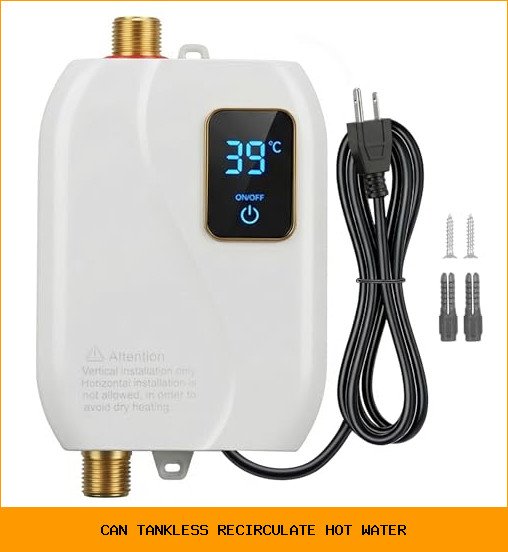
Tankless Water Heater Electric, 3000W Tankless Electric Water Heater 110V, On Demand Hot Water Heater Electric with Digital Display, Electric Tankless Hot Water Heater for Kitchen Bathroom Washin
- Electric Tankless Water Heater - This instant water heater is equipped with state-of-the-art technology, with 3000W power, LED dis…
- Compact & Lightweight Unit: The electric hot water heater adopts a compact and exquisite design, which is small in size and does n…
- Compact & Lightweight Unit - The electric hot water heater adopts a compact and exquisite design, which is small in size and does…
You’ll leave knowing exactly which method fits your situation and how to avoid the three mistakes that waste time and money.
If you only need instant hot water at one sink—say, a kitchen faucet or a bathroom vanity—running a full recirculation loop might be overkill. A small point-of-use tankless heater like the xwdzswgs 3000W electric unit can do the job without any recirculation plumbing. It installs under the sink, heats water on demand, and delivers hot water in about 3 seconds. No return line, no pump, no waiting. For a single fixture, it’s simpler than adding a recirculation system.
How Recirculation Works Differently with Tankless Heaters
A tank heater holds 40 or 50 gallons of hot water. A recirculation pump pushes a small amount of that water through the pipes and back to the tank to stay warm. The pump runs periodically, and the tank’s thermostat keeps the temperature stable.
Tankless heaters are different. They only fire up when water flows through them at a certain rate—usually 0.5 to 0.7 gallons per minute. Below that threshold, the heater stays off. Standard recirculation pumps move water too slowly. The pump pushes maybe 0.2 GPM through the loop, the tankless never turns on, and you get cold water in the return line.
That’s the core problem. To make recirculation work with a tankless, you either need a pump that delivers enough flow to trigger the heater, or you need a system that doesn’t require the heater to run during the recirculation cycle.
Three Ways to Recirculate Hot Water with a Tankless Heater
1. Dedicated Recirculation Pump with a Return Line
This is the most reliable method. You install a pump on the hot water line near the farthest fixture, and run a dedicated return line back to the tankless heater. The pump runs on a timer, a thermostat, or a push-button. It delivers at least 0.5 GPM, which keeps the heater fired up and maintains hot water in the loop.
Pro tip: Use a pump designed for tankless recirculation, like the Grundfos Comfort or Taco 003. These pumps have flow rates of 1–3 GPM and include a check valve to prevent backflow.
You’ll need:
- A return line from the farthest fixture back to the heater
- A pump rated for at least 0.5 GPM at the head height of your house
- A timer or thermostat control to avoid running the pump 24/7
Energy cost: The pump draws about 60–90 watts. The heater will fire up each time the pump runs, so you’re paying to reheat the water in the pipes. Insulating your hot water lines cuts that waste in half.
2. Built-In Recirculation (Some Tankless Models Have It)
A few high-end tankless heaters include an internal recirculation pump and controller. Brands like Rinnai, Navien, and Rheem have models with this feature. The heater itself manages the flow, temperature, and pump schedule. No external pump needed. You still need a return line.
Checks to make:
- Your model must explicitly list built-in recirculation. Many don’t.
- With built-in recirculation, the heater will modulate the flow to stay above its minimum activation rate.
- Installation is usually easier than adding an external pump, but the unit costs more upfront.
If you’re buying a new tankless heater and want recirculation, this is the cleanest option. Retrofitting an existing tankless with an external pump is more common, though.
3. Crossover Valve (No Return Line) – The Compromise
A crossover valve (sometimes called a comfort valve or recirculation crossover) connects the hot and cold water lines under the farthest sink. When the pump runs, hot water pushes into the cold line and back to the water heater via the cold water supply. No return line required.
This works with tankless heaters, but there are trade-offs:
- Cold water lines get warm during recirculation. That means the toilet, the garden hose bib, and the refrigerator line all get warm water until you flush it out.
- The flow through the crossover is usually 0.3–0.5 GPM, which just barely triggers some tankless heaters. If your heater has a high minimum flow rate (0.7 GPM or more), the crossover method will fail.
- You can’t use a crossover valve if you have a well with a pressure tank—warm water in the cold supply can cause bacteria growth in the tank.
This method works best with tankless heaters that have a low minimum flow rate (0.4 GPM or less) and in houses with short pipe runs. I’ve seen it work well in apartments and small condos, but I would not recommend it for a two-story house with long runs.
When You Should Skip Recirculation Entirely
If you only need instant hot water at one or two fixtures, a point-of-use tankless heater like the xwdzswgs 3000W unit is simpler, cheaper, and more efficient than adding a recirculation loop. It sits under the sink, plugs into a standard 110V outlet (or hardwired with 13 AWG wire and a 32A breaker), and delivers hot water in seconds. No pump, no return line, no warm cold water.
For whole-house instant hot water, recirculation makes sense. For a single sink, the under-sink tankless wins almost every time.
Recirculation Methods Compared
| Method | Return Line Needed? | Minimum Flow | Best For | Downside |
|---|---|---|---|---|
| Dedicated pump with return line | Yes | 0.5–1.0 GPM | Whole house, long runs | Requires plumbing access, pump cost |
| Built-in recirculation (tankless model) | Yes | Set by heater | New installation | Limited models, higher upfront cost |
| Crossover valve (no return line) | No | 0.3–0.5 GPM | Small homes, short runs | Warms cold pipes, may not trigger low-flow heaters |
| Point-of-use tankless (like xwdzswgs 3000W) | No | N/A | Single sink, small space | Only serves one fixture |
Frequently Asked Questions
Can I add a recirculation pump to any tankless water heater?
Technically yes, but you must ensure the pump delivers enough flow to activate the heater (usually at least 0.5 GPM). Many standard home recirculation pumps move only 0.2 GPM. You need a pump rated for tankless systems or a model with adjustable speed. Also check the heater’s minimum flow spec—some require 0.7 GPM, which means a stronger pump.
Does recirculation waste energy with a tankless heater?
Yes, but less than with a tank heater. A tank heater loses heat from the stored water 24/7. A tankless only heats water when the pump runs. The waste comes from reheating the water in the pipes after it cools. Insulating your hot water lines reduces that loss by about 50%. On average, recirculation adds 10–20% to your water heating energy use, depending on pipe length and insulation.
Will recirculation affect the water temperature at the faucet?
It can, if the pump runs too fast. The tankless heater heats water to a set temperature. If the pump pushes water through faster than the heater can raise its temperature, you’ll get lukewarm water at the fixtsture. Most tankless heaters can handle 1–1.5 GPM and still deliver a 40–50°F temperature rise. Stick with pumps that stay under 1.5 GPM for standard residential units.
How long does it take to get hot water with a recirculation system?
With the return line method: 5–15 seconds, depending on how close the fixture is to the loop. With a crossover valve: 10–30 seconds, because the pump has to push through the cold line. Without any recirculation: 30–90 seconds for a typical house. The trade-off is noticeable but not instant—only a point-of-use tankless gives you water at the set temperature in under 5 seconds.
Do I need a return line for a tankless recirculation system?
Not necessarily. The crossover valve method works without a dedicated return line, but it has the warm-cold-water downside. If you’re doing new construction or have access to the walls, running a return line is worth the effort. For existing homes, a crossover valve is a reasonable retrofit as long as your tankless heater has a low minimum flow rate (0.5 GPM or less).
What You Should Do Right Now
- Check the minimum flow rate of your tankless heater. If it’s above 0.5 GPM, a crossover valve probably won’t work. Plan for a return line and a dedicated pump.
- Measure the distance from your heater to the farthest faucet. Anything over 40 feet will benefit from recirculation.
- For a single sink, skip the pump entirely. Install a point-of-use tankless like the xwdzswgs 3000W unit. It costs less than a full recirculation setup and works every time.
- If you choose a recirculation pump, pick one with a timer or thermostat. Running the pump 24 hours a day wastes energy and shortens the pump’s life.
- Insulate your hot water pipes. This cuts energy loss from recirculation by roughly half and pays for itself in a year.
- Never install a crossover valve if you have a well with a pressure tank. Warm water in the cold line is a bacteria risk.
- Test your setup by feeling the water at the farthest faucet after the pump has run for two minutes. If it’s not warm, either the flow is too low or the pump is undersized.


