
You hear a rumbling from the basement or notice rust-colored water from the kitchen tap. That’s your water heater talking. And the part that stops that tank from turning into a rusty sieve is the anode rod. But if you have a natural gas water heater, you might wonder: does it even have one?
The short answer: yes. Nearly every natural gas water heater made today ships with a magnesium or aluminum anode rod installed. Electric heaters do too. The difference is in the details — where it lives, how it’s installed, and what happens when it wears out. This article covers exactly what to look for, how to check yours, and when to replace it.
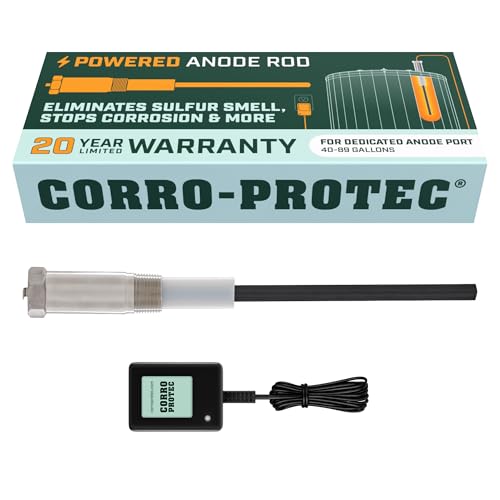
Corro-Protec
Corro-Protec Powered Anode Rod for Water Heater | 24-Hour Sulfur Smell Removal. Stops Corrosion & Reduces Sediment Buildup in Tank. 20-Year Warranty. WQA-Certified.
- HASSLE-FREE HOT WATER - Corro-Protec’s powered anode rod revolutionizes water heater maintenance with [1] permanent corrosion prot…
- EXTEND TANK LIFESPAN WITH TITANIUM - Forget replacing depleted magnesium or aluminum anode rods. Our titanium powered anode rod is…
- STANDARD INSTALLATION IN THE DEDICATED ANODE PORT [for all brands except Bradford White tanks] - This 40-89-gallon model installs…
By the end you’ll know your tank’s anatomy, the signs of a dead anode, and whether a powered anode like the Corro-Protec is worth the swap. No fluff. Just the stuff you need.
For people who want to stop worrying about anode replacement every few years, there’s a powered option that eliminates the guesswork. The Corro-Protec Powered Anode Rod for Water Heater replaces your old magnesium or aluminum rod with a titanium element that uses a tiny electric current to stop corrosion. It works with any water hardness, eliminates the rotten-egg sulfur smell, and comes with a 20-year warranty. No more climbing stairs to check a sacrificial rod every two years.
Why Natural Gas Water Heaters Need Anode Rods
All storage tank water heaters — gas or electric — have one job: hold hot water without leaking. Water is corrosive. Over time it eats through steel. The anode rod is the sacrificial metal that gets eaten instead of the tank.
Your natural gas model uses a burner under the tank to heat the water. That flame introduces combustion gases and raises the metal temperature slightly higher on the bottom. The anode rod protects the entire tank interior, including that hot bottom surface where rust often starts first.
Without a working anode, the steel tank can develop pinhole leaks in 6 to 12 months in aggressive water. With a healthy anode, a typical gas water heater lasts 8 to 12 years. That’s the difference.
So the rod matters. A lot.
Where Is the Anode Rod on a Natural Gas Water Heater?
On most residential gas heaters, the anode rod lives under a hex-head plug on top of the tank. It looks like a big bolt with a 1-1/16-inch or 15/16-inch head. You’ll see it near the hot water outlet nipple.
Some manufacturers combine the anode rod with the hot water outlet nipple. If you don’t see a separate hex plug, the anode is inside the nipple fitting. You’ll need to disconnect the hot water line to access it.
On a few models, especially older Rheem or Ruud units, the anode is built into the cold water dip tube. That’s a plastic tube running from the cold inlet down to the tank bottom. Harder to get to, but still replaceable.
Key tip: before you buy a replacement rod, check what type of head you have. Standard hex heads accept a common socket. Nipple-style rods require a special nipple wrench or a long breaker bar.
Magnesium vs. Aluminum vs. Powered Anodes — Which Is Best?
Most gas water heaters come with a magnesium anode. Magnesium is more reactive, so it protects the tank aggressively. But it also produces hydrogen sulfide gas when it reacts with sulfur in the water. That’s the rotten egg smell.
Aluminum anodes last longer and don’t cause sulfur odor in most water. But they’re less reactive, so the tank may get thinner protection in soft water. Also, aluminum can leave white chalky sediment in the tank.
Powered anodes like the Corro-Protec work differently. They don’t sacrifice themselves. Instead, they use a low-voltage DC current to push electrons into the tank, preventing the steel from corroding. No smell. No sediment. And the titanium element lasts years longer than any sacrificial rod.
Here’s a direct comparison:
| Anode Type | Lifespan | Odor Risk | Best Water Type | Install Complexity |
|---|---|---|---|---|
| Magnesium | 3 – 5 years | High (sulfur smell) | Soft or moderate | Moderate (need socket) |
| Aluminum | 5 – 7 years | Low | Hard or softened | Moderate |
| Powered (Corro-Protec) | 10 – 20 years | None | Any hardness | Easy (plug-in required) |
The powered anode costs more upfront — check the current price on Amazon — but if you factor out replacement labor and chemical treatment, it often pays for itself in one cycle.
How to Check and Replace the Anode Rod on a Gas Water Heater
This is a job you can do yourself with basic tools. Here’s the step-by-step:
- Turn off the gas and water. Close the gas valve at the heater. Shut the cold water supply valve. Open a hot water faucet to relieve pressure.
- Drain a few gallons. Connect a hose to the drain valve. Drain 3–4 gallons so the water level drops below the anode port. This keeps you from getting scalded when you loosen the rod.
- Remove the old anode. Use a 1-1/16-inch socket with a long breaker bar. Turn counterclockwise. It may be tight. If it strips, try a 15/16-inch socket. For stubborn rods, apply penetrating oil and let it sit 15 minutes.
- Inspect the rod. A healthy rod looks like a solid metal pencil. A dead rod is a thin, fragile wire or a hollow shell. If more than 6 inches of the core wire is exposed, replace it.
- Install the new rod. Wrap Teflon tape around the threads. Apply pipe dope over the tape for extra seal. Tighten to about 15 ft-lbs — snug but not torqued to death.
- Refill and test for leaks. Open the cold water supply. Close the hot water faucet you opened earlier. Check the anode port for drips. If it leaks, tighten a quarter-turn more.
- Restore gas and relight the pilot. Follow your heater’s lighting instructions. Turn the gas valve back on, light the pilot, and set the thermostat.
Pro tip: if you have a gas heater without a dedicated anode port (common on some Bradford White models), you’ll need a combined anode/hot water outlet nipple. The Corro-Protec offers a version for that installation too.
Frequently Asked Questions
Do all natural gas water heaters have an anode rod?
Yes. Every storage-tank-style gas water heater — from major brands like Rheem, Bradford White, AO Smith, and State — includes a sacrificial anode rod. Tankless water heaters don’t have them because there’s no storage tank to protect.
What happens if the anode rod is completely gone?
The steel tank starts corroding immediately. You’ll likely see rust-colored water and hear popping or rumbling as sediment builds on the bare metal. A pinhole leak can develop in less than a year in aggressive water. Replace the rod as soon as you see exposed core wire.
Can I use a powered anode rod in a gas water heater?
Absolutely. The Corro-Protec powered anode rod installs the same way as a sacrificial rod. It requires a 110-volt AC outlet nearby — the unit plugs in and draws very little power (about 2 watts). It works with any water quality and won’t cause sulfur odor.
How often should I check the anode rod on a gas water heater?
Once a year. Mark it on your calendar. Drain a gallon, pull the rod, and look at it. If water heater uses softened water, check every 6 months — soft water eats anodes faster.
Will a bad anode rod cause my gas water heater to make noise?
Yes. When the anode is gone, sediment builds on the tank bottom. The burner heats that sediment, creating steam bubbles that pop and rumble. You’ll hear it. A new anode plus a good flush can quiet things down.
What to Remember If You Own a Natural Gas Water Heater
- Your heater 100% has an anode rod. Don’t let anyone tell you gas models skip it. They all do.
- Check it every 12 months. Set a phone reminder. A 10-minute inspection saves you an $800-replacement.
- Soft water eats anodes faster. If you have a water softener, expect to replace the rod every 2–3 years depending on usage.
- Powered anodes remove the guesswork. The Corro-Protec lasts 20 years with no yearly checking required. You trade upfront cost for total peace of mind.
- Sulfur smell means your anode is reacting. Switching to a powered or aluminum rod kills the odor for good.
- Always use Teflon tape and pipe dope on the threads. A leak here can ruin a finished floor.
- Stuck rod? Heat the port with a propane torch for 30 seconds. The expansion usually frees it. Or use a 2-foot cheater bar — slowly.


