Your living room is 64 degrees. You’re sitting on the couch with a blanket, and your fingers are cold enough that typing feels clumsy. You could turn up the central thermostat and heat the whole house, including the empty bedrooms and the hallway nobody uses. Or you could plug in a small box that heats just the space you’re in. That small box is a space heater, and it’s one of the most straightforward appliances you’ll ever own.
But once you start looking at them, the specs get confusing. PTC ceramic vs. radiant vs. oil-filled. 1500W vs. 750W. ECO mode vs. fan mode. It’s easy to overthink this. This guide breaks down what actually happens inside those boxes, what the numbers on the label mean for your electricity bill, and how to choose one that won’t waste your money or put your curtains at risk.

DREO
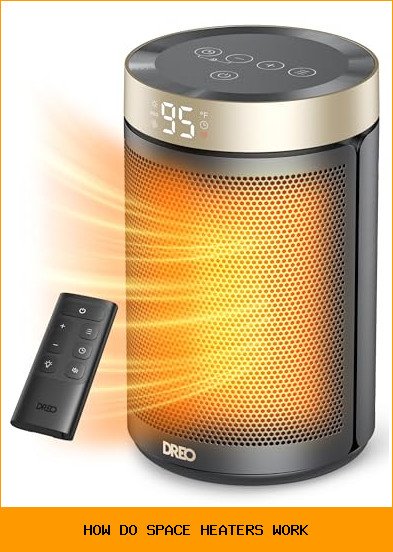
DREO Space Heater, Portable Electric Heaters for Indoor Use with Thermostat | 2026 Upgraded, 34dB Quiet, 12H Timer, 5 Mode, Remote, 1500W PTC Ceramic Fast Safety Heat for Office Bedroom Home, Gold
- Powerful heat that fits everywhere: DREO space heaters for indoor combines Hyperamics 1500W advanced PTC system with a new heat fu…
- Unbreakable safety:DREO goes beyond the unexpected to deliver peace of mind with every room heater. The innovative tilt-detection…
- Ultimate temperature control: The enhanced NTC chipset brings more precision to turn your space heater with thermostat into a smar…
You’ll walk away knowing exactly how these devices create heat, why they all seem to max out at 1500W, and which type makes sense for a bedroom versus a drafty garage.
The Basic Physics: Resistance Is Everything
Strip away the plastic casing and the digital display, and every electric space heater does the same thing. It pushes electricity through a material that resists the flow of current. That resistance creates friction at the atomic level, and friction produces heat. It’s the same principle that makes your toaster glow red and your phone warm up when it’s charging hard.
The material doing the resisting changes the experience. In a cheap coil heater, it’s bare metal wire that gets red-hot. In a ceramic heater, it’s a ceramic plate with metal embedded in it. In an oil-filled radiator, it’s a metal element submerged in thermal oil. But the core physics is identical: electrical energy converts directly into heat energy at nearly 100% efficiency.
That last point matters. Every watt of electricity a space heater draws becomes heat. There’s no energy lost to a motor or a compressor. A 1500W heater produces exactly 1500W of heat. A 750W heater produces exactly 750W. This means you can’t buy a more efficient space heater — only a more effective one for your specific room.
Convection vs. Radiant: Two Ways to Deliver That Heat
Here’s where the marketing language starts. Some heaters blow hot air around the room. Others sit there and beam heat at you like a tiny sun. Both work, but they work for different situations.
Convection Heaters (Fan-Forced and Oil-Filled)
Convection heaters warm the air itself. The air rises, circulates, and slowly raises the temperature of the whole room. This is what you want if you plan to sit in a room for a few hours and want the air around you to feel uniformly warm.
Fan-forced ceramic heaters are the most common. They pull cool air in from the back, push it across a hot ceramic element, and blow it out the front. The fan means they heat a room quickly, but the fan also makes noise. They’re best for home offices or living rooms where you’re awake and moving around.
Oil-filled radiators are the quiet cousin. They use convection but no fan. The oil heats up, the metal fins get warm, and the heat radiates outward naturally. They take longer to warm up — often 15 to 20 minutes before you feel much — but they keep putting out heat after you turn them off because the oil retains temperature. They’re ideal for bedrooms where you want silent, steady warmth overnight.
Radiant Heaters (Infrared and Quartz)
Radiant heaters don’t bother warming the air. They emit infrared radiation that travels in a straight line and warms whatever it hits — your skin, your chair, the floor in front of you. The air stays cold, but you feel warm.
This makes radiant heaters perfect for a workshop or a garage where heating the entire air volume would take forever. You point it at yourself and you feel the heat instantly. The downside is directional. Step out of the beam and you’re cold again. They’re also a fire risk if placed too close to furniture, because they don’t just warm the air — they warm surfaces.
Why 1500W Is the Magic Number
Walk through any store’s heater aisle and you’ll notice something. Almost every plug-in unit, regardless of brand or style, draws either 750W or 1500W. That’s not a coincidence. It’s physics and electrical code working together.
A standard US household outlet runs on a 15-amp or 20-amp circuit. At 120V, a 15-amp circuit can handle about 1800W before the breaker trips. Safety margins and continuous-load limits (which cap you at 80% of the breaker’s capacity) bring that down to roughly 1440W. So 1500W is the maximum safe load for a single heater on a standard circuit.
What does that mean for you? A 1500W heater can heat roughly a 150-square-foot room on average insulation. A 750W heater handles about half that. If your room is bigger, the heater will run continuously without ever catching up, and you’ll feel a draft near the floor.
Here’s the trade-off nobody mentions. Running a 1500W heater for one hour uses 1.5 kilowatt-hours of electricity. At the US national average of about 16 cents per kWh, that’s 24 cents per hour. Run it eight hours a day for a month and that’s nearly $58. A 750W heater costs half that but heats half the space. You don’t save money by buying a weaker heater — you just stay cold.
Thermostats and the ‘ECO’ Button: How They Actually Save You Money
You’ll see thermostats on most modern heaters, and they aren’t just a convenience. They’re the only thing that actually reduces your electricity bill.
A heater without a thermostat runs at full power until you unplug it. A heater with a thermostat runs until the room hits the set temperature, then shuts off. When the temperature drops a few degrees, it kicks back on. This cycling means the heater isn’t drawing 1500W continuously — it’s drawing that power in bursts.
If you set the thermostat to 68°F, the heater runs hard for the first 30 minutes, then cycles on for 5 minutes and off for 10. That’s roughly a 33% duty cycle, which cuts your energy use by two-thirds compared to running it flat out all night.
ECO mode on most heaters does something similar but with a twist. It uses a sensor to measure the temperature near the heater, and it adjusts the power output to maintain a comfortable level without overshooting. Some models, like the DREO Space Heater, pair that with a digital thermostat that lets you set the target anywhere from 41°F to 95°F in 1-degree increments. That precision matters more than you’d think. A heater that can hold a room at exactly 68°F uses noticeably less power than one that bounces between 66°F and 72°F.
The real energy savings come from heating only the room you’re in. Central heating warms the whole house. A space heater with a thermostat warms just the living room. If you spend most of your evening in one room, you can drop the central thermostat to 60°F and let the space heater handle the rest. That combination routinely cuts heating bills by 20-30% in my experience, especially in homes with poor ductwork.
Safety Features That Actually Matter (and One That Doesn’t)
Every space heater sold in the US has to pass basic safety tests, but not all safety features are created equal. Here’s what to look for and what’s just marketing.
Tip-over shutoff is non-negotiable. A heater that falls over and stays on can ignite a carpet in minutes. Most modern units have a tilt sensor that kills the power the moment the unit tips past a certain angle. The DREO model I mentioned uses a weighted sensor that’s more accurate than the old ball-and-switch designs, which is worth having if you have pets that bump into things.
Overheat protection is also standard. A thermocouple inside the heater shuts it down if the internal temperature exceeds a safe threshold. This protects you if the air intake gets blocked by a blanket or a pile of clothes.
Cool-touch exteriors matter if you have kids. Cheaper metal heaters can reach 200°F on the outside. Ceramic models with dual-wall construction stay under 120°F on the housing, which is still hot but won’t burn on contact.
The feature that gets oversold is the safety plug. The little prongs that are supposed to detect a loose outlet and shut off are a nice idea, but they don’t protect you from the more common problem: a 1500W heater on a circuit that’s already powering a TV, a computer, and a lamp. That’s what trips breakers, and no special plug prevents it. Your real protection is plugging the heater directly into a wall outlet, never into an extension cord or power strip.
| Heater Type | Best For | Heat Delivery | Noise | Warm-Up Time | Typical Wattage |
|---|---|---|---|---|---|
| Ceramic Fan-Forced | Living rooms, offices | Convection (blows warm air) | Low to moderate hum | 1-3 minutes | 750W / 1500W |
| Oil-Filled Radiator | Bedrooms, overnight use | Convection (radiates from fins) | Silent | 15-20 minutes | 700W / 1500W |
| Infrared / Radiant | Garages, workshops | Radiant (heats objects, not air) | Silent | Instant | 400W – 1500W |
| PTC Ceramic (Digital) | Any room with a thermostat | Convection with precise control | Very low (34dB range) | 2-5 seconds | 1500W |
Real Questions People Ask About Space Heaters
Is it cheaper to run a space heater or central heating?
It depends on your house and your habits. If you’re heating one room and you turn the central thermostat down, a space heater almost always wins. A 1500W heater costs about 24 cents per hour. Central heating burns gas or uses a 3-5kW electric furnace that heats the whole house. But if you try to heat a 400-square-foot open floor plan with a space heater, it’ll run at full power non-stop and you’ll lose money. The math favors space heaters for small, closed-off rooms only.
Can I leave a space heater on overnight?
You can, but you should be deliberate about it. Choose an oil-filled radiator or a heater with a precise thermostat — not a bare coil unit. Set the thermostat to a moderate temperature like 65°F, not the max. Make sure the heater is at least three feet from the bed, curtains, and any fabric. And never leave it running when you’re not home. Modern units with tip-over and overheat shutoff are much safer than older models, but they’re still heating elements inside your bedroom.
Why does my heater keep turning on and off?
That’s the thermostat working. The heater runs until the air near it hits the set temperature, then shuts off. When the air cools a few degrees, it cycles back on. If it’s cycling every 10 seconds, the heater is probably oversized for the room or the thermostat sensor is too close to the heat source. If it runs for 20 minutes and shuts off for 5, that’s normal and efficient.
Do space heaters dry out the air?
They do, but less than you’d think. Electric resistance heating doesn’t burn oxygen or remove moisture chemically, but the heating process lowers relative humidity. The air gets warmer, so it can hold more moisture, which makes the existing humidity feel lower. Fan-forced models circulate that dry air more, which is why they can cause dry eyes and scratchy throats. Oil-filled radiators are gentler. If you run a heater nightly, a small humidifier in the same room balances it out.
Are ceramic heaters better than metal coil heaters?
For most people, yes. Ceramic heaters heat up faster, run at lower surface temperatures, and are less likely to ignite dust or fabric on contact. Metal coil heaters are cheaper and simpler, but they get hot enough to be a fire hazard if something falls against them. The only advantage of a coil heater is that it’s nearly indestructible. If you need a heater for a harsh environment like a garage where it might get knocked around, a coil unit is fine. For indoor living spaces, ceramic is the safer call.
What to Look For Before You Buy
You don’t need the most expensive heater on the shelf. You need one that matches your room size and your usage pattern. For a bedroom, get an oil-filled radiator or a quiet ceramic model with a good thermostat. For a living room where you’re active, a fan-forced ceramic gets the room warm fast. For a garage or workshop, a radiant heater aimed at your workbench is the practical choice.
Check the wattage first. If it’s not 1500W, it’s probably rated for a small space. Check the thermostat range — a wider range gives you more control. Check the noise rating if you plan to sleep with it. And check the physical size. A heater that’s too tall to fit under your desk or too wide for the shelf you planned is useless no matter how well it works.
The DREO model I linked earlier is a solid example of what a modern PTC ceramic heater does well. It hits 1500W, it has a precise thermostat with a wide range, it runs at 34dB which is genuinely quiet for a fan heater, and it has a remote and a timer. It’s not the cheapest option, but it covers the bases that matter for indoor use. If you’re shopping, that’s the feature set to compare against.
Practical Takeaways You Can Use Right Now
- Match the wattage to the room: 1500W for up to 150 square feet, 750W for small offices or bathrooms.
- Use the thermostat. Running a heater at max with no thermostat wastes roughly 60% more electricity than letting it cycle.
- Plug directly into the wall. Extension cords and power strips are the leading cause of heater-related electrical fires.
- Keep three feet of clearance on all sides. Heaters need airflow to work safely, and fabric blocks that airflow fast.
- For bedrooms, choose a model rated under 40dB or an oil-filled radiator. Fan noise at 50dB+ will disturb light sleepers.
- Turn the central thermostat down when you run a space heater. That’s where the real bill savings come from.
- Check the current price on Amazon before buying — heater prices fluctuate seasonally, and last year’s model often drops significantly.



