You walk into the basement or utility closet, and there it is – a metal tank you’ve ignored for years. But now it’s making noises, or the water runs cold after five minutes, and you need to figure out what kind of water heater you have. It matters. A gas water heater and an electric water heater get repaired differently, have different parts, and different costs. Get it wrong and you might order a gas burner assembly for an electric tank, or worse, try to light a pilot when there’s no gas line.
The good news is you don’t need a technician to tell you. With a few minutes and a flashlight, you can figure it out yourself. This article walks you through three quick methods that work for any residential water heater – tank or tankless, standard or high-efficiency. By the end you’ll know exactly what you have, what to look for on the nameplate, and what the little clues mean. I’ll also cover a common RV water heater scenario because many readers ask about those too.
LDCRE
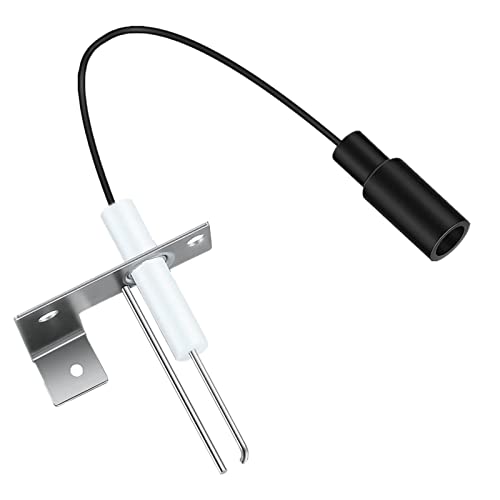
93868 Water Heater Igniter Electrode With Spark Probe,RV Water Heater Replacement Parts,Sensor Spark Probe for Atwood 93868, 2-Prong Igniter Repair For RV Emergency Camper GCH6-4E, GCH6-6E,1Pack
- [ Water Heater Igniter with Spark Probe ]: the Rv Water Heater Replacement Parts is a Local Sense Electrode Spark Probe for Atwood…
- [ Electrode Spark Probe Model Compatibility ]:The RV Water Heater Igniter Fits for Gch6-4e, Gch6-6e, Gch6-7e, Gch6a-10e, Gc6aa-10e…
- [ Check The Gap Before Installation ]: The Gap Between The Sparking Probe And The Ground Probe Should Be 1/8 Inch. The Probes Shou…
One thing I see all the time: homeowners confuse their furnace fuel with their water heater fuel. Just because your house heats with gas doesn’t mean the water heater is gas. Always check the unit itself. Let’s start.
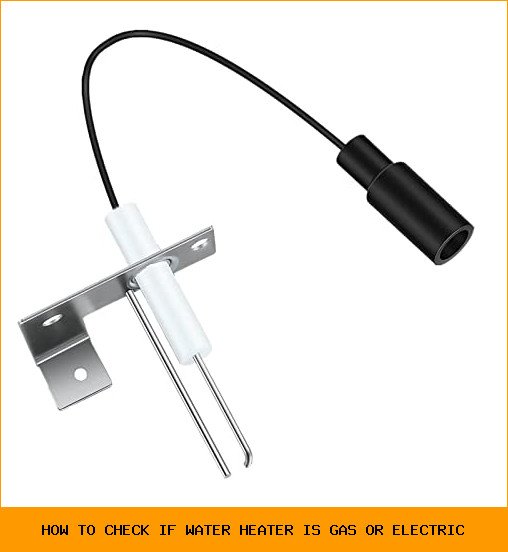
If your water heater uses a spark ignition system (common in RV or propane setups), you might eventually need a replacement igniter. The LDCRE 93868 Water Heater Igniter Electrode With Spark Probe is a direct-fit part for many Atwood models. It replaces the sensor and spark probe in one unit, and the gap between the spark probe and ground probe needs to be 1/8 inch – a detail I’ll mention again later because gap size matters a lot for reliable ignition.
Method 1: The Visual Check – What Does the Top Look Like?
Stand right in front of the water heater. If you see a metal exhaust flue – a pipe, often 3 to 4 inches wide, running from the top of the tank up into the ceiling or through the roof – it’s almost certainly gas. That flue carries combustion gases out. Electric water heaters produce no exhaust, so they have no flue pipe.
Now look at the top of the tank. On a gas water heater you’ll usually see a draft hood – that’s the bell-shaped piece where the flue connects. It’s sheet metal and often has a small opening for combustion air. Electric heaters have a flat or slightly domed top with no openings except maybe a wiring access panel.
Look for the burner access panel. Gas water heaters have a cover near the bottom, about 6 to 8 inches tall, with a peephole and sometimes a small window to see the burner flame. Behind that cover is the gas burner, pilot assembly (on older models), or a spark igniter. Electric water heaters have no such panel. Instead they have one or two access panels on the side of the tank where the heating elements and thermostats live. These are round or rectangular covers, usually held on by screws.
One more visual cue: a gas water heater will have a gas supply pipe running to the gas control valve (the box with a knob or electronic display). That pipe is typically black iron or corrugated stainless steel. Electric heaters have a power cable coming from the wall, often through a conduit, entering a junction box on the top or side of the tank.
Method 2: Check the Nameplate (Rating Plate)
Every water heater has a sticker or metal plate with the model number, serial number, and key specs. It’s almost always on the front or side, near the top quarter of the tank. On gas heaters it might be near the gas valve; on electric heaters it’s usually on the upper front face.
Look for these terms on the nameplate:
- BTU/hr – British Thermal Units per hour. That number (like 36,000 or 40,000) tells you it burns fuel. Only gas water heaters have a BTU rating. Electric heaters are rated in kilowatts (kW) – typical sizes are 4.5 kW, 5.5 kW, or 6 kW for a standard electric tank.
- Voltage – If you see 120V, 208V, 240V, 277V, it’s electric. Gas units don’t list voltage (though they might have a small 120V connection for the electronic controls or spark igniter).
- Fuel type – Some plates explicitly say ‘Fuel: Natural Gas’ or ‘Fuel: Propane’ or ‘Fuel: Electric.’
- Model number – You can search the model number online. I’ve done this many times. Just type it into Google and you’ll get the manufacturer’s spec sheet. That sheet will tell you the fuel type and tank capacity.
If the nameplate is faded or damaged, try shining a flashlight at an angle. Sometimes the stamping is still readable under the right light. Take a photo and zoom in – you’d be surprised what a phone camera can pick up.
Method 3: Listen and Smell – Running and Off
Turn on a hot water faucet somewhere in the house. Wait for the heater to kick on. Listen. A gas burner makes a distinct whoosh when it ignites – like a large gas stove burner turned up high. You might hear a click (the spark igniter) then a low rumble. The burner runs continuously while the water is heating, then shuts off when the thermostat is satisfied.
An electric water heater is nearly silent. You might hear a faint hum if the elements are working, or a click from the thermostat relay, but nothing like a gas burner. If you stand close, you’ll hear the water inside the tank shimmering – a soft, continuous sizzling sound as the electric elements heat the water. That’s it.
Smell is another clue – but be smart about it. Sniff near the base of the unit (not directly at the exhaust). A faint odor of gas or rotten eggs could mean a small leak. Electric water heaters don’t smell like anything when operating normally. If you smell gas ever, get out and call the gas company. Don’t mess with it.
Comparison Table: Gas vs. Electric Water Heater at a Glance
| Feature | Gas Water Heater | Electric Water Heater |
|---|---|---|
| Exhaust flue pipe | Yes – metal pipe from top | No flue pipe |
| Burner access panel | Near bottom, 6-8 inches tall | No bottom panel |
| Element/thermostat covers | None on side | One or two round/rectangular covers on side |
| Rating plate shows | BTU/hr (e.g. 36,000) | kW (e.g. 4.5 kW) and voltage |
| Sound when running | Whoosh and rumble from burner | Faint sizzle or hum |
| Pilot light (older models) | Yes – small blue flame | No pilot |
| Common repair parts | Thermocouple, gas valve, igniter | Heating elements, thermostats |
What About Tankless and RV Water Heaters?
Tankless water heaters – both gas and electric – are a little different. Gas tankless units have a burner and a flue, so the flue pipe check still works. But the flue is often on the top or side, and much smaller than a tank flue. Electric tankless units have no flue and are usually wall-mounted boxes with thick power cables – sometimes 60-amp or more.
For RV water heaters (like Atwood or Suburban), the same principles apply but on a smaller scale. Look for a gas line connection and an exhaust vent on the exterior wall. Many RV water heaters are propane-only. The igniter electrode is a common failure point. If the burner doesn’t light and you hear the spark clicking but no flame, check the gap between the spark probe and ground probe. It should be exactly 1/8 inch – about the thickness of a dime. The LDCRE replacement igniter we mentioned earlier comes pre-gapped, but you should still verify before installing. If you don’t see a spark jumping cleanly, replace the probe.
One quick story: a friend of mine spent two days troubleshooting his RV hot water. He kept thinking the gas valve was bad. Turned out the spark probe was cracked and grounding out to the bracket. A $16 part fixed it. The gap was 3/16 inch instead of 1/8. That tiny difference stopped the whole system from working.
5 Real Questions People Ask About This
Can I tell if my water heater is gas or electric by looking at the power cord?
Only partly. If you see a thick electrical cable (usually 10 or 12 gauge) going into the top or side of the heater, it’s electric. If there’s no cable at all, it’s gas – but most gas heaters still have a thin power cord for the electronic controls. So the presence of a heavy cable means electric, but a thin cord doesn’t rule out gas. Better to check for a gas pipe.
What if the water heater has both a gas line and a power cord?
That’s normal for a gas water heater that uses electronic ignition, a power vent fan, or a recirculation pump. The gas line provides fuel, and the power cord runs the controls. It’s still a gas water heater. The fuel type is determined by how it heats the water – combustion or resistance elements. If you’re unsure, look at the burner access panel. If there’s a burner, it’s gas.
Is there a way to tell from the water heater serial number or model number?
Yes. Write down the model number (starts with letters, then numbers). Search it online. Most manufacturers have a lookup tool. For example, a Bradford White model starting with ‘RE’ usually means electric, while ‘RG’ means gas. Rheem uses ‘PRO’ followed by a number – gas models often have ‘G’ in the model code. But the safest is to Google the full model number. You’ll find the spec sheet within seconds.
Why does my water heater have a pilot light but no gas pipe running to it?
This is impossible. A pilot light requires a gas supply. If you see a flame, there must be a gas pipe somewhere – maybe behind the unit or concealed. Look more carefully. The gas pipe could be coming from below, running inside a chase, or from a propane tank outside. If you truly can’t find a gas pipe, you might be looking at a gas water heater with a very well-hidden supply line, or you’re mistaken about seeing a pilot. Another possibility: it’s a gas water heater that’s been converted to propane and the tank is remote.
Which type is more common in older homes – gas or electric?
In most of the US, gas water heaters are more common in older homes (built before 1980) because natural gas was cheap and widely available. Electric became more popular from the 1980s onward, especially in regions without gas lines. Region matters. In the Northeast and Midwest, gas dominates. In the Southeast, electric is very common. If your house was built in the 1960s and has a basement, odds are it’s gas. If it’s a 1990s slab-on-grade in the South, likely electric.
What You Should Do Right Now
- Look at the top of your water heater. See a flue pipe? It’s gas. No flue? It’s electric.
- Find the nameplate. Check if it lists BTU/hr (gas) or kW/voltage (electric).
- Listen when hot water runs. A whoosh and rumble = gas. Silence + faint sizzle = electric.
- If you own an RV with an Atwood water heater, verify the igniter probe gap is exactly 1/8 inch. Order a replacement like the LDCRE 93868 if the spark is weak.
- Take a photo of the model number. Keep it in your phone. When you need parts or help, you’ll have the info ready.
- Never assume based on your furnace fuel. Check the water heater itself. I’ve seen a gas furnace paired with an electric water heater plenty of times.
- If you smell gas or see rust around the burner area, call a professional. Don’t try to fix a gas leak yourself.


