It’s January. The thermostat in the hallway reads 62°F, but the room you actually sit in feels like 55°F. You don’t want to heat the whole house just to keep your feet warm, so you grab a space heater. But then the electric bill arrives, and you wonder if that little box is secretly eating your money. It might be.
Most space heaters are 100% efficient at converting electricity to heat. That sounds great, but it also means every watt you run costs you the same. The real difference between an energy hog and a smart purchase comes down to how the heater controls its output, how it distributes warm air, and whether you sized it correctly for the room. This article walks you through those decisions with specific numbers, not vague advice.

DREO
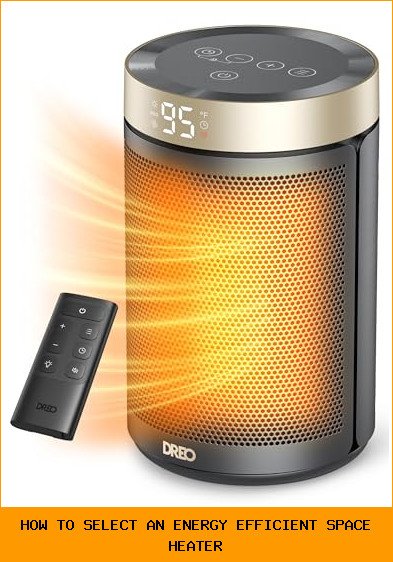
DREO Space Heater, Portable Electric Heaters for Indoor Use with Thermostat | 2026 Upgraded, 34dB Quiet, 12H Timer, 5 Mode, Remote, 1500W PTC Ceramic Fast Safety Heat for Office Bedroom Home, Gold
- Powerful heat that fits everywhere: DREO space heaters for indoor combines Hyperamics 1500W advanced PTC system with a new heat fu…
- Unbreakable safety:DREO goes beyond the unexpected to deliver peace of mind with every room heater. The innovative tilt-detection…
- Ultimate temperature control: The enhanced NTC chipset brings more precision to turn your space heater with thermostat into a smar…
You’ll learn what to check on the spec sheet, how to match heater size to room size, and which features are worth paying for. You’ll also see why the cheapest unit on the shelf often ends up costing more per winter than a slightly pricier one with a good thermostat.
One solid option that checks many of these boxes is the DREO Space Heater. It uses a 1500W PTC ceramic system with a thermostat that adjusts in 1°F increments, which matters more than you might think for energy use.
Start With the Wattage, Then Look at the Controls
Every space heater sold in the US draws either 750W or 1500W on the high setting. That’s not a coincidence. A standard 15-amp household circuit can handle 1800W max, so manufacturers stay under that. If you see a heater claiming 2000W, it probably needs a dedicated circuit or it will trip your breaker.
Here’s the part most people skip: 1500W running constantly for one hour uses 1.5 kWh. At the national average electricity rate of about 16 cents per kWh, that’s 24 cents per hour. Run it 8 hours a day for a month, and that’s roughly $58 just for one room. That number can double if you live in a state with high rates like California or Hawaii.
So the goal is not to find a heater that uses less power. It’s to find one that turns itself off or dials down when the room reaches your target temperature. A heater with a simple mechanical dial might run at full power until it overheats internally, then shut off, then kick back on. That cycle wastes energy because it overshoots the temperature you actually want.
Look for a heater with a digital thermostat that reads the room temperature, not the temperature inside the heater casing. The DREO model mentioned above has an NTC chipset that lets you set temperatures from 41°F to 95°F in 1°F steps. That precision means you can set it to 68°F instead of cranking to 75°F and then opening a window.
Also check whether the heater has an ECO or energy-saving mode. These modes typically run the heater at lower wattage until the room drops a couple degrees below your set point, then kick back up. That cycling saves maybe 15-20% compared to running full power continuously.
Match the Heater Size to Your Room
Bigger is not better. A 1500W heater in a tiny bathroom will cycle on and off constantly, and the thermostat will read the warm air right next to the unit, not the far corner where you stand. A 750W heater might actually be the right tool for a small space.
Here’s a simple rule: a 1500W heater can comfortably warm about 150 to 200 square feet if the room has average insulation and 8-foot ceilings. That’s a typical bedroom or small office. For a bathroom under 50 square feet, a 750W heater is usually enough and safer around water.
For a large open living room with vaulted ceilings, no portable plug-in heater will do the job well. You’ll run it for hours and still feel cold because heat rises and collects near the ceiling. In that case, you’re better off with a radiant heater aimed directly at your chair, not a convection heater trying to warm the whole space.
Pay attention to the heating technology too:
- Ceramic (PTC): Fast warm-up, good for small to medium rooms. They use a ceramic element with a fan to push heat out. Energy use is steady, and most have good safety shutoffs.
- Infrared / Radiant: Heats objects and people directly, not the air. Great for spot heating. You can sit 5 feet away and feel warm while the rest of the room stays cold. Uses the same 1500W max, but you can run it less because you feel the heat sooner.
- Oil-filled radiator: Slower to warm up, but the heat lingers after shutoff. Good for bedrooms where you want steady heat through the night. The surface stays hot, so keep it away from pets and kids.
- Fan-forced (bare wire): Cheap, loud, and hot on the surface. They heat fast but lack precise temperature control. Not ideal for energy savings.
For most people, a ceramic heater with a decent thermostat is the sweet spot. It heats quickly, and the fan helps distribute warmth so you don’t have to sit right on top of it.
Read the Fine Print: Thermostats, Timers, and Fan Speeds
The thermostat is the single most important feature for energy efficiency. A heater without one is just a resistor with a switch. You’ll run it, get too hot, turn it off, then get cold again. That cycle wastes more electricity than any other mistake.
Here’s what to look for in a thermostat:
- Digital display with set point: You should be able to pick a specific temperature. Analog dials are usually inaccurate by 5-8°F.
- 1°F adjustment increments: Some heaters only let you set 60, 65, 70, 75. Being able to set 68°F instead of 70°F saves roughly 3-5% on your heating cost per degree.
- Thermostat location: Ideally, the sensor is in the airflow path but not right next to the heating element. Some cheap heaters measure the internal temperature, so they shut off when the casing is hot but the room is still cold.
- ECO mode: This usually drops the target temperature by a few degrees when you leave the room or when it senses no motion. Not all heaters have motion sensing, but a simple ECO mode that runs at lower wattage helps.
Timers are also worth having. A 12-hour timer lets you set the heater to turn off 30 minutes after you fall asleep, or turn on 20 minutes before you wake up. The DREO model has a 12-hour timer and a memory function that remembers your last settings, so you don’t have to reprogram it every night.
One thing to note: fan noise matters for bedrooms. A heater with a brushless DC motor runs quieter than a standard AC motor. The DREO runs at 34dB, which is about the same as a quiet library. If you’re a light sleeper, that’s the difference between using the heater and leaving it off because it keeps you awake.
Safety Features That Also Save Energy
Safety and efficiency overlap more than you’d expect. A heater that shuts off when it tips over is not just protecting your carpet — it’s also preventing a runaway heating session that wastes electricity. But here’s the catch: some tip-over sensors are mechanical and can fail if the heater lands a certain way. Look for a tilt-detection sensor, which uses an accelerometer instead of a simple switch. The DREO uses that type, and it’s more reliable.
Overheat protection is standard on most modern heaters, but check that it’s built with V0 flame-retardant materials. That rating means the plastic casing resists catching fire if the internal components fail. It’s not a feature you’ll ever test, but it’s worth knowing it’s there.
Another energy-related safety point: always plug the heater directly into a wall outlet. Extension cords and power strips are not rated for continuous 1500W loads. A cord that gets warm is wasting energy as heat, and it’s a fire hazard. The DREO includes a safety plug that helps prevent overheating at the outlet connection.
Compare the Options Side by Side
Here’s a practical comparison of the main heater types to help you decide based on your room size and how you use the space.
| Heater Type | Best For | Warm-up Time | Temperature Control | Typical Wattage | Energy Notes |
|---|---|---|---|---|---|
| Ceramic fan (PTC) | Bedrooms, offices, small living rooms | 1-2 minutes | Digital thermostat, 1°F steps | 750W / 1500W | Good cycling, ECO modes common |
| Infrared / Radiant | Spot heating, drafty rooms | Instant | Often manual or low/high | 400W – 1500W | Feels warm sooner, but no room-wide control |
| Oil-filled radiator | Bedrooms, overnight use | 10-15 minutes | Thermostat, but often coarse | 600W – 1500W | Heat lingers after shutoff, good for steady temps |
| Fan-forced (bare wire) | Quick bursts, garages | Seconds | Usually just on/off | 1500W | Poor temperature control, runs full power until manually switched off |
Look at the ‘Temperature Control’ column. That’s where the energy savings hide. A heater with a precise thermostat will pay for itself in one winter compared to a cheap on/off unit.
Five Questions People Ask About Energy Efficient Heaters
Does a 1500W heater always use 1500W?
No. That’s the maximum draw. A heater with a thermostat will cycle on and off to maintain the set temperature. In a well-insulated room, it might run 50% of the time, meaning it averages 750W over an hour. In a drafty room, it might run 90% of the time. The wattage rating is the ceiling, not the average.
Is it cheaper to run a space heater or turn up the central heating?
It depends on how much of the house you need to heat. If you live alone in a 2-bedroom apartment and spend all evening in one room, a space heater is almost always cheaper. You’re heating 150 square feet instead of 800. If you have a family spread across multiple rooms, central heating is more efficient because the space heater would run everywhere anyway.
What does ‘ECO mode’ actually do?
It varies by brand, but generally it lowers the target temperature by a few degrees or runs the heater at reduced wattage when the room is already close to the set point. Some models also have a sensor that detects when you leave the room and drops the temperature. Over a night, that can save 10-15% compared to running at a constant high setting.
Should I buy a heater with a fan or without?
If you want to warm a whole room evenly, get a fan. The fan circulates warm air so the far corner isn’t freezing. If you only need to warm the spot where you sit, a radiant heater without a fan is quieter and uses less energy because you can run it for shorter periods. The trade-off is that radiant heaters don’t warm the air behind you.
How do I know if a heater is actually efficient?
Look for a thermostat with a digital display and fine temperature increments. Check if it has an ECO mode or a timer. Look at the materials rating (V0 flame retardant is good). And read the noise spec — a quieter motor usually means a more efficient brushless DC design. The marketing will say ‘efficient’ on every box, so trust the controls, not the label.
What to Do With This Information
You don’t need to overthink this. Here’s the short version of what matters:
- Buy a heater with a digital thermostat that adjusts in 1°F steps. That’s your biggest energy saver.
- Match the wattage to the room — 1500W for up to 200 sq ft, 750W for small bathrooms.
- Use ECO mode or a timer so the heater isn’t blasting all night.
- Plug directly into the wall. Extension cords waste energy and create fire risk.
- Consider a ceramic heater with a fan for even heat distribution.
- Check the noise level — if it’s too loud, you’ll turn it off and lose all efficiency.
- Don’t pay extra for ‘smart’ features you won’t use. A remote control and a timer are enough.
The right heater is the one you’ll actually use because it’s quiet, safe, and holds the temperature you set. A few extra dollars on a better thermostat saves more over a winter than any discount on the purchase price.



