You walk downstairs, flip the light on, and push the water heater’s test button. Nothing. No hot water coming from the tap. Your first thought: the breaker must be off. But is it really? Breaker panels can be misleading — a handle that looks off might actually be on, and a tripped breaker often looks like it’s still in the ON position. That confusion costs people time and sometimes money on unnecessary service calls.
This article walks you through exactly how to confirm whether your water heater breaker is off, tripped, or working fine — using your eyes, a multimeter, and the behavior of the heater itself. We’ll cover electric and gas water heaters, because the answer changes depending on what fuels your tank. By the end you’ll know what to do next, and when to call a pro.

Reliance
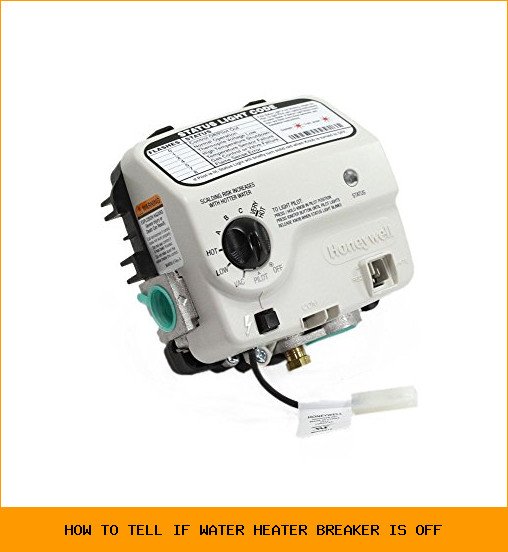
Reliance Water Heater Natural Gas Control Valve 100112336 Thermostat Compatible with A.O. Smith, Reliance, State, and American Branded Water Heaters
- Note : This is a gas control valve and should be installed by a professional and not by homeowner as that potentially voids any wa…
- This product adds a great value
- This product is manufactured in China
If you have a gas water heater, the problem isn’t usually a breaker — it’s the gas control valve. A common replacement part for units from A.O. Smith, Reliance, State, and several other brands is the Reliance Natural Gas Control Valve (ASIN B00CGASYAK). This valve manages gas flow and temperature regulation; when it fails, the heater won’t fire even with gas supply on. Professional installation is recommended because homeowner installation can void warranties.
Start With the Panel: What a Tripped Breaker Actually Looks Like
Open your electrical panel cover. Look at the breaker labeled ‘Water Heater’ — it should be a double-pole 30-amp breaker (or occasionally 20-amp on smaller units). A breaker that’s fully ON will have its handle pushed firmly toward the panel’s center or toward the ON marking. A breaker that’s fully OFF will be pushed away.
But a tripped breaker doesn’t land in either position. It sits in between — usually at a 45-degree angle. In many Square D and Eaton panels, a tripped breaker looks like it’s slightly past OFF, but not quite all the way. You might need to push it fully to OFF first before you can reset it to ON. If the handle feels loose or floppy, it’s definitely tripped.
One caveat: older panels (especially Federal Pacific or Zinsco) can have breakers that don’t trip cleanly. The handle might stay in the ON position even after a dead short. That’s rare, but good to know if your house was built before 1980. In those cases, no visual check is reliable — you have to test voltage.
Use a Multimeter to Confirm Zero Voltage
Visual inspection isn’t foolproof. The only definitive way to tell if your water heater breaker is off is to measure voltage at the water heater’s junction box or at the breaker terminals themselves. Safety first: turn off the main breaker or verify the panel’s dead before opening it. Wear rubber-soled shoes and keep one hand in your pocket.
At the water heater, remove the access cover on the upper thermostat (for electric heaters). Set your multimeter to AC voltage, range 250V or auto. Place one probe on each of the two incoming wires (usually black and red). If the breaker is ON, you should read 220 to 250 volts. If you read 0 volts, the breaker is either off, tripped, or the wiring between panel and heater is broken.
Now test at the breaker itself. Carefully remove the panel cover (you should see the breaker terminals). Place one probe on each breaker terminal. Again, 0V means the breaker is off. But if you read 240V at the breaker and 0V at the heater, the problem is in the wiring or the breaker’s internal connection, not the switch position.
A common mistake: testing from a single wire to ground. That will show 120V even if the breaker is off because of capacitive coupling or shared neutrals. Always test between the two hot wires.
What the Water Heater Tells You (Without Touching Any Wires)
You don’t always need a meter. The water heater’s behavior gives clues. Here are three patterns I’ve seen over the years:
- No hot water at all, and the tank is cold to the touch. That’s almost always a power problem — breaker off or tripped, or a failed high-limit switch. For electric heaters, if the tank is stone cold but the breaker is on, the upper thermostat might be dead.
- Lukewarm water for a few minutes, then cold. That means the lower element is heating but the upper element isn’t. Breaker is probably fine; replace the upper element.
- Hot water at one faucet but not another. That’s a plumbing issue or a failed mixing valve, not a breaker problem.
For gas water heaters, no hot water almost always means the burner isn’t firing. You’ll hear clicking from the igniter or see an error code on the gas valve. That’s where the Reliance control valve comes in — if the valve won’t open, you get cold water even with the breaker on (gas heaters still need 120V for the electronics).
Symptom Comparison Table
| What You Notice | Most Likely Cause | Quick Check |
|---|---|---|
| No hot water, tank cold | Breaker off/tripped (electric) or thermostat failure | Check breaker position; measure voltage at heater |
| No hot water, tank warm but not hot | Gas valve closed (gas) or bad upper element (electric) | Listen for burner ignition; test upper element resistance |
| Breaker keeps tripping after reset | Short circuit in element, wiring, or control board | Check element resistance to ground (should be >10k ohms) |
| Hot water runs out faster than usual | Sediment buildup or failed thermostat, not breaker | Flush tank; check thermostat calibration |
| Breaker handle won’t stay in ON position | Breaker is faulty or circuit is still shorted | Replace breaker; do not force it on |
Frequently Asked Questions
Can a tripped breaker damage my water heater?
Usually no. The breaker trips to protect the wiring and heater from overload. But repeated tripping can stress the breaker and the heater’s components. If it happens more than once in a month, find the root cause — don’t just reset and hope.
How do I reset the breaker for a water heater?
First, push the breaker handle firmly to the OFF position. Wait 10 seconds. Then push it straight back to ON. If it trips again immediately, do not keep resetting. That indicates a serious short. Call an electrician.
Why does my water heater breaker keep tripping?
Three common reasons: a shorted heating element (element resistance to ground is zero), water leaking into the thermostat housing, or an undersized breaker. Check the element with a multimeter; if it shows continuity to ground (less than 10k ohms), replace it. Also check the wire connections for corrosion.
How long does it take for water to reheat after resetting the breaker?
For a 50-gallon electric water heater, about 60 to 90 minutes. Gas heaters recover in 30 to 40 minutes. If you get no hot water after two hours, the breaker may still be off or the heater has a different issue.
Can I use a multimeter to test if the breaker is off without removing panel covers?
Partially. You can buy a non-contact voltage tester and wave it near the wire coming into the water heater. If it beeps or lights up, the breaker is on. But these testers can give false positives from nearby wires. For a definitive answer, you need a multimeter at the breaker terminals or the heater’s junction box.
What to Do Now — Your Next Moves
- Check the breaker visually and see if it sits at a 45-degree angle. If so, reset it fully.
- If the breaker looks on but you still get cold water, use a multimeter to measure voltage at the water heater. Zero volts means the breaker is off or the wiring is broken.
- For gas water heaters, check the gas control valve for error codes. If the valve is non-responsive, consider replacing it with the Reliance Natural Gas Control Valve (ASIN B00CGASYAK). Professional install is recommended.
- If the breaker resets but trips again within 10 seconds, you have a short. Turn the breaker off and call an electrician.
- Always test between the two hot wires, not from one wire to ground — otherwise you’ll get false readings.
- If the water heater is electric and the breaker is fine, the problem is likely a failed heating element or thermostat. Those are cheaper to replace than a new water heater.


