Understanding Saunas: A Quick Overview
Many people find themselves in search of relaxation and therapeutic benefits and often consider saunas as a solution. Whether it’s after a long week at work or a rigorous workout, the idea of unwinding in a sauna is appealing. However, with different types of saunas available, such as infrared and traditional Finnish, it can be confusing to know which option suits your needs best.
This article examines the key differences between infrared saunas and traditional Finnish saunas. Readers will learn about their unique features, benefits, and potential drawbacks. By the end, you’ll have a clearer understanding of which sauna type may work best for your lifestyle.

Himouta
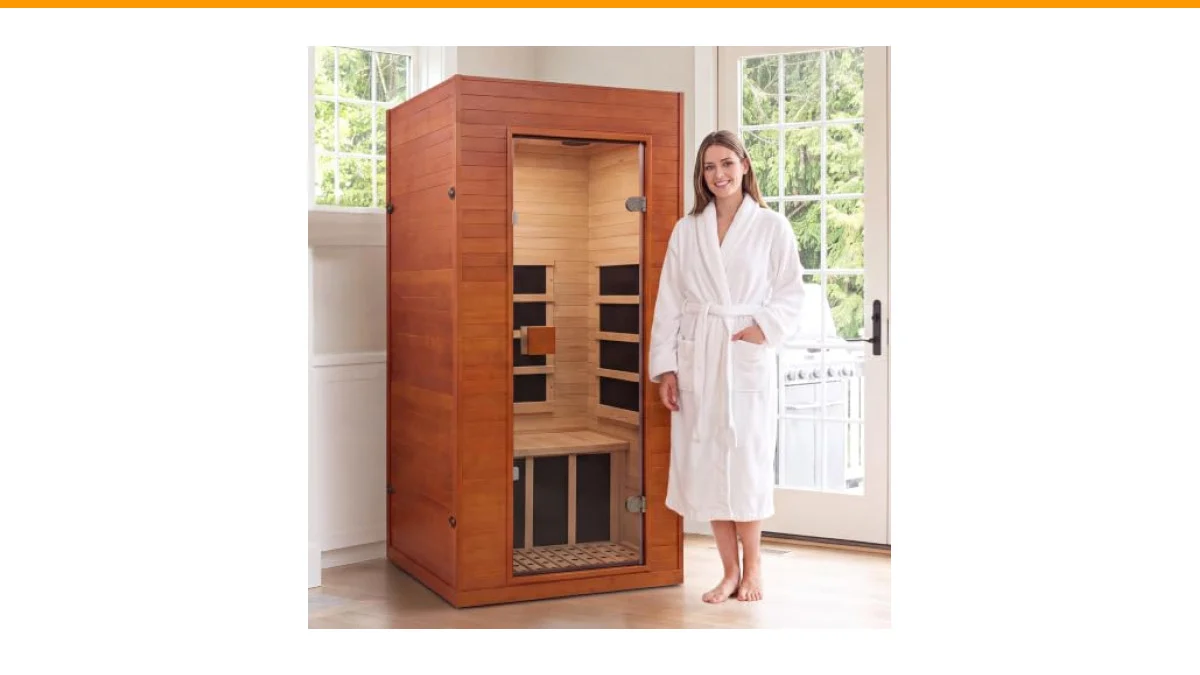
Himouta Infrared Sauna for Home, 1-Person Canadian Hemlock Wood Far Infrared Sauna Cabin with Smart Voice Control and Bluetooth Speakers, Low EMF Personal Spa Relaxation
- Smart Voice Control:Elevate your wellness routine with advanced smart voice recognition. No need to sit up or press rigid buttons…
- 100% Canadian Hemlock:Crafted from kiln-dried Canadian Hemlock wood with extra-thick wooden panels and a double-wall insulated str…
- Bluetooth Wireless Home Audio System:This infrared saunas for home unit features premium built-in stereo speakers with seamless wi…
For those interested in an infrared sauna, consider the Himouta Infrared Sauna. This compact sauna features smart voice control and a built-in audio system, enhancing your relaxation experience at home.
Heating Mechanisms: How They Work
Okay, but how does each sauna heat up? Traditional Finnish saunas use a stove to heat the air, which then warms your body. These saunas typically operate at higher temperatures, around 150°F to 195°F (65°C to 90°C). The heated air creates a dry environment, but you can add water to the rocks for a brief increase in humidity.
In contrast, infrared saunas use infrared heaters to emit light that directly warms your body without significantly heating the air around you. This allows for lower temperatures, usually between 120°F to 140°F (49°C to 60°C). Many users find this gentler approach more comfortable, especially for longer sessions.
Health Benefits: What to Expect
What health benefits can you expect from each type? Traditional Finnish saunas are known for promoting relaxation and stress relief. The high temperatures can also help improve circulation, alleviate muscle soreness, and enhance skin health.
Infrared saunas offer similar benefits, but some studies suggest they may provide additional advantages. Users often report benefits like detoxification, weight loss through increased heart rate, and improved skin tone. The lower temperatures can make it easier for those who are sensitive to heat, allowing for longer sessions.
Maintenance and Setup: What You Should Know
So, what about maintenance? Traditional Finnish saunas require more upkeep than infrared saunas. The wood and heating elements need regular cleaning and occasional repairs. Installation can also be more complex, often requiring professional help.
Infrared saunas, like the Himouta model, are generally easier to set up. Many are designed for quick, modular assembly and plug into standard electrical outlets. Maintenance is typically straightforward, focusing on keeping the heaters and interior clean.
Comparison Table: Infrared vs Traditional Finnish Saunas
| Feature | Infrared Sauna | Traditional Finnish Sauna |
|---|---|---|
| Heating Method | Infrared heaters | Stove heating |
| Temperature Range | 120°F to 140°F (49°C to 60°C) | 150°F to 195°F (65°C to 90°C) |
| Humidity Level | Low (dry) | Can be high (wet) |
| Installation Complexity | Easy (modular) | Moderate to difficult |
| Health Benefits | Detoxification, relaxation, muscle relief | Relaxation, improved circulation, skin health |
| Maintenance | Minimal | Moderate |
1. What is the primary difference between infrared and traditional saunas?
The main difference lies in the heating method. Infrared saunas use infrared light to directly warm the body, while traditional saunas use a stove to heat the air.
2. Which sauna is better for detoxification?
Infrared saunas are often touted for their detoxification benefits. The lower temperatures can lead to a deeper sweat at a comfortable level.
3. Can I use an infrared sauna daily?
Many users find daily use comfortable. However, it’s wise to listen to your body and adjust frequency based on personal comfort.
4. Are there any risks associated with using saunas?
Both types of saunas can pose risks if used excessively, such as dehydration or overheating. Always stay hydrated and consult a physician if you have health concerns.
5. How much does an infrared sauna cost?
The cost varies widely based on size and features. Entry-level models can start around a few hundred dollars, while high-end options may reach thousands. Check the current price on Amazon for specific models.
Final Observations
- Infrared saunas operate at lower temperatures, making them more comfortable for longer sessions.
- Traditional Finnish saunas provide a more intense heat experience, favored by many sauna enthusiasts.
- Maintenance and installation are generally easier with infrared models.
- Both types offer health benefits, but specific advantages may vary.
- Consider personal preferences and health needs when choosing a sauna type.
- The Himouta Infrared Sauna combines modern features for a convenient home experience.
- Always consult a healthcare provider if unsure about sauna use, especially for those with pre-existing conditions.


