You walk past your water heater in the basement and feel heat radiating off it like a cast-iron skillet. That warmth is money leaving your pockets. Most people assume a gas water heater wastes heat by design, and slapping an insulation blanket on it is an easy fix. Problem is, you’ve also heard that wrapping a gas unit can be dangerous — a fire risk, even. So which stories are true?
This article walks through the real trade-offs. You’ll learn exactly when a gas water heater benefits from extra insulation, when it doesn’t matter, and when a blanket can actually cause trouble. I’ll share numbers you can use to decide if the payback makes sense for your setup, plus a few safety rules that aren’t up for debate.
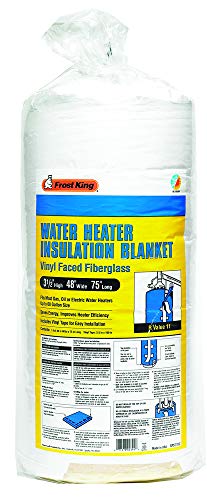
Frost King
Frost King SP57/11C All Season Water Heater Insulation Blanket, 3” Thick x 48” x 75”, R10
- Vinyl backed fiberglass insulation blankets are designed for gas, oil or electric water heaters up to 60 gallon size
- Improves heater efficiency
- 3” thick x 48” x 75”, R10
If you decide a blanket is right for you, I’ll mention one product I’ve used that works without hassle. But first, the straight talk.
One product that does the job cleanly is the Frost King SP57/11C All Season Water Heater Insulation Blanket. It’s a vinyl-backed fiberglass blanket 3 inches thick with an R-value of 10, designed for gas, oil, or electric heaters up to 60 gallons. The package includes plastic tape for sealing seams, so you don’t have to hunt for separate supplies. It’s not fancy, but it gets the job done without fuss.
How Much Heat Does a Gas Water Heater Actually Lose?
Standing heat loss is the real enemy. Every hour your water heater isn’t firing, the water inside cools down a little. The tank has factory insulation — usually 1 to 2 inches of foam or fiberglass with an R-value around 5 to 10. But many budget models skimp. If you can feel noticeable warmth on the outside of the tank with your hand, you’re losing heat.
Here’s a concrete example. Suppose your tank holds 40 gallons of water heated to 120°F in a 60°F basement. A bare tank with R-5 loses roughly 40 to 60 Btu per hour per square foot of surface area. Over a full day, that’s around 10 to 15 kilowatt-hours worth of gas energy wasted. That adds up to maybe $30 to $50 per year depending on local gas prices.
Adding an R-10 blanket on top of factory R-5 cuts that loss by about two-thirds. You’d go from $40/year lost to maybe $13. A $25 blanket pays for itself in under a year in that scenario. But there’s a catch — that math only works if your tank is in a cold or unconditioned space. A water heater inside a heated living area loses less because the surrounding air is warmer. In that case, the heat isn’t wasted; it’s just helping heat your home. The blanket doesn’t save much.
So the first question you need to answer is: where does your tank live?
Where Your Water Heater Lives Changes Everything
If your gas water heater is in an unheated basement, attached garage, crawl space, or outdoors, heat loss is real. Those spaces stay colder in winter, sometimes below 50°F. The temperature difference between tank and room is larger, so heat escapes faster. A blanket makes a noticeable difference there.
But if your water heater sits inside a conditioned part of your home — a heated basement, a utility closet off the kitchen — the story flips. The heat that leaves the tank is still inside your home’s envelope. Your furnace doesn’t need to work as hard to replace that heat. In mild climates or well-insulated homes, the net savings from a blanket can be close to zero.
I put a blanket on my own gas heater in an unheated garage. Before, the tank felt warm to the touch even after no hot water use for hours. Afterwards, the outside surface was barely above room temperature. My gas bill dropped about $6/month that winter. Not huge, but the blanket paid for itself in four months.
One more thing: if your water heater is in a space that gets below freezing, a blanket won’t prevent pipes from freezing, but it does help the tank maintain temperature longer during power outages.
Safety Rules for Gas Water Heaters — Don’t Skip This
Here’s where the danger warnings come from. Gas water heaters have combustion air intakes and exhaust vents that must not be covered. The burner underneath needs oxygen to burn cleanly. A blanket that blocks the air intake can cause incomplete combustion, producing carbon monoxide. That’s not a theoretical risk — it’s a real one.
Every gas water heater has a label on the tank that says something like: ‘Do not install insulation within X inches of the flue or combustion air openings.’ Follow that. The standard rule is to keep the blanket at least 6 inches away from the flue pipe on top, and never wrap below the draft hood. Also, never cover the access panel for the thermostat or burner. If your blanket doesn’t have cutouts for those, cut them yourself.
The Frost King blanket I mentioned comes with plastic tape, but it’s the kind meant for sealing the blanket edges. Some people think tape can replace proper clearance. It can’t. Leave air gaps where the manufacturer says.
And here’s a less obvious problem: moisture. A blanket traps condensation between the tank and the blanket if the air is humid. Over years, that can rust the outer jacket of the water heater. If your basement is damp, check the bottom of the blanket a couple times a year. If you see water stains, the blanket may be doing more harm than good.
Comparing Insulation Options
Not all water heater blankets are the same. Some are thin foil-faced bubble wrap, others are thick fiberglass. R-value matters, but so does fit. Here’s a comparison of the main types you’ll find.
| Insulation Type | Typical R-Value | Best For | Trade-offs |
|---|---|---|---|
| Fiberglass with vinyl face (like Frost King SP57/11C) | R-10 (3 inch) | Gas or electric tanks in cold basements or garages | Thick, good performance; can trap moisture if not sealed |
| Foil-faced bubble wrap | R-2 to R-4 | Electric tanks or mild climates | Thin, easy to install; low R-value, minimal savings |
| Foam rubber (closed cell) | R-5 to R-7 | Gas tanks with tight clearance needs | Flexible, resists moisture; pricier per square foot |
| Reflective radiant barrier | R-3 to R-6 (depends on air gap) | Attics or hot climates | Works by reflecting heat, not insulating; less effective in cold basements |
The Frost King blanket sits at the higher end of R-value for off-the-shelf blankets. At R-10, it matches or beats most factory insulation. If you have a newer tank with R-12 factory foam, an extra blanket adds almost nothing. But most tanks sold in the last 15 years have R-5 to R-8, so the blanket still helps.
5 Real Questions People Ask About Insulating Gas Water Heaters
Will a blanket make my water heater last longer?
Probably not by much. The blanket reduces standby heat loss, which means the burner fires less often. Fewer cycles could theoretically extend the life of the burner and gas valve, but the savings are tiny. The main risk of early failure — corrosion from the inside due to sediment or anode rod depletion — remains unchanged. If you live in a damp area, the blanket could actually shorten the tank’s life by rusting the outside. Keep an eye on it.
Can I insulate a gas water heater that’s already tight against a wall?
You can, but you’ll need to leave clearance around the combustion air openings. Many gas heaters have a gap requirement of 2 inches from combustible surfaces. The blanket won’t violate that if you leave the same gaps. Measure carefully. If the heater is wedged against a wall with no airflow, you’re better off leaving it bare than overheating the jacket.
Does insulating a gas water heater save money in summer?
Yes, but less than in winter. In summer, your basement or garage is warmer. The temperature difference between tank and room is smaller, so heat loss is lower. You might save $2 to $4 a month in summer vs. $6 to $10 in winter. Still, over a full year, the blanket pays for itself in most cold-climate installations.
What if my water heater already has foam insulation? Do I still need a blanket?
Check the label on the tank. If it says R-10 or higher, an extra blanket saves maybe 10% of standby loss. Not worth the effort. If it says R-5 or has no rating, a blanket makes sense. Most builders’ grade tanks from the 2000s are R-5. Stick your hand on the side — if it’s warm, you’re losing heat.
Can I use a water heater blanket on a tankless gas water heater?
No. Tankless heaters don’t store water, so there’s no tank to wrap. Some people insulate the hot water pipes leaving the unit, which can help reduce heat loss in long runs. But a blanket on a tankless unit can block combustion air and void the warranty. Don’t do it.
Your Short List of Takeaways
- Check your tank’s R-value label and feel the warmth. If it’s warm to the touch, a blanket will save you $30-$50 a year in a cold basement.
- Always leave at least 6 inches of clearance around the flue pipe and never cover the burner access panel or air intake.
- Don’t insulate a tank that sits inside your heated living space — the heat isn’t wasted, and you’ll get near-zero savings.
- If you buy a blanket, get one with a high R-value like R-10. Thin bubble-wrap blankets barely do anything.
- In a damp basement, inspect under the blanket every few months for moisture or rust. If you see either, remove the blanket.
- Gas water heaters in unheated garages or basements see the biggest benefit. Those in a utility closet next to the furnace don’t need a blanket.
- Skip the blanket entirely on tankless water heaters. It’s dangerous and pointless.


