You open your monthly gas bill and wince. Water heating eats up 15% to 30% of the energy in a typical home. Solar can slash that, but the choices get confusing fast. Should you bolt glass panels on your roof? Or use solar panels to run a heat pump? This article walks through every real option for heating central hot water with solar energy, with numbers that matter for your house and your climate.
You’ll walk away knowing exactly which system fits your roof, your budget, and your hot water habits. No vague advice. Just specs, trade-offs, and honest comparisons.

Intex
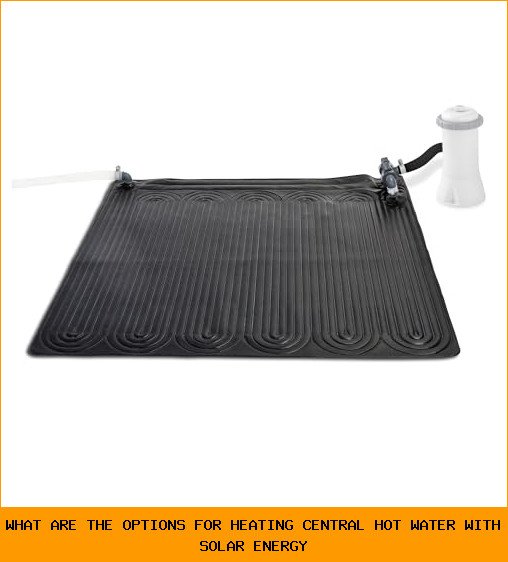
INTEX Solar Pool Water Heater Mat for Above Ground Swimming Pools | 28685E - Energy-Efficient Heating - Designed to work with INTEX Filter Pumps up to 2,000 GPH, 47.25" x 47.25"
- Solar heater mat uses solar technology to increase the temperature of the pool water by approximately 5 to 9 degrees depending on…
- Features an 11-square-foot surface to absorb the sun's rays to heat up above-ground pools; Dimensions (L x W): 47.25 x 47.25 inche…
- Simple and economical to use, compatible with filter pumps with up to 1/3 HP or a pump flow rate less than 2,000 GPH; Weight: 6.41…
For smaller-scale needs like warming an above-ground pool, a solar mat such as the Intex 28685E (47 x 47 inches, 11 square feet of absorbing surface) can raise water temps by 5 to 9 degrees in good sun. It hooks up to a filter pump under 1/3 HP and folds flat for winter. That works for a pool, but a whole house needs something beefier. Here’s what actually works for central hot water.
Three Core Technologies That Actually Deliver
Every central hot water solar system falls into one of three families. Each has sweet spots and real limits.
1. Flat Plate Collectors
Think of a dark metal absorber plate inside an insulated box with a glass lid. Water or a glycol mix runs through copper tubes bonded to the plate. They are the workhorses of the solar thermal world.
Flat plates perform best in moderate climates. Efficiency runs about 70% on a clear winter day, dropping to maybe 40% when the tank is already hot (because the collector can’t cool down enough). They deliver water around 140-160°F, which is plenty for a standard domestic hot water tank.
One honest downside: in sub-freezing weather, you need a glycol mixture (PV) or a drainback system to prevent freeze damage. That adds complexity and a small pump. A typical 4×8-foot flat plate collector costs between $600 and $1,000, uninstalled.
2. Evacuated Tube Collectors
These look like a row of glass thermoses. Each tube has a vacuum between two layers of glass, which kills heat loss. Inside is a copper heat pipe that transfers energy to a manifold.
Evacuated tubes beat flat plates in two situations: cold climates and cloudy weather. The vacuum keeps heat in even when the air outside is freezing. Efficiency can hit 50% on a cloudy 30°F day, where a flat plate might struggle to 20%. They also reach higher temperatures — 180°F to 200°F — which matters if you need hot water for radiators or a combi system.
The catch: they are more fragile (one broken tube kills the row), cost about 30-50% more per square foot, and snow and leaves can fall between the tubes if not mounted correctly. A 30-tube system (roughly 80 sq ft of aperture) costs $1,500 to $2,500 before installation.
3. Solar PV + Heat Pump Water Heater
Instead of heating water directly with sunlight, you install standard solar panels (photovoltaic) that generate electricity. That electricity then powers a heat pump water heater. A heat pump moves heat from the surrounding air into your tank, using about one-third the electricity of a conventional resistance heater.
This approach has gained traction fast. Why? You can use the same solar panels to offset your whole house electricity, then size the heat pump to run primarily during sunny hours. Modern heat pumps (like the Sanden or Rheem models) produce water up to 150°F, though efficiency drops as outdoor temperature falls. In a mild climate, you can get a COP of 3.0 to 3.5, meaning 1 kWh of solar electricity moves 3-3.5 kWh of heat into the water.
It’s not perfect. Heat pumps are noisy (about 50 dB), need a basement or garage with good air flow, and the compressor has a 10-15 year lifespan. But the system is simpler to install than roof-mounted water-filled collectors, and you avoid freeze worries entirely.
System Configurations You Need to Know About
Even after picking the collector type, you have to choose how the system circulates fluid and stores heat. Get this wrong and performance tanks.
Direct vs Indirect Circulation
Direct systems pump potable water straight through the collectors and into your tank. They are simple and efficient — no heat exchanger losses — but only work in climates that never freeze. Even one hard freeze can burst the copper tubes. Use direct only if you live in Florida, Southern California, or similar zones.
Indirect systems circulate a propylene glycol antifreeze mixture through the collectors, then pass it through a heat exchanger inside your storage tank. The glycol adds a 5-10% efficiency penalty, but the system survives -30°F winters. Most plumbers recommend indirect for any location that sees frost more than once a year.
Drainback vs Pressurized
Drainback is a clever variation: when the pump shuts off, the water/glycol mixture drains by gravity into a small reservoir inside the house. The collectors stay empty and can’t freeze or boil. This eliminates pressure relief valves and expansion tanks in the collector loop. It adds one pump (for the drainback) but simplifies maintenance.
Pressurized systems keep the collector loop at 30-50 psi year-round. They are more common and less expensive to install because the pump is simpler. But they need an expansion tank, a pressure relief valve, and careful freeze protection. If the glycol degrades or leaks, the system can boil on a hot summer day.
My opinion: if you can afford the extra design, go drainback. It’s more reliable over the long haul and easier to troubleshoot.
Comparing the Three Main Options Side by Side
| Feature | Flat Plate | Evacuated Tube | PV + Heat Pump |
|---|---|---|---|
| Typical efficiency (clear day) | 60-70% | 65-75% | N/A (COP 2.5-3.5) |
| Winter performance (freezing) | Low – needs glycol | Good – vacuum insulation | Depends on air temp; COP drops |
| Max water temperature | 160°F | 200°F | 150°F (most models) |
| Installed cost per sq ft | $25-$40 | $40-$60 | $10-$20 (panels + tank) |
| Maintenance | Low – flush every 3-5 yr | Medium – replace broken tubes | Medium – filter cleaning, compressor |
| Freeze safe without glycol? | No | Yes (drainable) | Yes (no water on roof) |
| Lifespan | 20-25 years | 15-20 years | Panels 25-30 yr, HP 10-15 yr |
Notice that the PV + heat pump row shows a cost per square foot for the solar panels only. The heat pump water heater adds $1,200 to $2,500 on top. For a family of four, you’d need roughly 1.5-2 kW of solar panels (about 6-8 panels) and a 80-gallon heat pump tank. That total installed price usually runs $6,000-$10,000 before federal tax credits.
Frequently Asked Questions
Can solar completely replace my gas or electric water heater?
In most homes, no — not 100%. Solar thermal systems can cover 50% to 80% of your annual hot water load, depending on climate and system size. During weeks of overcast weather or when demand spikes (morning showers after a dark day), you need a backup electric element or gas burner. PV + heat pump can get closer to 100% if you oversize the panel array and add battery storage, but that’s rare. Plan on a hybrid system, not a replacement.
What happens on cloudy days or at night?
Solar thermal collectors produce almost nothing on heavy overcast days and zero at night. A good system uses a differential controller: when the collector temperature is 10-15°F hotter than the tank, the pump runs. When it’s colder, the pump stops and the backup takes over. For PV + heat pump, you either pull from the grid or from a battery if you have one. The backup heating element in the tank handles the rest. That’s normal — don’t expect sunshine 24/7.
How much roof space do I need for a typical house?
A family of four in a moderate climate needs about 60-80 square feet of south-facing collector area for flat plates or evacuated tubes. That’s roughly 1.5 to 2 standard panels. For PV, you need 6 to 8 panels (about 150-200 sq ft) if you also want the heat pump to run on solar. If you only have a north or east roof, you can still do it — expect 15-25% less annual output. Measure your unshaded roof area first; most homes have enough.
Do I need a special hot water tank?
For solar thermal (direct or indirect), yes. You need a tank with two heat exchangers or a dedicated solar preheat tank upstream of your existing water heater. Standard water heaters can’t handle the high-temperature stratification or the second heat source. For PV + heat pump, you need a heat pump water heater (which has a built-in compressor and tank combo). That tank is typically taller than a standard gas unit, so check basement or garage ceiling height.
How long until the system pays for itself?
Payback varies wildly by local utility rates, available tax credits, and your hot water usage. In sunny states with high electric rates (e.g., Hawaii, California), a well-sized solar thermal system can pay back in 5-8 years. In colder, cheaper-energy regions (e.g., parts of the Midwest), it might take 12-15 years. PV + heat pump usually pays back a bit slower on hot water alone, but if you factor in the electricity savings for the rest of the house, the payback comes sooner. Always run a quick solar calculator from a local installer before buying.
What to Do Next
You don’t need to become a solar engineer. Here’s what you can act on today:
- Check your current hot water energy use — look at your gas or electric bill and find the monthly therm or kWh. That number tells you how big your solar system needs to be.
- Walk your roof. South-facing, unshaded, 30-45 degree pitch is ideal. Measure clear area in feet and note any obstructions (chimneys, vents).
- Decide on freeze risk. If you see frost more than 3 times a year, eliminate direct circulation and consider evacuated tubes or PV + heat pump.
- Get at least three quotes from local solar thermal installers. Ask for the estimated solar fraction (percentage of annual hot water from solar) and backup energy cost.
- If you’re handy, the Intex solar mat mentioned earlier works for small-scale water heating (pool, not house), but don’t try to DIY a central system with it — that mat is not rated for pressure or potable water.
- Look up your state and federal tax incentives. The 30% federal Investment Tax Credit applies to both solar thermal and solar PV, including the heat pump tank if powered by solar.
- Start small. A solar preheat system that feeds your existing water heater is cheaper and still cuts your bills by 40-60%. You can always expand later.