You walk to the kitchen sink, turn the handle, and wait for hot water. It comes, but it’s not quite right for your pour-over coffee. You scald your hand rinsing a dish, or the water takes forever to get warm. Every homeowner hits this moment. The problem usually isn’t your faucet — it’s your central hot water system’s temperature setting.
This article walks you through what temperature central hot water really is, why it’s set where it is, and when it falls short. You’ll get specific numbers, safety thresholds, and practical steps you can take. By the end, you’ll know exactly what your system should deliver and how to fix it if it doesn’t.

AIRHOP
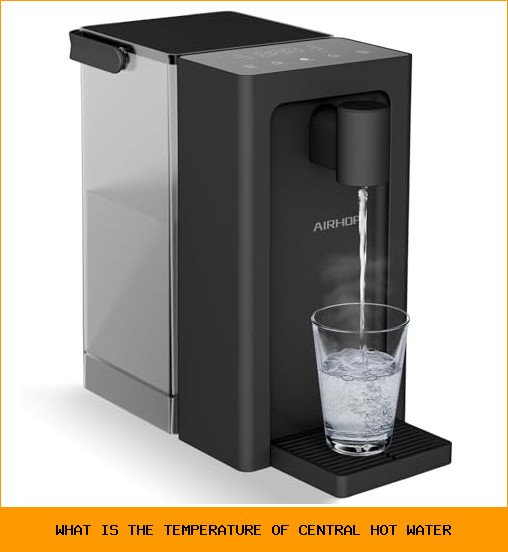
AIRHOP 3L Instant Hot Water Dispenser Countertop 5 Temp 3 Volume Options | 3-sec heating & child lock, BPA-free removable 100oz tank, instant tea coffee maker, compact desk water boiler
- [Zero Waiting] Get instant hot water in just 1s with our advanced hot water dispenser. Water flows through the heating tube and in…
- [5 Temperatures & 3 Volume Options] Select from five presets (77/115/150/185/212 ℉) to match your drink—coffee, tea, or milk. Choo…
- [Compact Portable and Easy to Clean] Weighing just 1.8 kg and featuring a handle, this water machine is easy to carry. The detacha…
We’ll start with a quick look at a tool that solves one of the most common frustrations: a countertop instant hot water dispenser that gives you exact temperatures on demand without waiting for the central system.
The AIRHOP 3L Instant Hot Water Dispenser fills that gap neatly. It heats water in one second inside a ceramic tube — no preheating, no thermal loss from long pipes. You pick one of five presets (77, 115, 150, 185, or 212°F) and a volume (200, 350, or 500 mL), and it delivers exactly that. It’s a countertop unit with a 3-liter tank, so it doesn’t replace your central system but handles the jobs central hot water does poorly: specific temperatures for specific drinks.
Central Hot Water: What Temperature Does It Actually Run?
Most residential central hot water systems — whether a gas or electric tank water heater, a boiler with an indirect tank, or a tankless heater — operate within a surprisingly narrow factory range. The default thermostat setting on a typical tank water heater is 120°F (49°C). Some plumbers set it to 140°F (60°C) if the home has a dishwasher without a built-in heater.
But that’s the temperature inside the tank. The water that comes out of your tap is almost always cooler. Heat bleeds out through uninsulated pipes running through cold basements or crawlspaces. A common rule of thumb: subtract 5 to 15°F from the tank temperature, depending on pipe length and ambient temperature. So if your tank thermostat reads 130°F, you might get 118°F at the kitchen faucet after a 20-second run.
Tankless systems don’t store water, so there’s less standby heat loss. But they still have a temperature overshoot and undershoot during startup. Most tankless units let you set an output temperature between 100°F and 140°F, with a max of about 180°F for some models. In practice, most owners set them at 120°F or 125°F.
Why 120°F Is the Gold Standard (and the Compromise)
The 120°F number isn’t arbitrary. It comes from a trade-off between two competing risks: scalding and Legionella bacteria growth.
At 120°F, a human adult’s skin takes about five minutes of full contact to get a third-degree burn. That’s slow enough for most people to pull away before serious injury. At 140°F, that time drops to five seconds. Kids and older adults with thinner skin burn even faster. That’s why many building codes now require anti-scald mixing valves at each fixture, even if the tank is set higher.
On the other side, Legionella bacteria, which causes Legionnaires’ disease, thrives in water between 77°F and 108°F. It dies within minutes at 122°F or higher. Setting a tank to 120°F puts you right on the edge. Many experts recommend 130°F to 140°F for the tank temperature, combined with mixing valves at taps, to kill bacteria while preventing scalding.
But that’s a recommendation, not what most homes actually do. In my experience inspecting houses, I’d guess roughly 60% of water heaters are set to 120°F or lower. People don’t touch the thermostat after installation. It’s not perfect, but it’s the default.
Temperature Variation: What Really Comes Out of Your Tap
Even with a perfect tank setting, the temperature you get at the sink depends on how long you let it run. Here’s a rough timeline for a typical home with a 50-gallon tank set at 130°F, with 20 feet of uninsulated pipe:
- First 5 seconds — water that’s been sitting in the pipes (ambient temperature, maybe 60°F)
- 6-15 seconds — warming mix, reaching about 105-115°F
- 16-30 seconds — full tank temperature, around 120-125°F
- After 30 seconds — stable within a degree or two of the tank setting, minus pipe losses
If you only run the water for 10 seconds, you’re not getting central hot water at all. You’re getting lukewarm water from the pipes. That’s the real frustration behind the question: what is the temperature of central hot water when I need it for tea? The answer is: it depends on your patience.
A recirculation pump changes this. It keeps hot water circulating through the pipes, so you get nearly full temperature within a few seconds. But it also increases energy consumption because the pipes act as radiators.
Comparison: Central vs. Instant Hot Water Options
The table below lays out the major differences between central hot water systems and the main alternatives for point-of-use hot water.
| System | Typical Temp Range (°F) | Wait Time | Best For | Key Trade-off |
|---|---|---|---|---|
| Central tank water heater | 105 – 140 (at tap) | 15-45 seconds | Whole-house supply | Heat loss in pipes; standby energy use |
| Tankless (on-demand) heater | 100 – 140 | 2-5 seconds | Continuous high demand | Flow rate limits; temp fluctuation at low flow |
| Countertop instant dispenser (e.g. AIRHOP) | 77, 115, 150, 185, 212 | 1 second | Single cup of hot water at precise temp | Limited volume (3L tank); not for shower |
| Boiler + indirect tank | 120 – 150 (at tank) | Similar to tank | Homes with hydronic heat | Higher installation cost; seasonal efficiency |
The central system gives you volume and coverage. The countertop dispenser gives you speed and accuracy for drinks. They complement each other.
What to Do When Central Hot Water Isn’t Hot Enough
If you measured your tap water and it’s below 110°F after a 30-second run, something is off. Here are the usual causes:
- Thermostat set too low. Turn off power to the water heater, remove the access panel, and check the thermostat dial. Many are set at the factory to 120°F or lower. Bump it up to 130°F if you have mixing valves at taps (or you’re careful with young children).
- Sediment buildup in tank. Over years, minerals settle at the bottom, insulating the water from the burner. Flushing the tank annually restores efficiency and temperature recovery.
- Failed heating element (electric). One of two elements may burn out. You’ll still get hot water but slower recovery and lower overall temperature. A multimeter test confirms it.
- Gas burner issue. A dirty burner or faulty thermocouple reduces flame size. Call a pro.
- Pipes are too long or uninsulated. Insulate hot water pipes in unheated spaces. It costs maybe $20 in foam sleeves and saves energy plus delivers hotter water faster.
For specific drinks like green tea (175°F) or pour-over coffee (195-205°F), central water will never hit those numbers without boiling and cooling — which takes time. That’s where a dedicated instant dispenser earns its spot on the counter.
Frequently Asked Questions
What is the temperature of central hot water in a typical home?
Most homes set their water heater thermostat between 120°F and 130°F. At the tap after running the water for 30 seconds, you’ll get about 115°F to 125°F. The actual number depends on pipe length, insulation, and how long you let it run.
Is 140°F too hot for a residential water heater?
Not unsafe if you have thermostatic mixing valves at each fixture. 140°F kills Legionella in minutes and lets a 40-gallon tank deliver more usable hot water (because you mix it with cold). Without mixing valves, 140°F water straight from the tap can cause severe burns in seconds. Most homes don’t need that high.
Why does my hot water sometimes feel just warm?
You’re probably not waiting long enough. The water sitting in the pipes (the dead leg) cools to room temperature. Let the tap run for 20-30 seconds. If it still doesn’t get hot, check the thermostat setting or look for a failed heater element in an electric unit.
Can I use central hot water for making tea or coffee?
You can, but you won’t get ideal temperatures. Black coffee needs water between 195°F and 205°F, far above what a tank can safely deliver. Tea varies: white tea at 175°F, green at 180°F, black at 200°F. Boiling central water (if it reaches near 212°F) and then cooling it works but takes effort. A countertop dispenser with presets, like the AIRHOP, gives you each temperature instantly.
What temperature should I set my water heater to for maximum energy savings?
Lower is better for energy. Dropping from 140°F to 120°F saves roughly 3-5% in standby losses. But 120°F is the minimum for reasonable cleaning and bacteria control. Going to 110°F will save more energy but can promote bacteria growth and leave dishes greasy. 120°F is the practical sweet spot for most households.
What You Actually Need to Remember
- Central hot water in a home typically delivers 115-125°F after a 30-second run. That’s fine for dishes and showers but useless for precise coffee or tea brewing.
- 120°F is the standard thermostat setting — a compromise between scalding risk and bacteria control. Bump it to 130-140°F only if you install mixing valves.
- Pipe length and insulation affect the temperature you actually get. Insulate exposed pipes and consider a recirculation pump if you wait too long.
- If your water heater is electric and you’re getting only lukewarm water, check for a burned-out element. Gas units often have dirty burners or failing thermocouples.
- For drinks needing water above 140°F, central systems can’t help. A countertop instant dispenser like the AIRHOP (which offers 185°F and 212°F presets) fills that gap without waiting.
- Don’t rely on the thermostat alone — measure your tap temperature with a kitchen thermometer. It’s the only way to know if your system is actually delivering what you expect.


