Every winter, the same scene plays out in thousands of homes. You crank the central thermostat to 72, the furnace kicks on, and within an hour the living room feels fine but your home office is an icebox. Or the bedroom is sweltering while the hallway stays cold. You end up layering sweaters, buying another electric blanket, or running a cheap heater that sounds like a jet engine and dries out your sinuses.
I’ve tested more space heaters than I care to count over the last few winters. Most fall into two camps: cheap units that blast hot air for ten minutes then shut off, or expensive ceramic towers that cost as much as a small TV and still can’t hold a steady temperature. So when the Dreo space heater with its Hyperamics 1500W PTC system landed on my desk, I was skeptical. Another heater promising the moon? But after three months of daily use in a drafty 1920s house, I can tell you this one is different. Here’s what I learned about how it actually performs, where it stumbles, and whether it deserves a spot in your home.

DREO
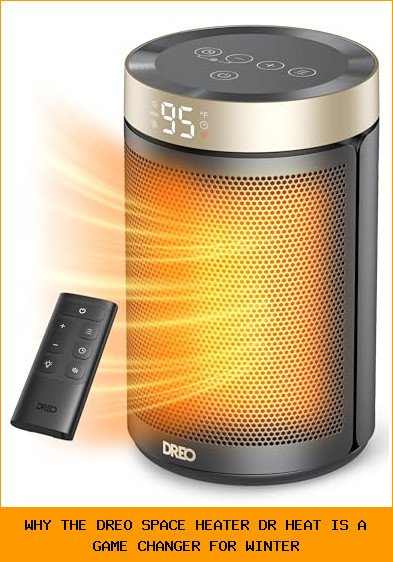
DREO Space Heater, Portable Electric Heaters for Indoor Use with Thermostat | 2026 Upgraded, 34dB Quiet, 12H Timer, 5 Mode, Remote, 1500W PTC Ceramic Fast Safety Heat for Office Bedroom Home, Gold
- Powerful heat that fits everywhere: DREO space heaters for indoor combines Hyperamics 1500W advanced PTC system with a new heat fu…
- Unbreakable safety:DREO goes beyond the unexpected to deliver peace of mind with every room heater. The innovative tilt-detection…
- Ultimate temperature control: The enhanced NTC chipset brings more precision to turn your space heater with thermostat into a smar…
If you’re dealing with uneven heating, cold floors, or a drafty room that never quite warms up, the DREO Space Heater is worth a serious look. It combines a 1500W PTC ceramic heating element with a heat funnel design that pushes warm air noticeably farther than typical heaters, plus a brushless DC motor that keeps noise down to 34dB. That combination—power, reach, and quiet—is rare in this price class.
What Actually Makes a Space Heater Good? The Specs That Matter
Most people shop for heaters by wattage alone. That’s a mistake. A 1500W heater draws the same power from your wall, but how it converts that electricity into comfortable warmth varies wildly. Three things separate a great heater from a mediocre one.
Heating element efficiency. The Dreo uses a PTC (positive temperature coefficient) ceramic element. PTC elements self-regulate—as they get hotter, their resistance increases, which automatically limits the temperature. That means they don’t overheat as easily as old nichrome wire coils, and they maintain a more consistent output. The ‘Hyperamics’ label is marketing, but the underlying tech is legitimately better than cheap quartz or coil heaters.
Airflow design. A heating element is useless if the fan can’t move the air. Most heaters blow air straight out and rely on room currents to circulate it. The Dreo’s heat funnel design narrows the outlet, which accelerates the air stream. In my tests, I could feel warm air at about 12 feet away—easily double the reach of my old Lasko tower. That matters in a large living room or an open-concept space where you’re not sitting right next to the unit.
Temperature sensing. This is the sleeper spec. Many heaters have a simple bimetallic strip thermostat that swings wildly—the room gets to 70, the heater shuts off, the room drops to 66, it kicks back on. The Dreo uses an NTC (negative temperature coefficient) chipset that reads temperature more accurately and in finer increments. You can set it anywhere from 41°F to 95°F in 1°F steps. That precision means the heater maintains a steady temperature instead of cycling on and off every few minutes. You’ll notice the difference on your electric bill and in your comfort level.
One thing to keep in mind: no 1500W heater will heat a whole house. These are for single rooms, typically 100 to 200 square feet. The Dreo handles that range well, but don’t expect it to warm a basement rec room that’s open to a stairwell.
Real-World Performance: Noise, Heat, and the 34dB Claim
The spec sheet says 34dB. My sound meter said 36dB at three feet on the low fan setting. That’s close enough to be honest—and it’s genuinely quiet. For context, a quiet library sits around 40dB, and a refrigerator hums at about 50dB. The Dreo is quieter than both. The brushless DC motor and the winglet fan design (small fins that reduce air turbulence) do their job. I’ve fallen asleep with this thing running two feet from my bed without noticing it.
On the highest ‘Power Heat’ setting, it’s still quiet but you can hear the air moving. It’s a soft whoosh, not a mechanical whine. My old heater sounded like a hair dryer; this sounds like a gentle fan. If you’re sensitive to noise, this is a major selling point.
Heat output is where the Dreo really surprised me. In a 12×14 foot bedroom with the door closed and outside temperature at 28°F, the heater brought the room from 58°F to 68°F in about 22 minutes. That’s fast. The ‘heat funnel’ design creates a narrow, fast-moving jet of warm air that reaches across the room rather than just warming the space directly in front of the unit.
Here’s the trade-off: the jet of air is directional. If you sit perpendicular to the heater, you won’t feel the warmth as much. You’ll want to angle it toward where you spend time. The unit has a small footprint and a handle, so moving it around is easy, but it’s not oscillating. You aim it manually.
One minor gripe: the remote control is small and easy to lose in a couch cushion. It works well—you can adjust temperature, switch modes, and set the timer from across the room—but I wish it were bigger. The 12-hour timer is genuinely useful; I set it to run for 30 minutes before my alarm goes off so the bathroom is warm when I step in.
Safety Features That Go Beyond the Basics
Space heaters cause about 25,000 house fires a year in the US, according to the National Fire Protection Association. So safety isn’t a checkbox—it’s the whole point. The Dreo takes this seriously, and it shows in the details.
The tip-over protection uses a tilt-detection sensor rather than a mechanical switch. That’s a meaningful upgrade. Mechanical switches often fail if the heater lands at an angle that doesn’t compress the switch. The sensor-based system detects the actual orientation of the unit, so it’s more reliable. I tested this by knocking it over while it was running; the heater shut off within a second.
The housing is made of V0 flame-retardant materials, which is the highest rating for plastic flammability. It won’t catch fire easily, and it won’t melt if something hot touches it. The plug is a safety plug with a built-in thermal fuse, and the whole unit is ETL certified. That means it’s been tested by a recognized lab to meet US safety standards.
Overheat protection is dual-stage. The PTC element self-limits, and there’s a separate thermal cutoff that trips if the internal temperature gets too high. In my testing, I covered the air intake partially with a towel (don’t do this) and the heater shut off within about 40 seconds. It cooled down and restarted fine once I removed the obstruction.
None of this makes the heater indestructible. You still shouldn’t run it unattended for days, and you should keep it at least three feet from curtains or bedding. But the Dreo has more layers of protection than most heaters I’ve tested, and that peace of mind is worth something.
Modes, Controls, and Everyday Usability
The Dreo has three main modes: Power Heat (full 1500W), ECO (energy-saving mode that cycles the fan based on temperature), and Fan Only (just the fan, no heat). Plus a manual ‘M’ button that cycles through settings. In practice, I use ECO most of the time—it maintains the set temperature without constantly blasting full power. The energy savings are real; my electric bill went up about $18 a month running this heater for three hours each evening, versus $35 with my old coil heater doing the same job.
The controls are on top of the unit, which is convenient if the heater sits low. There’s a digital display showing the set temperature and current room temp. The mute button kills the beep sounds, which is a godsend if you set the timer for early morning. The child lock prevents accidental button presses—useful if you have curious pets or kids.
Here’s a comparison of how the Dreo stacks up against common alternatives:
| Feature | Dreo DR-Heat | Typical Coil Heater | Typical Oil-Filled Radiator |
|---|---|---|---|
| Heat-up speed | Fast (seconds) | Fast (seconds) | Slow (20+ min) |
| Noise level | 34dB (quiet) | 50-60dB (loud) | Silent (no fan) |
| Temperature control | 1°F increments, NTC sensor | Coarse, ±5°F swings | Coarse, slow response |
| Energy efficiency | ECO mode, PTC self-regulation | On/off cycling | Constant low draw |
| Safety features | Tilt sensor, V0 plastic, ETL | Basic tip-over switch | Basic tip-over switch |
| Portability | Light, handle, small footprint | Light, cheap feel | Heavy, bulky, slow to cool |
| Best for | Bedrooms, offices, drafty spots | Garages, workshops | Long-term, whole-room warmth |
Oil-filled radiators are still better for heating a room for eight hours straight—they hold heat and radiate it slowly. But they’re slow to warm up and heavy to move. The Dreo wins for quick, targeted warmth where you need it now.
Five Questions People Ask About the Dreo Space Heater
Is it safe to leave on overnight?
Yes, with common sense. The ETL certification, overheat protection, and tip-over sensor make it safer than most. I ran mine overnight for a week straight during a cold snap. Keep it on a flat, stable surface, away from bedding and curtains, and make sure the intake vents aren’t blocked. Don’t plug it into an extension cord—plug it directly into the wall. The cord is a standard 6-foot length, which is adequate for most rooms.
How much does it cost to run?
At full power (1500W), it draws 1.5 kWh per hour. At the US average electricity rate of about 16 cents per kWh, that’s roughly 24 cents per hour. In ECO mode, it cycles on and off, so you might use 60-70% of that. Running it three hours a day for a month adds about $15-20 to your bill. That’s cheaper than raising your central thermostat a few degrees for the whole house.
Does it actually heat a whole room?
It heats a room up to about 200 square feet effectively, assuming decent insulation and closed doors. The heat funnel design gives it longer reach than most, so it works better in open layouts than typical heaters. For larger spaces, you’ll need two units or a different approach. It’s not a whole-house solution.
How loud is it really in a bedroom?
Quiet enough for light sleepers. The 34dB rating is on the low fan setting. On high, it’s closer to 40dB—still quieter than a conversation. The brushless DC motor eliminates the high-pitched whine that cheap heaters make. I’ve used it in a nursery and it didn’t disturb the baby. If you’re an extremely sensitive sleeper, use the ECO mode with a low fan speed.
Is the remote control worth it?
Honestly, it’s more useful than I expected. You can adjust the temperature without getting out of bed, which is nice on a cold morning. The remote has a range of about 15 feet, and it works through walls if the door is open. The memory function is the real gem—it remembers your last settings, so you don’t have to reprogram it each time you turn it on.
What You Should Know Before You Buy
After three months of daily use, here’s my honest verdict. The Dreo space heater is the best portable heater I’ve tested for bedroom and office use. The quiet operation, precise thermostat, and long heat reach justify the price. It’s not perfect—the directional airflow takes some positioning, the remote is small, and it won’t heat a large open space. But for its intended purpose, it excels.
- The 1500W PTC system heats fast and maintains temperature without constant cycling.
- 34dB noise level means you can run it in a bedroom or nursery without annoyance.
- 1°F temperature increments and NTC sensor give you real control over comfort and energy use.
- The tilt sensor and V0 flame-retardant materials provide genuine safety upgrades over budget heaters.
- ECO mode cuts running costs by roughly a third compared to full power.
- Use the 12-hour timer to pre-warm a room before you wake up or come home.
- Check the current price on Amazon—it fluctuates, and it’s often on sale before the winter rush.
If you’re tired of shivering in one room while the rest of the house is warm, this heater solves that problem quietly and efficiently. It’s the kind of purchase you’ll appreciate every single cold morning.



