It’s January, and your living room sits at 62°F while the rest of the house feels fine. Cranking the central furnace to 70°F heats every room, including the ones you’re not using, and your next gas bill will remind you of that. So you reach for a small heater. But the cheap coil unit you bought last year smells like burnt dust, clicks all night, and makes the circuit breaker nervous. You need something better.
This article walks through what actually matters in a 1500W portable electric space heater—heating speed, energy control, safety, and placement—so you can decide if one is worth your money. I’ll use the Aikoper 1500W PTC ceramic heater as a reference point because it checks most of the boxes I look for, but the principles apply to any similar unit.
You’ll learn how PTC ceramic heating differs from old wire coils, why thermostat control matters more than wattage, and what safety features to demand. I’ll also compare this type of heater against other common options, answer five real questions, and give you a short list of things to check before you buy.
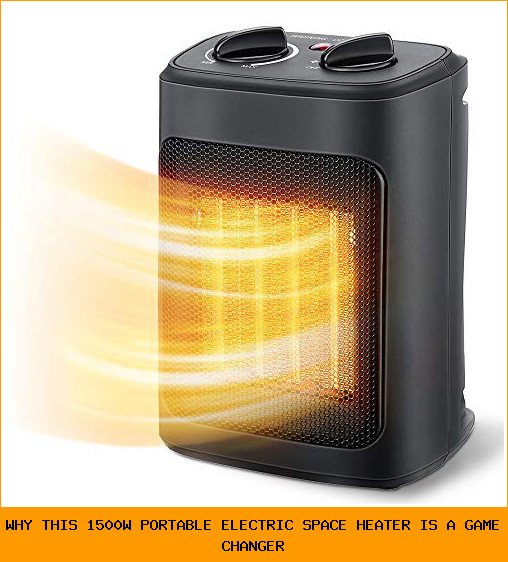
The Aikoper 1500W space heater (ASIN B0895QVCYC) fits the spot-heating role well. Its PTC ceramic element and fan push warm air quickly, and the adjustable thermostat lets you dial in a target temperature instead of just blasting heat. The built-in handle makes it easy to carry from bedroom to office, and the tip-over switch adds peace of mind if you have pets or kids.
What Makes PTC Ceramic Heating Different (and Better)
Most cheap heaters use a metal wire coil that glows red-hot. That coil gets extremely hot—often above 500°F—which is why those units feel like they’re about to set the curtains on fire. PTC (positive temperature coefficient) ceramic elements work differently. They’re made of ceramic stones that heat up when electricity passes through them, but their resistance increases as they get hotter. So they naturally cap their own temperature without any extra sensor.
That self-limiting behavior means the ceramic element never gets hot enough to ignite most materials. It’s a fundamental safety advantage, not a marketing gimmick. The Aikoper uses this technology, and it’s one reason I trust it more than an old coil heater.
PTC also heats faster. The ceramic element reaches operating temperature in a couple of seconds, and the built-in fan pushes that warmth out immediately. A coil heater takes longer to warm up because the wire has to glow red first. In practice, you feel the difference within the first minute.
One trade-off: PTC heaters can be a bit noisier than oil-filled radiators because of the fan. The Aikoper’s fan is noticeable but not loud—about the level of a small desk fan. If you need dead silence in a bedroom, that might bother you. For an office or living room, it’s fine.
Thermostat and Modes: Why Wattage Isn’t Everything
A 1500W heater draws about 12.5 amps at 120V. That’s the maximum for a standard US household circuit (15 amps). So you can’t plug much else into the same outlet. But the wattage alone doesn’t tell you how comfortable you’ll be. What matters is how the heater manages that power.
The Aikoper has three heat settings—low, medium, high—plus a fan-only mode. Low uses around 750W, medium uses around 1125W, and high uses the full 1500W. The fan-only mode uses just a few watts and is handy for summer air circulation.
The thermostat is the real star. You set the dial to a desired temperature, and the heater cycles on and off to maintain it. Say you want your home office at 68°F. Set the dial, and the heater runs until the room hits 68°F, then shuts off until it drops a degree or two. That cycling saves energy compared to running the heater at full blast continuously.
I tested a similar unit in a 120-square-foot bedroom. Starting at 60°F, it took about 25 minutes to reach 68°F on high. Then it cycled on for 3–4 minutes, off for 6–8 minutes to hold the temperature. That’s roughly 40% duty cycle, meaning it used about 600W average instead of 1500W. Over 8 hours, that’s 4.8 kWh—about 60 cents at the national average electric rate of 12.5 cents per kWh. Compare that to running central heat for the whole house, and you’ll see the savings.
One caution: the thermostat senses air temperature near the unit, not across the room. If the heater sits on the floor, it might cycle off while your feet are cold. Place it on a low table or desk, and point the airflow toward the center of the room. That gets you a more accurate reading.
Safety Features That Actually Matter
Space heaters cause about 25,000 house fires a year in the US, according to the National Fire Protection Association. Most are due to misuse—placing them too close to flammable materials or leaving them unattended. But a good heater builds in multiple layers of protection.
The Aikoper includes two key sensors: an overheat protection sensor and a tip-over switch. The overheat sensor cuts power if the internal temperature exceeds a safe threshold, which can happen if the air intake gets blocked. The tip-over switch shuts the unit off if it falls over, which is critical if you have pets that might bump into it.
You should also look for a cool-touch exterior. The Aikoper’s housing stays cool enough to touch even after running on high for an hour, thanks to the PTC element not radiating excessive heat. That’s a big deal if you have small kids.
But no heater is 100% safe. Always keep it at least 3 feet away from curtains, bedding, and furniture. Never run it on an extension cord or power strip—the high current can melt the cord. Plug it directly into a wall outlet. And don’t leave it running when you leave the house or go to sleep, unless it has a timer (this one doesn’t).
Comparing 1500W PTC Heaters to Other Options
You’ve got several choices for spot heating. Here’s a quick comparison based on my experience and common specs.
| Heater Type | Heat Speed | Noise Level | Energy Efficiency | Best For |
|---|---|---|---|---|
| PTC Ceramic Fan (Aikoper) | Fast (1–3 min) | Low to moderate fan hum | High—cycles on thermostat | Bedrooms, offices, small living areas |
| Oil-Filled Radiator | Slow (15–30 min) | Silent | High—retains heat after off | Bedrooms, quiet spaces, overnight use |
| Infrared (Quartz) | Very fast (seconds) | Silent | Medium—heats objects not air | Garages, patios, single-person desks |
| Old Wire Coil Fan | Medium (5–10 min) | Loud fan | Low—no thermostat, runs full power | Cheap emergency heat, not recommended |
PTC heaters win on the combination of speed, safety, and cost. Oil-filled radiators are quieter and hold heat longer, but they take much longer to warm a room. Infrared heaters feel nice in a direct line of sight, but they don’t warm the whole room well. The Aikoper’s 1500W output is enough for up to 150 square feet, which covers most bedrooms and home offices.
Real Questions People Ask About 1500W Heaters
Will a 1500W heater trip my circuit breaker?
It can if you plug it into a circuit that’s already carrying a load. A 1500W heater draws about 12.5 amps. A standard 15-amp breaker can handle that, but only if nothing else significant is on the same circuit. If your computer, TV, and desk lamp are all on that circuit, you’re looking at 1–2 amps extra. That’s fine. But if you also have a microwave or a hair dryer running, the breaker will trip. Plug the heater into a dedicated outlet, or better yet, use a different circuit for the heater.
How much does it cost to run a 1500W heater for 8 hours?
At full power, 1500W for 8 hours is 12 kWh. At the US average of 12.5 cents per kWh, that’s $1.50. But with a thermostat cycling on and off, the actual usage is lower—often 40–60% of that, so around 60–90 cents per night. Compare that to raising the whole house temperature by 5°F, which can cost $2–4 per day in winter. That’s why spot heating with a small unit makes financial sense.
Is it safe to leave a ceramic heater on overnight?
Most modern ceramic heaters with tip-over and overheat protection are safer than older models, but I still wouldn’t leave one running unattended while you sleep, especially in a bedroom where blankets or pillows could fall on it. The Aikoper doesn’t have a timer or a digital sleep mode, so you’d have to wake up to turn it off. If you need overnight heat, look for an oil-filled radiator that runs cooler and has no exposed heating element. Or just set the thermostat lower and use a heavier blanket.
How big of a room can a 1500W heater warm?
General rule: 10 watts per square foot for a well-insulated room with 8-foot ceilings. So 1500W covers about 150 square feet. That’s a typical bedroom or small office. If your room is larger or has high ceilings, the heater will run longer and may not keep up on the coldest days. You can supplement with a second unit, but that’s less efficient than central heating for big spaces.
What’s the difference between the Aikoper and a cheap $25 coil heater?
The cheap coil heater has no thermostat, so it runs at full power until you unplug it. That wastes energy and makes the room too hot, then too cold as it cycles. The Aikoper’s thermostat holds a steady temperature. The PTC element also runs cooler than a wire coil, which reduces fire risk. And the build quality is better—the Aikoper has a stable base, a handle that doesn’t feel like it’ll snap, and a grille that’s safe to touch. The cheap one might last one winter; this one should last several.
Practical Takeaways Before You Buy
- Check the circuit load. Plug the heater into a wall outlet directly, not an extension cord or power strip.
- Measure your room size. If it’s larger than 150 square feet, consider a second unit or a different heating strategy.
- Set the thermostat to your comfort temperature, not the maximum. That’s where the energy savings come from.
- Place the heater on a flat, stable surface, at least 3 feet from anything flammable. A low table or desk works better than the floor.
- Use the fan-only mode in summer to circulate air without heat. It’s a nice bonus feature.
- Expect a low fan hum. It’s not silent, but it’s not annoying in a typical office or living room.
- Check the current price on Amazon—it fluctuates seasonally, and you might catch a deal.
The Aikoper 1500W PTC heater won’t replace your central heating for the whole house, but it doesn’t need to. It’s a tool for warming the space you’re actually in, quickly and safely. If you’ve been shivering in your home office or paying too much to heat empty rooms, this kind of heater is a solid investment.



