It’s January. You’re sitting at your desk, and your fingers are cold enough that typing feels clumsy. The central heating kicks on, blasting hot air into rooms you don’t occupy, while your office stays drafty. You reach for a space heater, but the one you own is either too loud, too weak, or a safety hazard you don’t fully trust.
This article walks through what actually matters when buying a 1500W ceramic heater. You’ll learn why wattage claims are often misleading, how thermostat control changes your electricity bill, and what safety certifications you should look for. The goal is to help you make a smart choice without falling for marketing nonsense.

WINHL
WINHL Space Heaters for Indoor Use with Thermostat, 1500W Electric Heater | 17 Inches, 70° Oscillation, Remote Control,12H Timer, ECO Mode, Quiet Operation, ETL Listed Safety Heat for Office Large Room
- Fast Heating: This ceramic heater uses advanced PTC ceramic heating technology. Equipped with a high-performance fan, it efficient…
- Multiple Heat Settings:Designed for indoor use, this heater offers three adjustable power levels—700W, 1000W, and 1500W—to accommo…
- Smart Thermostat Control: The electric heater features a built-in thermostat system that automatically detects the room temperatur…
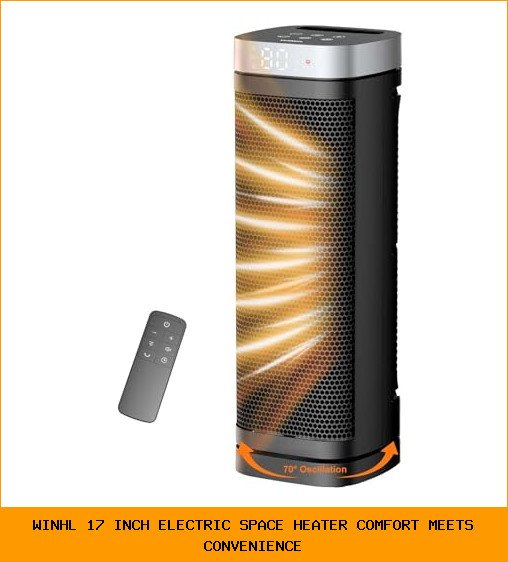
One option that checks many practical boxes is the WINHL 17 inch electric space heater. It brings 1500W PTC ceramic heating, a remote, and 70° oscillation into a compact tower design. We’ll use it as a reference point throughout this guide because it demonstrates several features worth understanding before you buy any heater.
Myth #1: More Watts Always Means More Heat
Most people assume a 1500W heater will warm a room twice as fast as a 750W model. That’s not how physics works in a typical home. Wattage determines the maximum power draw, not the efficiency of heat transfer. A well-designed fan-forced ceramic heater moves warm air effectively; a poorly designed one just burns electricity while a small area gets hot.
Consider the WINHL unit’s three power settings: 700W, 1000W, and 1500W. Running it at 1500W in a 100-square-foot bedroom will heat the space faster, but it also cycles on and off more frequently once the thermostat hits your target temperature. The real benefit of multiple wattage settings is matching output to room size. Use 700W for a small bathroom or under a desk. Reserve 1500W for a larger living room or open-plan area.
Here’s a quick comparison of what different wattages mean in practice:
| Wattage Setting | Best For | Approx. Room Size | Energy Draw |
|---|---|---|---|
| 700W | Personal space, small office nook, bathroom | Up to 75 sq ft | 0.7 kWh per hour |
| 1000W | Bedroom, small studio | 75–120 sq ft | 1.0 kWh per hour |
| 1500W | Living room, larger bedrooms | 120–200 sq ft | 1.5 kWh per hour |
Running any 1500W heater for 8 hours at max settings costs roughly $1.50–$2.00 per day, depending on your local electricity rate. That’s why the thermostat matters more than the wattage knob.
Myth #2: Oscillation Is Just a Gimmick
Some reviewers dismiss oscillating heaters as a marketing trick. They argue that heat rises anyway, so moving the fan side to side doesn’t do much. That’s only half true. Oscillation matters when you need to distribute heat across a wide seating area or when the heater sits in a corner.
The WINHL heater swings 70 degrees, which is wider than many fixed-position units. In a 12×12-foot bedroom, that sweep covers a bed on one wall and a desk on the opposite side. Without oscillation, you’d get a hot spot near the unit and cold air everywhere else. The trade-off is noise. Oscillating motors add a low hum, and some cheap units click when they change direction. This one is quieter than most, but it’s not silent.
If you plan to use the heater while sleeping, place it at least 3 feet from the bed and set oscillation to a lower sweep if available. It’s a convenience feature, not a heating booster. Don’t pay extra for a 90° oscillation if your room is small.
Thermostat Control: The Feature That Saves You Money
Many budget heaters run at full power until you manually turn them off. A thermostat-equipped unit monitors the room temperature and adjusts output. The WINHL model does this automatically, and it’s the difference between a $60 monthly heating bill and a $120 one.
Here’s how it works in practice. Set the target temperature to 68°F. The heater runs at 1500W until the built-in sensor reads 68°F, then it drops to a lower power level or shuts off the fan. When the room cools a couple of degrees, it kicks back on. This cycling behavior is normal, and it prevents overheating.
One honest caveat: the thermostat sensor sits inside the unit, so it reads the air near the heater, not the far corner of the room. If you place the heater behind a couch, it will think the room is warmer than it actually is. Position it in an open area with good airflow for accurate readings.
The remote control adds real convenience here. You can adjust temperature from bed or across the room without getting up. It requires 2 AAA batteries, which aren’t included, so keep spares handy.
Safety Features That Actually Matter
Space heaters cause thousands of house fires each year, usually from tip-overs or contact with flammable materials. A good unit should have three protections: tip-over switch, overheat sensor, and flame-retardant housing.
The WINHL heater includes all three. The tip-over switch kills power if the unit falls. The overheat protection shuts down the heating element if internal temperatures spike. The V0 flame-retardant plastic casing resists catching fire. It also has a 12-hour timer, which is useful if you want it to run for a set period and then stop.
One feature that surprises people: the 24-hour automatic power-off. If you leave the heater on and forget about it, the unit turns itself off after a full day without interaction. That’s a practical safety net, especially for anyone prone to leaving appliances on.
All these features are backed by ETL certification, which means an independent lab tested the design for electrical safety. That’s not a marketing badge; it’s a legal requirement for selling heaters in many U.S. states. If a heater doesn’t have ETL or UL certification, skip it.
Real Questions Buyers Ask About This Heater
How loud is the WINHL 17 inch heater?
At 700W, it’s quiet enough for a bedroom. At 1500W, the fan noise is noticeable but not intrusive—think of a loud computer fan rather than a hair dryer. The oscillation motor adds a soft hum. If you’re sensitive to noise, run it at a lower setting while sleeping.
Can I leave it on overnight?
Yes, with two conditions. Set the thermostat to a comfortable temperature, and make sure the heater is on a flat, stable surface away from bedding. The 12-hour timer and 24-hour auto shut-off provide extra peace of mind. Don’t place it on carpet or near curtains.
Does the remote control work from far away?
The remote uses infrared, so it works up to about 15–20 feet with a clear line of sight. It won’t work through walls or thick furniture. You’ll point it at the heater’s front panel, similar to a TV remote.
Is 1500W enough to heat a large living room?
It can handle up to roughly 200 square feet if the room is reasonably insulated. For larger open-plan spaces, you’ll need a second heater or a higher-wattage unit. This one is best for bedrooms, offices, and small apartments.
Does the heater dry out the air?
PTC ceramic elements don’t burn oxygen like older coil heaters, so they’re less drying. The fan still moves air, which can feel dry if you run it for hours. A small humidifier helps if you’re sensitive to that. It’s not a desert-dry heat, but it’s not a steam radiator either.
What to Do With This Information
You don’t need to become a heating engineer to make a smart purchase. Keep these points in mind when shopping:
- Check the wattage settings match your room size; 1500W isn’t always the right choice.
- Look for a thermostat, not just high/low settings, to keep electricity bills in check.
- Verify ETL or UL certification before buying—this is non-negotiable.
- Test the noise level at the highest setting; you’ll live with it daily.
- Use the timer for overnight operation instead of leaving it on indefinitely.
- Place the heater in open space so the thermostat reads accurately.
- Keep the remote batteries stocked; it’s the convenience feature you’ll actually use.
The WINHL 17 inch electric heater covers the essentials without overcomplicating things. It’s not the cheapest option, nor is it the most powerful. But it balances safety, control, and comfort in a way that most budget heaters miss. Check the current price on Amazon and see if it fits your space.
If you buy one, take twenty minutes to set it up properly. Place it away from foot traffic, set the thermostat a few degrees below your usual comfort level, and let the oscillation do its job. You’ll stay warm, and your electric bill won’t make you wince.



