You bought a Bradford White because you expected it to last 12–15 years. Seven years in, you spot orange-brown streaks near the drain valve or a puddle under the tank. That rust is not just cosmetic. It signals internal corrosion that can lead to a sudden leak and a flooded utility room.
Most homeowners react by blaming the brand. But the truth is more nuanced. A Bradford White water heater rusted in 7 years is almost always the result of a few specific, addressable factors—not a factory defect. In this article you’ll learn exactly what caused that rust, how to check if the tank is still salvageable, and what steps to take today to slow further damage or avoid the same problem on your next unit.

Bradford White
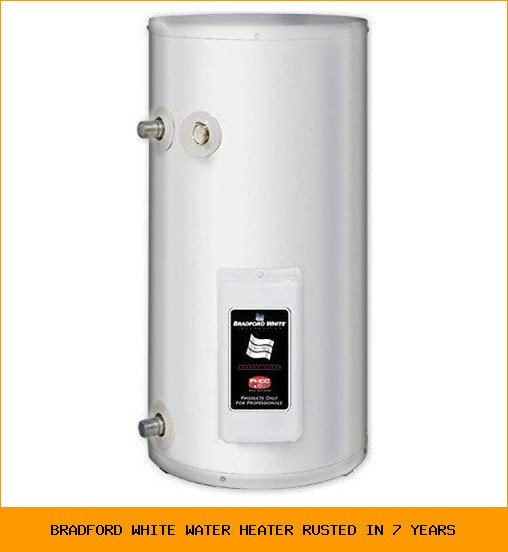
Bradford White RE112T6-1NAL
- 12 Gallon - Residential Utility Energy Saver Electric Water Heater, 120V
- Home
- Plumbing Supplies
If You Need a Quick Replacement Option
If your tank is already too far gone and you need a reliable drop-in replacement for a small space, the Bradford White RE112T6-1NAL is a 12-gallon residential electric utility water heater that runs on 120V. It connects without special wiring, fits under sinks or in tight closets, and uses the same Vitraglas lining and self-cleaning Hydrojet system the brand is known for. It won’t fix the rust on your old tank, but it will give you a fresh start with a properly sized unit for low-demand applications like a workshop or office sink.
Why Your Bradford White Rusted in 7 Years
The single most overlooked part on any water heater is the sacrificial anode rod. That rod’s job is to corrode instead of your tank’s steel walls. When it’s gone, the metal tank becomes the anode. Rust follows fast.
In a typical Bradford White, the anode rod lasts 3–5 years if you have soft water or water high in chloramines. Hard water can deplete it even faster—sometimes under 3 years. If you never inspected or replaced that rod, it likely dissolved years ago. That alone explains the bradford white water heater rusted in 7 years mystery.
But water chemistry is not the only culprit. Grounding issues accelerate electrolysis. A missing dielectric union between copper pipe and the steel tank creates a tiny battery that eats through fittings. And sediment buildup at the bottom traps heat, scorches the glass lining, and exposes bare steel. All of these pile on the same result: rust.
One more factor: many newer homes have recirculation pumps that keep hot water moving 24/7. That constant flow flushes the anode rod too fast. If you have a recirculation loop, your anode may die in 12–18 months. Nobody tells you that when you buy the heater.
How to Diagnose the Damage Step by Step
Before you spend money on a replacement, do a quick assessment. You need a garden hose, a socket wrench, and a flashlight.
- Shut off power and water. For an electric unit, kill the breaker. For gas, turn the gas valve to pilot. Close the cold water valve above the heater.
- Drain a few gallons. Attach a hose to the drain valve and run it to a floor drain or outside. Open a hot water faucet upstairs to let air in. Drain about 5 gallons so the tank is still heavy but water drops below the element or burner level.
- Remove the anode rod. Locate the hex head on top of the tank—usually under a plastic cap. Use a 1-1/16” socket and a breaker bar. If the rod is stuck, spray penetrating oil and wait 15 minutes. Pull the rod out and look at it. If it’s a thin wire, completely gone, or coated with white chalky calcium, it’s spent. Replace it immediately.
- Flush the sediment. With the hose still draining, open the cold water valve for 10 seconds to stir up the bottom. Let the dirty water flush out. Repeat until the water runs clear. If you see chunks of rusty sludge, your tank lining is compromised.
- Inspect the inside. Shine a flashlight into the tank through the anode hole or the heating element port. Look for pitting—small dark craters in the metal. If you see more than a few pits deeper than 1/16 inch, the tank is likely beyond repair.
Pro tip: If you can’t get the old anode out because the head is rounded off, you can try a socket that bites into the flats, but don’t break the nipple. That means a new tank. Sometimes it’s smarter to walk away early.
Repair or Replace? A Practical Comparison
| Option | Cost Range | Effort Level | Expected Outcome | Best For |
|---|---|---|---|---|
| Replace anode rod | $30–$60 | Moderate DIY | Slows rust, adds 3–5 years | Mild to moderate interior condition |
| Install powered anode | $80–$180 | Moderate DIY | Stops electrochemical corrosion entirely | Aggressive water, recirculation systems |
| Full tank replacement | $500–$1,500 | Professional or high DIY | New 10–15 year life | Heavy internal pitting, leaks |
| Do nothing | $0 | None | Leak within 6–12 months | You plan to move soon |
Replacing the anode is the obvious first move if the tank interior looks clean. But if you have a bradford white water heater rusted in 7 years and the anode hole shows deep pitting, don’t waste time. Swap the whole unit. A new anode on a rusted-out tank is like putting a band-aid on a bullet hole.
The powered anode option is less common but solves one specific headache: water that eats magnesium rods in a year. It uses a tiny electric current to repel corrosion without a sacrificial metal. It works fine in recirculation systems. The trade-off is cost and the need for a nearby outlet.
Frequently Asked Questions
Can I replace just the anode rod on a rusted tank?
Yes, if the rust is only on the rod itself or the top of the tank. You need to see clean bare steel inside the tank. If you see deep rust pits, cracks, or a wavy bottom, a new anode will not stop a future leak. The damage is already structural.
How do I know if rust is inside the tank vs just on the outside?
Rust on the outside usually comes from condensation, a leaky fitting, or a sweating tank. Rub it with a dry cloth. If it wipes off and the metal underneath is still shiny, that’s not internal. Rust on the drain valve threads or around the bottom seam suggests internal corrosion that has reached the exterior.
Does Bradford White’s warranty cover rust?
It depends on the model and when you bought it. Most Bradford White residential water heaters come with a 6-year or 10-year tank warranty. If yours rusted in 7 years and you have a 6-year warranty, you are out of luck. If you have a 10-year warranty, you may get a prorated replacement—not a free one. You still pay for labor and shipping. Check your sticker on the side.
Should I flush the tank every year?
Yes. Not doing so is the second biggest cause of early rust after anode failure. Sediment insulates the bottom from the burner, causes overheating, and cracks the glass lining. Once the glass cracks, water hits the steel. Annual flushing takes 20 minutes and costs nothing. Skip it once and you shorten the tank’s life by years.
Is a powered anode better than a magnesium one?
For certain conditions, yes. If your water has high sulfate or a chlorine treatment system, a magnesium anode will dissolve fast. A powered anode emits a small voltage that prevents steel from corroding without dissolving itself. It lasts the life of the tank. But it requires a 120V connection and costs three times more upfront. For standard municipal water, a standard magnesium anode swapped every 4 years is cheaper and just as effective.
What You Should Do Right Now
- Check the anode rod today. If it’s less than 1/2 inch thick or covered in calcium, replace it this weekend.
- Flush the tank until the water runs clear. If the first water is rust-colored, flush again in 30 minutes after sediment settles.
- Inspect the inside of the tank through the anode hole. Anything beyond light surface rust means consider replacement.
- Install dielectric unions on both the hot and cold connections if you don’t have them. They cost $10 and stop galvanic corrosion at the pipe joints.
- Test your water hardness. Over 7 grains per gallon accelerates anode wear. A water softener helps, but it also makes the anode work harder—check it every 2 years instead of 4.
- If you have a recirculation pump, switch to a powered anode or install a check valve to slow water flow over the rod.
- Mark your calendar for year 5. Set a reminder to inspect the anode again. Most tank failures happen between years 8 and 12 because nobody looked at the anode at year 7.


