Introduction
Imagine you’re preparing for a weekend camping trip. You want to power your refrigerator, lights, and maybe even a small air conditioner. Understanding how to convert BTUs to watts becomes crucial in ensuring you have enough power available. But what does this mean? BTUs (British Thermal Units) measure heat energy, while watts measure electrical power. Knowing how to convert between these units can help you manage your energy needs effectively.
This article will provide a thorough understanding of BTU to watts conversion, practical examples, and tips for calculating power requirements. You’ll walk away with not only the knowledge of conversion but also insights into energy-efficient devices like the TOPBULL 3000W Power Inverter, which is designed to meet diverse power needs.

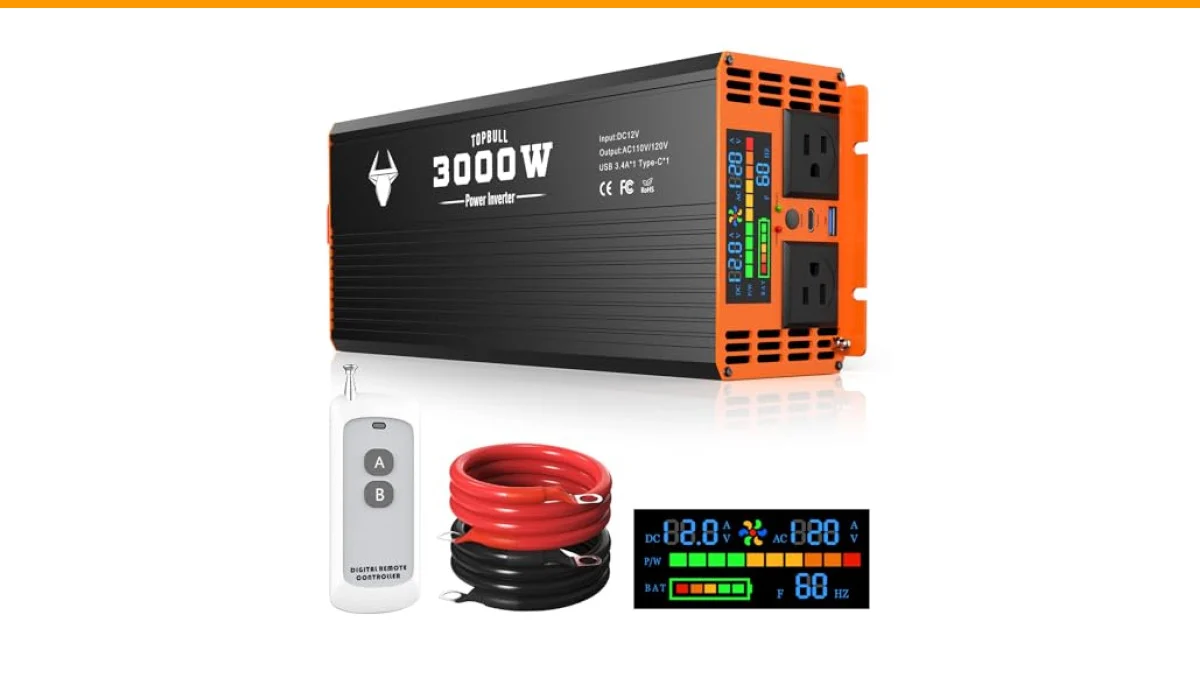
TOPBULL
3000W Power Inverter Car/Home 12V DC to 110V/120V AC Car Converter | with 200ft Remote Controll, LED Display, Dual AC Outlets, USB Port, Dual Smart Fans, Cables Included, Suitable for Home, RV
- 【New 3000W Professional-Grade Inverter】The new TOPBULL 3000W inverter reliably converts 12V DC to 110/120V AC, with a continuous o…
- 【Extensive Port Configuration】Equipped with two 20A/120V high-power AC outlets capable of powering high-current devices and indust…
- 【Ten-Layer Comprehensive Safety Protection】Features ten built-in safety protection mechanisms: low-voltage protection, high-voltag…
The TOPBULL 3000W Power Inverter efficiently converts 12V DC to 110/120V AC, offering a reliable solution for powering appliances while camping or during emergencies. With its extensive safety features and high output capabilities, it’s a valuable tool for anyone needing dependable energy on the go.
Understanding BTU and Watts
To effectively convert BTUs to watts, it’s essential to grasp the fundamental definitions of these units. A BTU is defined as the amount of heat required to raise the temperature of one pound of water by one degree Fahrenheit. In contrast, a watt is the unit of power that measures the rate of energy transfer. One watt equals one joule per second.
In heating and cooling applications, BTUs often represent the energy output of devices, such as air conditioners and heaters. Electric power consumption is measured in watts. Therefore, understanding how to convert between these two units can help you determine how much electrical power is needed for a given thermal output.
BTU to Watts Conversion Formula
The conversion formula is straightforward:
1 BTU/h = 0.2931 watts
This means that to convert BTUs to watts, you multiply the number of BTUs by 0.2931. Conversely, to convert watts back to BTUs, you’d divide the number of watts by 0.2931.
Example Calculation
Suppose you have an air conditioner rated at 12,000 BTUs. To find out how many watts this unit uses, apply the formula:
12,000 BTU/h × 0.2931 = 3,517.2 watts
This means your air conditioner needs about 3,517 watts to operate efficiently.
Practical Applications of BTU to Watts Conversion
Understanding this conversion is crucial in various scenarios:
- Heating and Cooling Systems: HVAC systems often have their capacity rated in BTUs. Knowing the wattage helps in selecting the right electrical supply.
- Power Inverters: When using devices like the TOPBULL 3000W inverter, knowing how much power your appliances require in watts ensures you don’t overload the inverter.
- Energy Efficiency: Calculating the energy consumption in watts allows for better planning and can lead to cost savings on energy bills.
Comparison of BTU to Watts Conversion Methods
| Method | Description | Accuracy |
|---|---|---|
| Manual Calculation | Using the formula to convert BTUs to watts or vice versa. | High |
| Online Calculators | Web-based tools that automate the conversion process. | Moderate |
| Conversion Charts | Pre-made charts showing common BTU to watt conversions. | Moderate |
Common Questions About BTU to Watts Conversion
1. How do I convert BTUs to watts for my heater?
Multiply the BTU rating of your heater by 0.2931 to find the wattage. For example, a 30,000 BTU heater would use approximately 8,793 watts.
2. Can I use watts instead of BTUs for my air conditioning unit?
While you can express energy needs in watts, most air conditioning units are rated in BTUs. It’s essential to understand both units for effective usage.
3. Why is it important to know the BTU to watts conversion?
Knowing the conversion helps ensure your electrical supply can support the heating or cooling devices you plan to use, avoiding potential overloads or inefficiencies.
4. How can I measure the power consumption of my appliances?
Use a power meter to measure how many watts an appliance consumes during operation. This can help you convert that value to BTUs if necessary.
5. What is the difference between peak power and continuous power in inverters?
Peak power is the maximum power an inverter can supply for short bursts, while continuous power is the steady output it can maintain without overheating or shutting down.
Final Thoughts
- Use the conversion factor of 0.2931 for accurate BTU to watts calculations.
- Understand both BTU and watt measurements for better energy management.
- Consider the power requirements of your appliances when choosing an inverter.
- Utilize online calculators or conversion charts for quick references.
- Invest in reliable equipment like the TOPBULL inverter for your power needs.
- Regularly check the power consumption of your devices to optimize energy usage.
- Stay informed about the energy ratings of appliances to make efficient choices.



