You step into the shower. Turn the handle. And wait. Thirty seconds of cold water while the heater fires up and pushes the hot slug through the pipes. That waiting is the one thing people hate about tankless water heaters. Rinnai units are some of the best on the market, but do they solve that problem with a built-in recirculating pump?
The answer is more nuanced than a simple yes or no. This article breaks down exactly which Rinnai models include a recirculation pump, how to know if you need one, and what it takes to add instant hot water to your home. By the time you finish reading, you’ll know whether your Rinnai can handle a recirc setup and exactly what to look for if it can’t.

6699
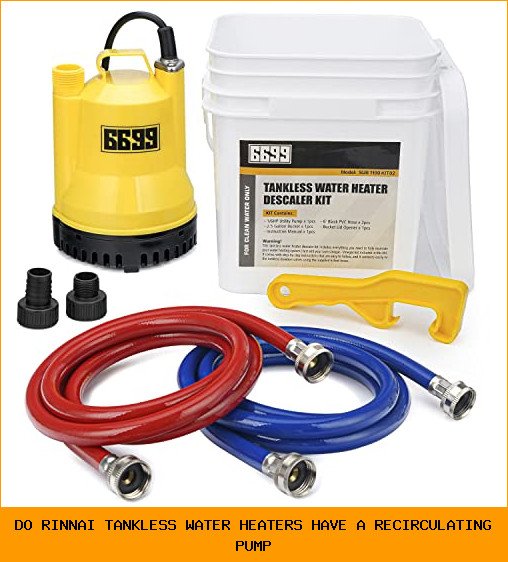
6699 Tankless Water Heater Flushing Kit, 1/6 HP Pump, 2 Hoses, 3 Gal Pail | Complete tankless water heater flushing kit with 1/6 HP pump, two 6 ft hoses, 3 gal pail, adapters, washers and lid opener.
- 【Tankless Heater Clean Kit】This cleaning kit comes with everything you need to maintain your water heating system. Helps maintain…
- 【Submersible Sump Pump】1/6HP energy-efficient motor with thermal overload protection, has the ability to deliver water to maximum…
- 【Easy to Use】This kit includes 3 gallons bucket with a bucket lid opener, 1/6HP utility pump with 2 adapters and 2pcs 6’ x 1/2” PV…
Let’s start with a quick reality check: even the best tankless heater needs regular maintenance to stay efficient. Scale buildup kills performance over time. A quality flushing kit, like the 6699 Tankless Water Heater Flushing Kit, makes it easy to descale your unit yourself. That kit includes a 1/6HP submersible pump, two 6-foot hoses, and a 3-gallon bucket—everything you need for a proper annual flush. Keeping the heat exchanger clean matters more for recirculation setups because the pump moves water constantly. Skip the maintenance and you’ll be flushing more often anyway.
The Short Answer: Yes and No
Rinnai does not include a recirculation pump in their standard tankless water heaters. The base models (like the RUC series) are straight-up on-demand heaters with no built-in pump. If you want recirculation with those, you buy an external pump and install it.
But Rinnai’s high-efficiency condensing models (the RUR series, specifically the RUR199iN and similar Super High Efficiency units) do come with a built-in recirculation pump. It’s integrated into the unit itself. However, there’s a catch: that pump only works if you also install a dedicated return line or use a thermal bypass valve at the farthest fixture. It’s not a plug-and-play magic box that gives you instant hot water without any extra plumbing.
So the real question isn’t just about the pump. It’s about the whole system. Let’s look at how recirculation actually works with a tankless heater so you can make the right call for your house.
How Recirculation Works with Tankless Heaters
A recirculation system keeps hot water moving through the pipes so it’s always a few seconds away. With a traditional tank heater, the water in the tank stays hot. With tankless, the heater turns on only when you call for hot water. That means there’s always a cold slug sitting in the pipes between the heater and your tap.
To fix that, you need a pump that slowly circulates water from the heater out through the house and back. The heater fires up briefly to reheat the returning water, keeping the loop warm. This works fine with Rinnai units, but you have to pay attention to a few details.
Dedicated return line vs. comfort valve. The cleanest setup uses a separate hot water return pipe running from the farthest fixture back to the heater. This gives you instant hot water at every tap and doesn’t mix cold water into the cold water line. The downside: you need to have that return pipe installed, which is expensive in an existing house. The alternative is a thermal bypass valve (sometimes called a comfort valve) that connects the hot and cold lines under the farthest sink. When the water in the hot line cools below a set temperature, the valve opens, allowing a little cold water to flow into the hot line, which triggers the heater and circulates warmer water. This works well for the first few months but can send cold water into your cold line—annoying for your toilet or fridge line.
Flow rate matters. Rinnai tankless heaters have a minimum flow rate (usually around 0.5 GPM) needed to fire the burner. A recirculation pump must push enough water to trip that flow sensor, or the heater won’t turn on. Most standard recirc pumps (like a Grundfos UP 15-18) produce 0.5-1.0 GPM at the right head pressure, so they work fine. But if your pipes are long or you use a low-power pump, the heater might not ignite. You’ll see an error code (usually 12 or 14) on the Rinnai control panel.
Built-in pump advantages. The internal pump on RUR-series models is perfectly sized for that heater. It communicates with the control board, so it only runs when needed. It also protects the heat exchanger by timing the pump to clear residual heat after a shower. You can set a timer or a temperature threshold, and the pump shuts off automatically. External pumps don’t have that integration—you’ll need a separate timer or thermostat.
Which Rinnai Models Support Recirculation?
| Model Series | Built-In Recirc Pump? | Dedicated Return Line Required? | External Pump Compatible? |
|---|---|---|---|
| RUC (Ultra Compact Non-Condensing) | No | Not built-in (but can add return line for external pump) | Yes |
| RUR (Ultra High Efficiency Condensing) | Yes (RUR199iN, RUR160iN, etc.) | Yes, or uses thermal bypass valve | Not needed |
| RUCB (Built-in Recirculation Pump models) | Yes (some 199k BTU B-model variants) | Yes, or thermal bypass | Not needed |
| REU (Commercial / Light Commercial) | No | Depends on application | Yes |
The RUR series is the most popular for homeowners who want built-in recirculation. The RUR199iN, for example, has a pump rated for up to 200 feet of pipe (including the return line). If your house has longer runs, you’ll need an external booster pump anyway. The RUCB models (like the RUCB199iN) are essentially the RUR with recirc built in—the name can be confusing. Check the spec sheet before buying. If you’re working with a plumber, tell them you want a ‘Rinnai with integrated recirculation pump,’ and they’ll know which SKU to grab.
For the RUC or any non-recirc model, connecting an external pump is straightforward. Plumbers do it all the time. The key is to place the pump on the hot water outlet, before any branches, and wire it to a control that cycles it based on time or temperature. Some pumps come with built-in timers, others need a separate controller. The cost of the external pump plus installation can run anywhere from $200 to $600, depending on your house.
Adding an External Recirculation Pump to a Rinnai
If you already own a Rinnai without a built-in pump, you can still get instant hot water. Here’s the general process.
First, decide on the return method. If you have a basement and accessible plumbing, a dedicated return line is the gold standard. It gives you the best performance and doesn’t mess with cold water temperature. If you can’t run new pipe, install a thermal bypass valve under the sink farthest from the heater. That valve costs about $30 and works decently, but be ready for occasional cold water burps in the cold line when the valve opens.
Second, choose the pump. Grundfos, Watts, and Taco are reliable brands. Look for a pump with a flow rate between 0.5 and 1.5 GPM at the head pressure of your house’s pipe length. For a typical 2,000 sq ft home with 80-100 feet of pipe, a Grundfos UP 15-18 works great. If your pipe runs exceed 150 feet, step up to a 1/12 or 1/6 HP pump. The flushing kit’s 1/6HP pump (660 GPH at 16.5 feet head) is actually more than enough for recirculation duty, though it’s designed for descaling, not continuous operation. For continuous recirculation, you want a pump rated for hot water (up to 180°F) with a ceramic shaft.
Third, install a check valve on the cold water inlet to prevent backflow. Without it, the recirculation pump can push hot water into your cold water pipes, which wastes energy and can surprise you when you turn on the cold tap.
Finally, set a control schedule. Most people run the pump during peak times—morning and evening—and let it rest at night. A simple 24-hour timer works. Some smart pumps have temperature sensors that turn the pump on only when the water in the return line drops below a threshold, saving electricity and gas.
Frequently Asked Questions
Can I use a recirculation pump with any Rinnai tankless heater?
Yes, any standard Rinnai can work with an external pump. The heater doesn’t care whether the water flow comes from a pump or from you opening a tap. Just make sure the pump delivers enough flow to trip the flow sensor (typically 0.5 GPM). If the pump is too weak, the heater won’t fire. Most residential recirc pumps push at least 0.6 GPM, so this is rarely an issue. Also verify that your unit’s isolation valves are fully open—sometimes they’re partially closed after installation, restricting flow.
Does Rinnai’s built-in recirculation pump waste energy?
It can if you run it 24/7. The integrated pump in RUR models includes a timer and a temperature-based shutoff. You can program it to circulate only during certain hours. Even then, you’re losing heat through the pipes, so the heater fires periodically to reheat the loop. That’s wasted energy compared to turning the pump off entirely. However, the convenience of waiting 2 seconds instead of 30 seconds is worth it for many homeowners. Rinnai claims the pump adds about 3-5% to your gas usage in typical installations—not negligible, but not a dealbreaker.
How much does it cost to add a recirculation system to a Rinnai?
If you already have a return line (rare), the pump plus installation runs $200-$350. If you need to run a new return line and install a pump, expect $500-$1,200 depending on house layout and local labor rates. A thermal bypass valve plus pump costs around $300-$500 total. The cheapest option is a retrofit recirc kit like the Watts Premier with a built-in pump and valve, priced about $250. But those kits often have smaller pumps that may not work well with longer pipe runs—check the pump head rating against your home’s pipe length.
Will a recirculation pump void my Rinnai warranty?
Not directly, but it can cause issues if installed wrong. Rinnai’s warranty says you must follow the installation manual. If you add an external pump that creates excessive flow, causes water hammer, or isn’t protected with a check valve and leads to back-siphoning, Rinnai could deny a warranty claim for damage caused by that pump. That said, thousands of homeowners use external pumps without problems. The safe approach: install a check valve on the cold line, avoid oversized pumps (over 3 GPM), and keep the pump on the hot outlet side. If you’re unsure, hire a licensed plumber who knows tankless systems.
What size recirculation pump do I need for a Rinnai tankless?
Size depends on pipe length and the number of fixtures. For a typical single-story house with 60-80 feet of hot water pipe, a 1/25 HP pump (like Grundfos UP 10-16) works fine. For two-story homes with 100-150 feet of pipe, move to a 1/15 or 1/12 HP pump. For long runs over 150 feet, consider a 1/6 HP pump. In the spec sheet, look at ‘max head’—the height in feet the pump can push water. Add vertical height (distance from pump to highest fixture) plus horizontal pipe resistance (roughly 1 foot of head per 10 feet of pipe). If the total head exceeds the pump’s max head, you won’t get flow. For example, a two-story house with 120 feet of pipe might need a pump with at least 20 feet of max head.
What You Should Do Next
- Check your Rinnai model number. Look at the sticker on the side panel. If it starts with RUR or RUCB, you likely have a built-in pump. If it’s RUC or REU, you’ll need an external pump.
- Measure the distance from your water heater to the farthest faucet. If it’s less than 100 feet, a small recirc pump will work. If it’s longer, budget for a more powerful pump or a dedicated return line.
- Pick a return method: dedicated return line (best), thermal bypass valve (budget option), or a dedicated recirc valve for under-sink installation. Each has trade-offs in cost and performance.
- Buy a pump rated for continuous hot water use. Do not use a sump pump or a cheap condensate pump—they’ll fail within months. Look for ‘water recirculation pump’ with bronze or stainless steel internals.
- Install a check valve on the cold water inlet. This is non-negotiable if you want to avoid hot water creeping into your cold lines.
- Set a timer or temperature control. Running the pump constantly isn’t just wasteful—it puts extra wear on the heater’s burner and heat exchanger. A simple 24-hour timer costs $15 and pays for itself in gas savings within two months.
- Commit to annual flushing. Recirculation systems stir up sediment and accelerate scale buildup. Use a kit like the 6699 flushing kit to keep your Rinnai clean. Without flushing, the heat exchanger can clog, leading to error codes and expensive repairs.


