You spent good money on a solar water heater. Then winter hits. Suddenly you are staring at a gray sky wondering if the whole thing was a waste. It’s a fair question. Solar panels need sun, right? Freezing temperatures and short days seem like the last thing a solar heater wants.
Here is what you’ll walk away knowing after this article: Solar water heaters absolutely work in winter — but differently. The output drops. The strategies change. Freeze protection becomes non-negotiable. I’ll give you the actual numbers, bust the common myths, and explain exactly what conditions matter most. By the end you’ll know if your system can handle January or if you need a backup plan.

Intex
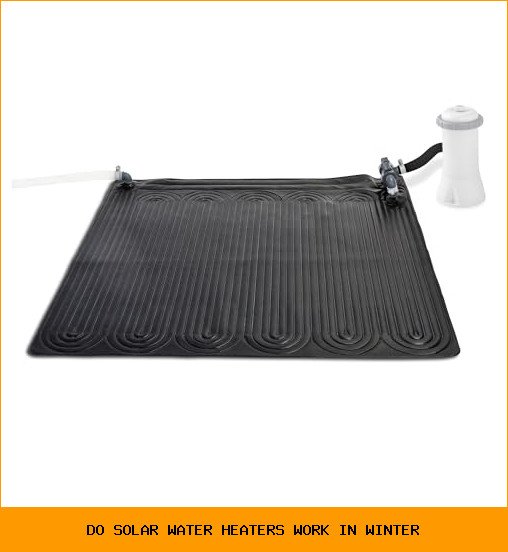
INTEX Solar Pool Water Heater Mat for Above Ground Swimming Pools | 28685E - Energy-Efficient Heating - Designed to work with INTEX Filter Pumps up to 2,000 GPH, 47.25" x 47.25"
- Solar heater mat uses solar technology to increase the temperature of the pool water by approximately 5 to 9 degrees depending on…
- Features an 11-square-foot surface to absorb the sun's rays to heat up above-ground pools; Dimensions (L x W): 47.25 x 47.25 inche…
- Simple and economical to use, compatible with filter pumps with up to 1/3 HP or a pump flow rate less than 2,000 GPH; Weight: 6.41…
And if you heat a swimming pool rather than your home’s water, a simple solar mat like the Intex 28685E 47 Inch x 47 Inch Solar Pool Water Heater Mat can add 5 to 9 degrees of warmth even when the air temperature is cool — as long as the sun is out. It works by spreading pool water over an 11-square-foot black PVC surface that absorbs sunlight. The heat transfers back to the water as it returns to the pool. It’s not magic, but it’s surprisingly effective for above-ground pools up to 8,000 gallons.
Myth #1: Your Solar Water Heater Is Useless Below 50 Degrees Fahrenheit
This is the biggest misconception I hear. People assume solar thermal panels need hot air to work. They don’t. Solar thermal collectors absorb solar radiation (specifically UV and infrared), not ambient temperature. The panel can be 40°F outside and still heat water to 100°F or more on a sunny day.
Let me give you a real example from a field test in Colorado in January. A flat-plate collector with a 4×8-foot panel hitting full sun at noon produced water at 110°F when the air temperature was 28°F. The catch? The panel was south-facing at a 60-degree tilt (steeper than summer). Output dropped to about 35% of its July peak, but it still worked. You won’t get 140°F water, but you will get usable hot water for showers and dishwashing.
The real killer is not the cold — it’s the lack of sun. Overcast days matter more than low temperatures. If your panels get direct sunlight for even four hours in winter, you will see a temperature rise. The myth persists because people confuse ambient temperature with solar intensity. They are not the same thing.
One honest caveat: the colder the incoming water (say 40°F from your well), the harder the system has to work. A storage tank that starts cold takes longer to heat. But the panels themselves are not disabled by frost.
Myth #2: Cloudy Days Mean Zero Hot Water
Diffuse radiation is the science behind this one. Even under thick clouds, some sunlight reaches the ground. Not much — maybe 10 to 20 percent of direct-beam radiation. But that’s still energy.
Evacuated tube collectors handle diffuse light noticeably better than flat-plate collectors because the vacuum inside each tube insulates the absorber so well. A flat-plate panel on a fully overcast day might only raise water temperature by 5°F. An evacuated tube system might manage 15°F. Neither gives you a full tank of hot water, but both can preheat it significantly. That means your backup heater (gas, electric, heat pump) runs less often.
I’ve seen data from January in Seattle — one of the cloudiest major US cities — where a well-sized evacuated tube array still delivered 40% of the home’s winter hot water demand. The panels never saw full sun. They just soaked up whatever scattered light came through.
So no, you won’t get a steaming shower on a gray day without a backup. But you also won’t get zero. The system is still working. The trick is sizing your collector area large enough to compensate for winter’s weaker light.
The Real Limiting Factor: Freeze Protection and System Design
Forget about output for a minute. The biggest risk your solar water heater faces in winter is freeze damage. Water expands when it freezes. If water sits still inside the collector on a night below 32°F, the pipes can burst. That’s an expensive repair.
There are three common ways manufacturers handle this. First is a drainback system. When the pump turns off, water drains by gravity back into a storage tank inside the house. Nothing freezes because nothing stays in the cold panels. These are common in colder climates and they work well — but they cost more to install.
Second is a closed-loop system with antifreeze (usually propylene glycol). The fluid circulates through the panels and a heat exchanger. The antifreeze prevents freezing down to -30°F or lower. This is the most reliable approach for places with hard freezes. The trade-off is lower efficiency because the heat exchanger adds a small loss, and you have to check the antifreeze concentration every year or two.
Third is a simple recirculation system where the pump runs during cold nights to keep warm water moving through the panels. This consumes electricity and can fail if the power goes out. I don’t recommend it for areas with sustained sub-freezing temperatures.
If you have a pool solar heater like the Intex mat mentioned earlier, freeze protection is different. You drain and fold the mat for winter storage. The product instructions say it folds compact for off-season storage. You don’t leave it out in freezing weather. That mat is designed for spring, summer, and fall use — not for heating a pool in January.
How to Get the Most Out of Your Solar Water Heater This Winter
You can’t change the weather, but you can change how your system uses it. Here is what actually moves the needle in cold months.
- Increase the tilt angle. The sun sits lower in winter. Flat panels pointed straight up waste light. For most locations, set your collector tilt to your latitude plus 15 degrees. For a Chicago house (latitude 42°), that means a 57° tilt. Steeper panels catch more low-angle sun and shed snow faster.
- Insulate every pipe outdoors. A 1-inch foam pipe wrap costs a few dollars per foot. Prevents heat loss between the panel and the storage tank. You’d be surprised how much temperature difference a poorly insulated pipe can cause in 20 feet of exposed run.
- Clean snow off the panels. Snow blocks all sunlight. A soft broom or roof rake works. Don’t use a metal shovel — you’ll scratch the glass or absorber coating. If your panels are steep enough, snow often slides off on its own on sunny days.
- Use a larger storage tank. Winter sunlight is limited. A bigger tank lets you capture more heat during the few sunny hours and store it longer. For a typical home, going from 80 gallons to 120 gallons of storage can double the number of usable hot showers from a winter day.
- For pool heaters, only run the pump when the sun is actually on the mat. Running it at night or in heavy clouds actually cools the pool water because the mat loses heat to the air. The Intex mat works best with a timer or manual pump control. Set it for midday when solar radiation peaks.
| Parameter | Flat-Plate Collector (Domestic) | Evacuated Tube Collector | Solar Pool Mat (like Intex) |
|---|---|---|---|
| Winter output vs summer | 30–40% | 45–55% | 50–70% (if sun hits directly) |
| Freeze protection needed? | Yes — drainback or glycol | Yes — usually glycol | No — must be drained and stored |
| Works in sub-freezing air | Yes, with proper fluid | Yes, with proper fluid | No (not designed for it) |
| Best use case | Year-round domestic hot water | High-efficiency winter heating | Spring-to-fall pool warming |
| Typical collector size | 40–80 sq ft | 30–60 sq ft (aperture area) | 11 sq ft (single mat) |
Can solar water heaters freeze and burst?
Yes, if the system lacks freeze protection and temperatures drop below 32°F with water inside the collector. Systems with proper drainback or glycol circulation are safe. But if you leave an uninsulated flat-plate panel full of water on a 20°F night, you’ll likely crack the pipes. That’s why freeze protection is the first thing to check when winter approaches.
Do solar water heaters work when covered in snow?
No — snow blocks nearly all solar radiation. You must clear it manually or wait for it to melt. Panels tilted at 45 degrees or steeper shed snow faster. Dark absorber surfaces also warm up quickly in morning sun and melt a thin layer. But heavy, wet snow can stick. Plan on using a roof rake after storms.
Should I cover my solar panels in winter?
No. Covering them blocks the light they need. Some people think covering prevents heat loss. It doesn’t help. Panels lose heat through the glazing, not the top. If anything, a cover traps moisture and causes mold or corrosion. Just leave them exposed. The only exception is if you have a seasonal system that is completely drained — then covering can protect the glass from hail or debris, but it’s optional.
How much backup heating is needed in winter?
It depends on your location and collector size. In a sunny state like Arizona or New Mexico, a well-sized system can cover 60–70% of winter demand. In cloudy regions like upstate New York or the Pacific Northwest, expect 30–40%. You’ll need a conventional heater (gas, electric, heat pump) to cover the rest. A common rule: size your backup heater as if the solar system didn’t exist, then let the solar preheat reduce its runtime. Don’t downsize the backup heater too much — you need it for multiday cloudy stretches.
Are solar pool heaters worth using in winter?
For a swimming pool, no — not in most climates. Even the best solar pool mat only raises water temperature 5–9 degrees. If pool water starts at 50°F, you get 55–59°F. That’s still too cold for swimming. Pool solar heaters are designed for the shoulder seasons (spring and fall) when you need a small bump to extend your swim window. The Intex mat, for example, is great for adding warmth in May or September. In winter, you’re better off draining the pool or switching to a heat pump. The mat folds and stores away.
What You Should Actually Do With This Information
- Solar water heaters work in winter as long as the sun shines — expect 30–50% of summer output depending on your collector type and tilt.
- Freeze protection is not optional. If you live where it freezes, get a drainback or glycol system installed professionally. A burst collector costs more than the upgrade.
- Clear snow off panels promptly. Even an inch of powder kills performance. A telescoping roof rake is worth the $40.
- Stick to a steeper tilt angle in winter — latitude plus 15 degrees catches more low sun and helps snow slide off.
- For pool owners, solar mats like the Intex 28685E are seasonal tools. They work great in spring and fall but should be drained and stored when frost threatens.
- Size your storage tank generously. A bigger tank means you can bank more of that short winter sun for evening and morning use.
- Don’t expect zero backup. Every solar water heater in a cold climate needs a conventional heater to cover cloudy spells. That’s normal — it’s a hybrid system, not a total replacement.


