You just spent $2,500 on a tankless water heater. Now you’re wondering: when you sell the house, will that money come back to you? Or are you doing it for the endless hot showers and the lower gas bill?
Most homeowners ask this same question. The answer isn’t a simple yes or no. It depends on where you live, what your buyer expects, and how you present the upgrade. In this article I’ll walk you through the real numbers appraisers use, the conditions that actually move the needle at sale, and a few mistakes that can turn a potential asset into a liability. You’ll walk away knowing exactly what your tankless unit is worth on the market.
Rheem
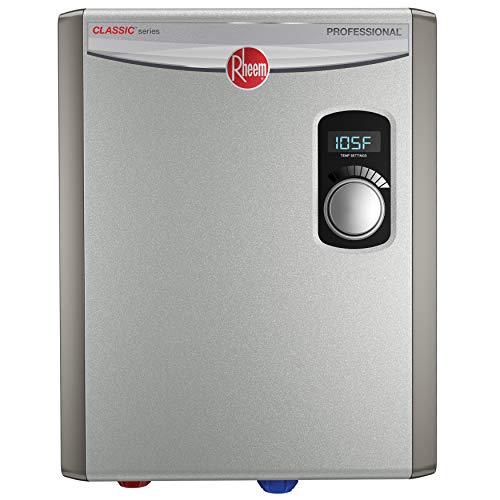
Rheem 18kW 240V Tankless Electric Water Heater, Gray
- External digital thermostatic control with LED display (+/1 degree accuracy)
- Most advanced self-modulation, adjust power to meet hot water demand
- Durable Copper immersion two heating elements, field Serviceable. Flow Rate- up to 4.4 GPM
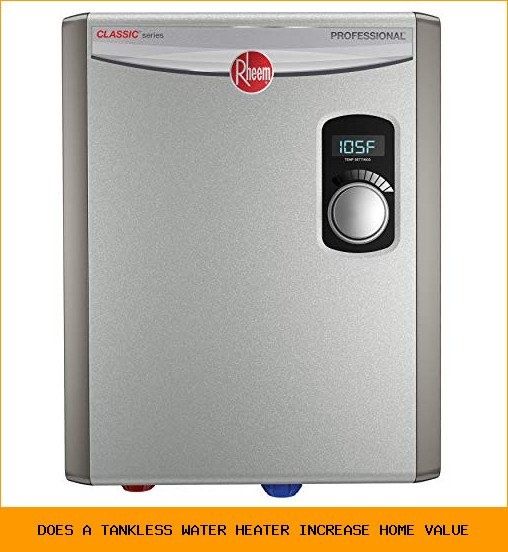
One unit that represents what a modern tankless can do is the Rheem 18kW 240V Tankless Electric Water Heater (ASIN: B01MR7Z39V). It includes an external digital thermostatic control with an LED display that holds temperature within one degree. Self-modulation means it adjusts power to match demand, and the copper immersion heating elements are field-serviceable. It delivers up to 4.4 GPM. That level of control and serviceability matters when a home inspector or buyer looks under the stairs.
How Appraisers Actually Treat Tankless Water Heaters
Appraisers don’t add the full installation cost to your home’s value. They use comparable sales — homes similar to yours that sold recently. If those homes had tankless units, yours will be in the same bracket. If they all had standard tanks, your upgrade might not bump your value much.
Here’s the blunt truth: the typical appraisal adjustment for a water heater is minimal. The Uniform Appraisal Dataset (UAD) doesn’t even have a separate line item for tankless vs. tank. Many appraisers lump both under ‘plumbing fixtures’ and move on. You might get a small positive adjustment if the comps lack an upgrade, but never the full price you paid.
What does help? If your tankless unit is less than five years old, professionally installed, and the seller provides documentation, an appraiser can note it as a quality feature. In tight markets where buyers compete, that can tip a valuation by a few hundred dollars. Not thousands.
The Real ROI: Energy Savings vs. Resale Premium
Let’s do the math. A gas tankless water heater costs $1,200 to $3,500 installed. An electric unit like the Rheem 18kW runs $700 to $1,500 installed depending on electrical work. Annual energy savings compared to a standard tank range from $80 to $200, depending on local utility rates and usage.
That means payback takes 6 to 15 years. If you sell before that, you haven’t recouped the cost through utility savings. Can you recoup it at sale? Possibly, but not dollar-for-dollar. Realtors I’ve spoken with say buyers might pay $300 to $800 more for a house with a new tankless, especially if the tank unit it replaces was old or leaking. That’s a fraction of your outlay.
Your best case: the buyer has researched tankless and actively wants one. Then you might get 60-70% of the cost back. But most buyers don’t know the difference. You’ll need to educate them during showings.
One thing that hurts ROI is when homeowners install the wrong size unit for their home. The Rheem 18kW pushes 4.4 GPM, which is enough for one or two simultaneous uses (a shower and a sink). If you have a large family or a big tub, an undersized unit will frustrate buyers. They’ll see cold water halfway through a shower as a defect, not an upgrade. Choose your unit carefully.
When Tankless Actually Boosts Home Value
Certain conditions make a tankless water heater a stronger selling point.
- High energy cost areas. In places like Hawaii, California, or the Northeast, fuel costs are high. Buyers there notice a unit that uses less energy. Appraisers may adjust upward if local market data shows a pattern.
- Premium or historic homes. If your home is in the top 20% of the local market, buyers expect modern features. A tankless water heater fits the narrative of an updated home. In a starter home, the same upgrade might seem overbuilt.
- Gas availability. Gas tankless units have higher flow rates and lower operating costs than electric in many regions. If you install a gas unit in an area where neighbors have electric tanks, that’s a tangible advantage.
- Space-constrained homes. A tankless unit frees up floor space. In a condo, tiny house, or basement with limited square footage, that’s a real selling point you can photograph and point out.
But there’s a catch. If the installation looks amateur — exposed wiring, unsecured pipes, wrong venting — buyers will assume other repairs were half-done too. A sloppy install can lower your home’s perceived value more than no upgrade at all. Always hire a licensed plumber or electrician.
Tankless vs. Traditional: What Matters at Sale
Here is a head-to-head comparison on the factors that influence a buyer’s decision and an appraiser’s adjustment.
| Factor | Tankless Water Heater | Traditional Tank Water Heater |
|---|---|---|
| Upfront cost (installed) | $1,200 – $3,500 | $600 – $1,500 |
| Lifespan | 20+ years (proper maintenance) | 8-12 years |
| Energy factor (efficiency) | 0.82 – 0.96 | 0.60 – 0.70 |
| Space required | Wall-mounted, ~2 cu ft | Floor footprint, ~6+ cu ft |
| Typical buyer value perception | Neutral to positive (if educated) | Neutral (expected) |
| Appraisal adjustment likelihood | Minor positive in premium comps | None unless defective |
| Maintenance requirements | Annual descaling, filter cleaning | Annual drain and anode check |
Notice the lifespan advantage: a tankless can last twice as long as a tank. If your unit is only a few years old when you sell, the buyer gets decades of life left. That’s a real benefit you can highlight.
5 Real Questions People Ask About This Topic
Does a tankless water heater increase home value on an appraisal?
Rarely as a line item. Appraisers use comparable sales. If homes in your area with tankless units sell for more, your home will be valued higher. But that’s a market effect, not an automatic adjustment. In most cases, appraisers consider it a functional upgrade that doesn’t add much to the final number unless the comparable homes lacked it.
How much value does a tankless water heater add — a percentage or dollar figure?
No universal percentage exists. Real-world data from realtor surveys suggests a premium of $300 to $800 over a comparable home with an old tank unit. That’s roughly 0.1% to 0.5% of a $350,000 home. Some high-end markets see $1,000+ if the unit is gas and sized correctly. But expect a modest return, not a windfall.
Is a gas or electric tankless better for resale value?
Gas usually wins. It delivers higher flow rates (7-10 GPM vs. 3-5 GPM for electric) and lower operating costs in most regions. Buyers familiar with tankless often look for gas. However, if your home lacks a gas line, running one can cost $500-$2,000, which eats into ROI. An electric tankless like the Rheem 18kW is a fine choice if gas isn’t available, but don’t expect the same premium.
Should I install a tankless water heater right before selling?
Probably not for the ROI alone. If your current tank is 10+ years old and shows rust or leaks, replacing it with a tankless can prevent a buyer from demanding a credit. In that scenario, you’re avoiding a negative rather than gaining a positive. If your tank works fine, you’re better off saving the money and offering a one-year home warranty instead.
Does a tankless water heater qualify for tax credits or rebates that affect value?
Some states and utilities offer rebates for high-efficiency water heaters. As of 2026, federal tax credits under the Energy Efficient Home Improvement Credit (up to $2,000) apply to certain heat pump water heaters, not to gas or electric tankless units. Check your state and local programs. If you claim a rebate, it doesn’t directly increase home value, but you can mention it to buyers as a savings they would also qualify for if they keep the unit.
What to Do If You Want Your Tankless to Help at Sale
- Keep the installation receipt and any permits handy. Buyers and appraisers trust paperwork.
- Have the unit serviced and descaled within six months of listing. Show the maintenance log.
- If it’s electric, make sure the electrical panel can handle the load. Undersized wiring scares off inspectors.
- Size the unit properly for your home’s peak demand. Too small hurts you more than too big.
- Include a brief note in your listing description: “Rheem tankless water heater — endless hot water, 20-year lifespan, energy efficient.” That educates the buyer.
- Don’t overspend on a premium unit if you’re in a mid-range market. A basic, well-installed tankless works just as well at sale.
- If you’re on the fence, talk to three local real estate agents. They’ll tell you whether buyers in your area ask for tankless or ignore it. Let local data drive your decision.


