You hook up a garden hose to the drain valve at the bottom of your water heater, open it, and watch the water trickle out. Then it stops. The tank still feels heavy. You knock on the side and it sounds full. What happened?
That little valve at the bottom of a tank is not a low point drain in the plumbing sense. It sits at the bottom of the tank, sure, but it rarely empties the unit completely. Sediment, the dip tube, and the internal design all get in the way. If you are trying to flush the tank or replace the element, you need to know what this valve can and cannot do.

Rheem
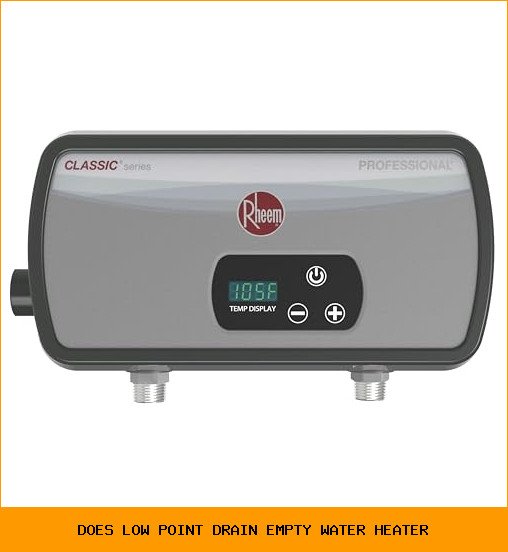
Rheem RTEX-06T, 6.5kw Professional Classic 240V Point of Use Thermostatic Tankless Electric Water Heater
- Endless On-Demand Hot Water - Consistent hot water when you need it that never runs out
- Continuously monitored water temperature and controlled flow rates ensure efficiency and consistent performance within 1 degree of…
- Save Space - Rheem Professional POU T tankless electric water heaters are 90% smaller than traditional tank heaters, great for poi…
This article explains exactly what a low point drain does for a water heater, why the tank still holds water after you open it, and the step-by-step method that actually gets the job done. You will also see when a tankless unit sidesteps this whole chore.
If you are tired of wrestling with tank maintenance, a point-of-use tankless heater like the Rheem 6.5kW 240V Point of Use Thermostatic Tankless Electric Water Heater removes the draining problem entirely. No tank means no sediment to flush and no drain valve to fight with. It heats water only when you turn on the tap, so there is nothing to store or drain.
What a Low Point Drain Actually Does
A low point drain is a valve installed at the lowest point of a plumbing system. Plumbers put them on main lines so you can drain the entire pipe network for repairs or winterizing. They work great for that purpose.
Water heaters borrow the name, but the reality is different. The drain valve on a water heater is a small brass or plastic valve threaded into the tank jacket. It is near the bottom, but it is not a true low point drain because the tank is not designed to empty through it.
Three things stop it from working like a real low point drain:
- The dip tube. Cold water enters the tank through a tube that runs from the top down to within a few inches of the bottom. That tube sits right above the drain outlet. It blocks the opening and traps water.
- The bottom of the tank is concave. Most tanks have a dished bottom. The drain valve is threaded into the side wall, not the absolute lowest point. A quarter-inch of water stays in that dish no matter what you do.
- Sediment. Minerals settle and harden around the drain opening. A layer of calcium can completely plug the valve, making it look like the tank is empty when it is actually full.
So, does a low point drain empty a water heater? Not completely. It drains maybe 70 to 80 percent of the water, and that is on a good day with a clean tank. The rest stays behind.
Why the Tank Still Feels Heavy After Draining
You open the valve, water runs for a few minutes, then slows to a drip. You think the tank is empty. Then you try to lift it and your back disagrees.
A 50-gallon tank holds about 400 pounds of water. Even if you drain 80 percent, you have 80 pounds left inside. That is not nothing. The concave bottom, the dip tube, and the sediment all conspire to hold that last bit.
There is another factor most people miss: the hot water outlet pipe. It draws from near the top of the tank. When the tank is full, water flows out through the top. When you drain from the bottom, air has to get in through the top to replace the water leaving. If the outlet pipe is closed or the vacuum breaker is stuck, the tank creates a vacuum and stops draining.
Here is the fix for that: open a hot water faucet somewhere in the house. That lets air into the top of the tank and breaks the vacuum. You will hear the water start flowing again almost immediately.
Even with the faucet open, you will not get every drop out. That is normal. The last half-inch to an inch of water sits in the bottom dish, and the dip tube covers the drain opening like a straw lying across a puddle.
How to Actually Drain a Water Heater (The Right Way)
If you want to flush the tank or replace the bottom element, you need a better approach than just opening the drain valve. Here is the method that works.
- Turn off the power or gas. For electric heaters, flip the breaker. For gas, turn the thermostat to pilot or shut off the gas valve entirely. Never drain a tank that is still heating.
- Turn off the cold water supply. There is a valve on the cold water line above the tank. Close it.
- Open a hot water faucet. Pick the closest one to the heater. This breaks the vacuum and lets air in.
- Attach a garden hose to the drain valve. Run the other end to a floor drain, a bucket, or outside. Make sure the hose is rated for hot water if the tank is still warm.
- Open the drain valve. Full open. Do not crack it halfway. You want maximum flow to carry sediment out.
- Let it drain until the flow stops. This takes 20 to 30 minutes for a 50-gallon tank. The water will run clear after a while if the tank is clean, or it will spit brown sludge if it is not.
- Close the valve, remove the hose, and refill. Open the cold water supply, let the tank fill completely, and check for leaks. Then turn the power or gas back on.
That method gets the tank mostly empty. If you need it bone dry to replace the bottom heating element, you have to do more. Use a wet/dry vacuum to suck out the remaining water through the element opening. Or tilt the tank slightly if you can move it. Most people cannot, so the vacuum is the practical answer.
One honest caveat: if your tank is more than a few years old and has never been flushed, the drain valve may be clogged solid. You can try poking a wire through the opening, but sometimes the valve is just done. Replacing a drain valve is a job for someone comfortable with plumbing, because the tank is full of water and hot.
Drain Valve vs. Low Point Drain: A Comparison
People use the terms interchangeably, but they are not the same thing. Here is a side-by-side look at what each one does.
| Feature | Water Heater Drain Valve | True Low Point Drain |
|---|---|---|
| Location | Side of the tank, near the bottom | Lowest point of the plumbing line |
| Purpose | Flushing sediment, partial draining | Emptying the entire pipe system |
| Drains completely? | No, leaves 1-2 inches in the bottom | Yes, by design |
| Needs air intake? | Yes, open a hot water faucet | Yes, open a vent or faucet |
| Common issues | Sediment clogging, stuck valve | Debris in the valve seat |
| Best for | Annual flushing, element replacement | Winterizing, pipe repairs |
The takeaway is simple. A water heater drain valve is a maintenance port, not a full-drain system. Treat it like one and you will not be surprised when the tank still has water in it.
When Draining Is Not the Answer: Tankless Options
There is a whole category of water heaters that never need draining. Tankless units heat water on demand and have no storage tank. That means no sediment buildup in a tank, no dip tube, and no drain valve to fight with.
The trade-off is flow rate. A point-of-use unit like the Rheem 6.5kW 240V model delivers hot water at the sink or shower where you install it. It is not going to supply the whole house. But for a bathroom, a kitchen, or a small apartment, it is plenty.
Installation is simpler than you might think. The unit mounts on the wall, connects to the existing water lines, and needs a 240V electrical circuit. It is about 90 percent smaller than a tank heater, which frees up floor space in a closet or under a sink.
The efficiency angle matters too. A tank heater keeps 40 or 50 gallons hot all day, even when nobody uses it. That is standby loss. A tankless unit only draws power when the water is running. Over a year, that difference shows up on the electric bill.
If you are replacing a failing tank, or adding hot water to a new location, skipping the tank entirely is worth considering. You lose the draining chore forever.
Frequently Asked Questions
How long does it take to drain a 50-gallon water heater?
Plan on 20 to 30 minutes with the drain valve fully open and a hot water faucet open upstairs. If the tank is full of sediment, it can take longer because the flow slows as the outlet clogs. A clean tank drains faster than a dirty one, so if it takes more than 40 minutes, you probably have a blockage.
Can I drain a water heater without a hose?
Yes, but it makes a mess. You can let the water run into a large bucket or a floor drain directly under the valve. The problem is controlling the flow. The valve opens to a full stream, and that is hard to aim into a bucket. A hose is cheap and worth the trip to the hardware store.
Why is my water heater not draining at all?
Two common reasons. First, the cold water supply is still on, so the tank keeps refilling. Second, the drain valve is clogged with sediment. Try opening a hot water faucet to break the vacuum. If that does not work, the valve is probably plugged. You can carefully poke a wire into the opening, but if the valve is corroded shut, it needs replacing.
Is it bad to drain a water heater completely?
Not if you do it right. The risk is turning it back on before the tank is full. That burns out the heating elements instantly. Always close the drain valve, open the cold water supply, and let the tank fill completely before restoring power. You will know it is full when water flows steadily from the hot water faucet you opened earlier.
How often should I drain my water heater?
Once a year is the standard recommendation. If you have hard water, do it every six months. The goal is to flush out sediment before it hardens into a layer that insulates the bottom of the tank. That makes the heater work harder and shortens its life. Skipping the flush for five years is how you end up with a tank that needs replacing.
What You Can Do Right Now
- Open a hot water faucet before you drain the tank. It breaks the vacuum and speeds up the whole process.
- Expect some water to stay in the tank. The concave bottom and dip tube make a complete drain impossible through the valve alone.
- Use a wet/dry vacuum to remove the last inch of water if you are replacing a bottom heating element.
- Flush the tank once a year, or twice if you have hard water. Sediment is the enemy.
- If the drain valve is clogged, try a wire first. If that fails, plan on replacing the valve.
- Consider a tankless point-of-use unit like the Rheem 6.5kW if you are tired of tank maintenance. No tank, no drain, no sediment.
- Never turn the power back on until the tank is completely full. A dry element burns out in seconds.


