Picture this: it’s mid-July, the sun is hammering your roof, and your electric water heater is humming away in the basement, burning kilowatts to do the same job the sun could do for free. Most people don’t realize that solar water heating is one of the most mature solar technologies out there. It’s been used for decades in places like Israel and Australia. It’s simple. It’s durable. And it works even in cloudy climates.
By the time you finish this article, you’ll know exactly how these systems turn sunlight into hot water. We’ll skip the marketing fluff and get into the real physics, the different designs, and the practical trade-offs. You’ll also pick up a few things that might save you from buying the wrong equipment or installing it in a shady spot.

Intex
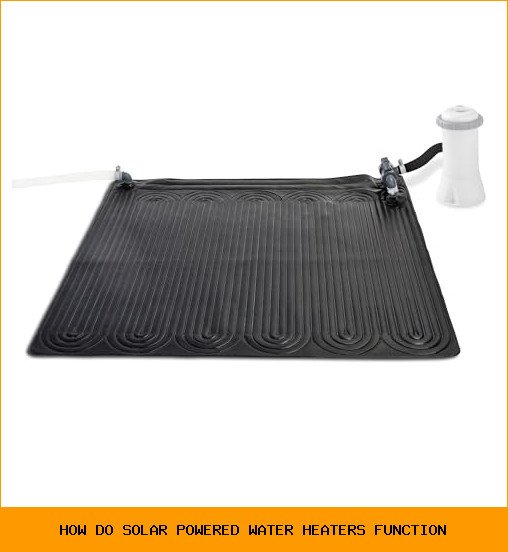
INTEX Solar Pool Water Heater Mat for Above Ground Swimming Pools | 28685E - Energy-Efficient Heating - Designed to work with INTEX Filter Pumps up to 2,000 GPH, 47.25" x 47.25"
- Solar heater mat uses solar technology to increase the temperature of the pool water by approximately 5 to 9 degrees depending on…
- Features an 11-square-foot surface to absorb the sun's rays to heat up above-ground pools; Dimensions (L x W): 47.25 x 47.25 inche…
- Simple and economical to use, compatible with filter pumps with up to 1/3 HP or a pump flow rate less than 2,000 GPH; Weight: 6.41…
One quick example of a simple, low-cost solar heater: the Intex 28685E Solar Pool Heater Mat. It’s a 47-inch square black PVC mat that you connect to your above-ground pool’s filter pump. Water runs through it and gets heated by direct sun exposure. It can raise pool temperature 5 to 9 degrees on a good day. It’s not a whole-house system, but it shows the basic idea in its simplest form.
How Sunlight Becomes Heat: The Basic Physics
Solar water heaters work on a dead-simple principle: dark surfaces absorb sunlight and turn it into heat. The heat is then transferred to water flowing through the collector. It’s not magic. It’s radiation absorption.
A typical flat-plate collector has a dark absorber plate (usually copper or aluminum with a selective coating), a glass or plastic cover (called the glazing), and a network of tubes or channels. Sunlight passes through the glazing and hits the absorber. The absorber gets hot, sometimes 150-200°F on a sunny day. Water or a heat-transfer fluid flows through the tubes, picks up that heat, and carries it away.
Efficiency depends on the temperature difference between the absorber and the outside air. A well-designed collector can convert 50-70% of the incoming solar energy into usable heat. That’s a lot better than photovoltaic panels, which top out around 20-22%.
Three Main System Types: Which One Fits Your Situation
There are three common ways to move heat from the collector to your tap. Each has its own pros and cons.
Direct active systems pump potable water through the collectors and into a storage tank. Simple. Efficient. But if you live where it freezes, the water in the collector can freeze and burst the pipes. You’d need a freeze protection valve or drain-down system.
Indirect active systems use a separate heat-transfer fluid (often propylene glycol) that circulates through the collector. That fluid passes through a heat exchanger in the storage tank, warming the domestic water. Freeze protection is built in, but you lose a little efficiency because of the extra thermal step.
Passive thermosiphon systems have no pump. The collector is mounted lower than the storage tank. As water heats up in the collector, it becomes less dense and naturally rises into the tank. Cooler water from the bottom of the tank flows back down into the collector. Simple, no electricity needed, but you need the tank above the collector which doesn’t always work with roof aesthetics.
Take a look at how the three stack up side by side.
| Feature | Active Direct | Active Indirect | Passive Thermosiphon |
|---|---|---|---|
| How water is moved | Pump pushes household water through collector | Pump circulates antifreeze fluid through closed loop | Natural convection (no pump) |
| Freeze protection | None built-in; needs drain-down or recirc | Glycol mixture prevents freezing | Usually drain-down or recirc in cold climates |
| Best climate | Mild, frost-free areas | Cold climates where freezing is common | Warm, sunny regions with mild winters |
| Efficiency | Highest (no extra heat exchanger) | Slightly lower (heat exchanger adds resistance) | Moderate (flow rate varies with sun) |
| Installation complexity | Moderate (pump + controller) | Higher (glycol loop + expansion tank) | Simple (no pump, but tank must be above collector) |
| Maintenance | Low (check pump, flush system) | Moderate (check glycol level and pH every 1-2 years) | Very low (no moving parts) |
| Typical cost (installed) | Medium | Higher | Lower |
Key Components You’ll Find in Every System
Regardless of the type, every solar water heater shares a few common parts. Understand these and you’ll know how any system fits together.
Collector. The heart of the system. Most residential systems use flat-plate collectors. Evacuated tube collectors are more efficient but pricier. They work better in cold climates because the vacuum reduces heat loss.
Storage tank. Just a well-insulated tank, often bigger than a conventional water heater (80-120 gallons). Some tanks have a built-in heat exchanger. Others rely on the pump to circulate water through an external exchanger.
Pump and controller. In active systems, a small pump (typically 1/25 to 1/12 HP) moves the fluid. The controller turns the pump on when the collector is hotter than the tank by a set difference (usually 10-15°F). It turns off when the difference drops to about 5°F.
Backup heater. Solar won’t cover 100% of your hot water demand every day. Most systems tie into an existing electric or gas water heater. When solar isn’t enough, the backup kicks in automatically.
What Actually Affects Real-World Performance
You’ll see companies claim huge savings. The real number depends on your specific situation.
Orientation and tilt. In the northern hemisphere, collectors should face true south (not magnetic south). Tilt angle matters: set it at your latitude for year-round use, or adjust for more summer or winter output. A 15-degree error in orientation can drop annual output by 10%. A 30-degree error can drop it by 20%.
Shading. Even partial shading is a killer. A shadow from a chimney or tree branch across even 10% of the collector area can cut output by 30-50% because the unshaded part still works but the overall temperature rise is reduced.
Ambient temperature and wind. On a cold, windy day, the collector loses heat faster to the air. That’s why evacuated tube collectors perform better in winter – the vacuum creates insulation. A flat-plate collector might produce 40-60% less on a 30°F day compared to a 70°F day with the same sun.
Cloud cover. Diffuse (scattered) light still carries energy. A collector can produce 20-30% of its clear-sky output on a heavily overcast day. Not great, but not zero.
Frequently Asked Questions
Do solar water heaters work in winter?
Yes, but output drops. A properly installed indirect system with glycol will still produce hot water. You’ll just rely more on your backup heater. In northern climates, solar might cover 30-50% of your winter load. In summer, it can cover 80-90%.
How long do solar water heaters last?
Collectors often last 20-30 years with minimal care. Pumps and controllers typically need replacement after 10-15 years. The storage tank’s life depends on water quality and anode rod maintenance: expect 10-15 years if you flush it annually.
Can I install a solar water heater myself?
You can, but it’s not a weekend project for most people. The collector needs to be securely mounted on the roof with flashing to prevent leaks. The glycol loop requires pressurized connections. The controller wiring must meet code. Expect a proper DIY install to take two full days. Mistakes can cost you more in repairs than hiring a pro.
How much money will I save on my utility bill?
In the US, a typical household can expect to save 50-80% on water heating costs annually. Exact savings depend on local sun, fuel prices, and how much hot water you use. A family of four in Arizona might save $400-600 a year. A family in Seattle might save $200-300. Check local incentives – the federal tax credit (30% as of 2026) can cut the upfront cost significantly.
Do I need a backup water heater?
Yes. Solar thermal systems are sized to cover 70-80% of annual load. Some days you won’t get enough sun. A backup electric or gas heater ensures you never run out of hot water. Most systems combine the two in one tank or connect them in series.
What to Do Next
If you’re thinking about going solar for hot water, start with these steps.
- Check your roof’s orientation, tilt, and shading. Do a simple shadow survey at 9am, noon, and 3pm on a sunny day. If you have more than 10% shading during peak hours, consider ground-mount or a different collector location.
- Estimate your daily hot water use. Typical number: 20 gallons per person per day. Multiply by family size to get the required tank size.
- Look up your local solar insolation values (peak sun hours). The National Renewable Energy Lab’s PVWatts tool also works for thermal.
- Get quotes from two or three installers. Ask them to run a performance simulation for your address. Compare their output numbers side by side.
- If you only want to heat a pool or a small cabin, something like the Intex 28685E mat is a cheap way to test the concept. It won’t replace a full system, but it’ll show you how much free heat the sun puts out.
- Watch for local rebates and federal tax credits. They can cut your installed cost by 30-50%, making the payback period drop from 10 years to 4-5 years.
- Join a solar thermal forum or Facebook group. Real owners will tell you what they wish they’d done differently. That advice is worth more than any website.


