You step into the shower, turn the handle, and wait. And wait. The water stays cold for what feels like forever. If you’ve got a 40-gallon electric water heater, you know the drill. But how long should that recovery actually take? And more importantly, what can you do when it takes way longer than it used to?
This article gives you the straight numbers for a 40-gallon electric water heater heating time, why it varies, and what parts you might need to swap if your unit is dragging. No fluff, just the facts you can use.
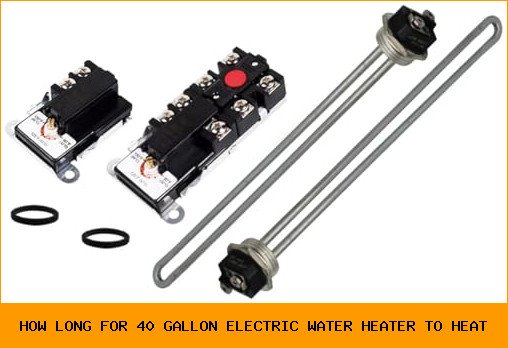
If your water heater is taking longer than it should, the problem often traces back to worn-out heating elements or a thermostat that’s lost its calibration. A kit like the LONG TERM EWH-01 Electric Water Heater Tune-Up Kit gives you both 4500W elements and upper/lower thermostats plus gaskets in one box. It’s designed to fit most dual-element heaters from Rheem, A.O. Smith, Whirlpool, and others. Replacing those parts is usually the fastest way to restore proper heating time without buying a whole new tank.
The Basic Math: How Long Should It Take?
A 40-gallon electric water heater with two 4500W elements will recover from a full tank of cold water (say 70°F) to 120°F in roughly 55 to 75 minutes. That’s the theoretical recovery time if both elements run at the same time. But here’s the catch: most residential electric water heaters use a sequencing system. Only one element fires at a time. That doubles the real-world recovery time.
Your typical 40-gallon tank runs one element for about 90 minutes to heat a full cold tank. If you only used half the hot water, recovery is faster—around 40 to 45 minutes. The first-hour rating on a standard 40-gallon electric is normally 50 to 55 gallons. That means you can draw about 50 gallons of hot water in the first hour before the tank can’t keep up.
But those numbers assume healthy elements, correct voltage, and a properly set thermostat. Throw in a failing part or cold incoming water, and everything shifts.
What Changes the Heating Time?
Here are the big variables that affect how long for 40 gallon electric water heater to heat under real conditions.
Incoming Water Temperature
Groundwater in the northern U.S. can hit 35°F in winter. In the south, it might be 70°F year-round. That 35° difference means the heater has to work roughly 30% longer to bring cold water up to temperature. Someone in Minnesota will see noticeably longer recovery in January than someone in Florida.
Element Wattage
Most 40-gallon heaters use 4500W elements. But some budget models use 3500W, and a few higher-end units have 5500W elements. A 5500W element heats water about 22% faster than a 4500W one, assuming everything else is equal. If your heater has 3500W elements, you’ll wait a lot longer.
Simultaneous vs. Sequential Operation
Some newer models (especially hybrid heat pumps or commercial-grade units) let both elements run at once. That cuts recovery time nearly in half. Check your owner’s manual or look at the wiring diagram. If your heater supports simultaneous operation, it’s a game-changer for recovery speed.
Thermostat Setting
Turning the thermostat from 120°F down to 110°F shortens recovery, but you risk running out of usable hot water faster. Most people keep it at 120°F for safety and efficiency. If you’ve cranked it to 140°F, recovery time jumps about 15%.
Real Comparison: Heating Time Under Different Conditions
I put together a table using standard formulas to show you how much these factors matter. The times assume a 40-gallon tank, sequential operation, 120°F setpoint, and starting from a full cold tank.
| Element Wattage | Incoming Water Temp | Recovery Time (Minutes) |
|---|---|---|
| 3500W | 40°F | ~125 |
| 3500W | 70°F | ~85 |
| 4500W | 40°F | ~97 |
| 4500W | 70°F | ~66 |
| 5500W | 40°F | ~79 |
| 5500W | 70°F | ~54 |
Notice that a 3500W heater in cold climate is basically a full two-hour wait for a full tank. That’s brutal if you’ve got back-to-back showers.
Is Your Heater Underperforming? Here’s How to Tell
You know how long a 40 gallon electric water heater to heat should take for your setup using the table above. If your actual wait is 30% or more beyond that, something’s wrong.
The most common culprit is a burned-out lower heating element. That element does the heavy lifting for incoming cold water. When it fails, the upper element tries to heat the whole tank, which takes forever. Other signs include:
- Water that goes lukewarm quickly during a shower
- Heating times that have gotten slower over the last year
- Tripping breakers when the heater kicks on
- Rust-colored water (elements can corrode and fail)
Replacing both elements and both thermostats at the same time is cheap insurance. The LONG TERM EWH-01 kit gives you everything needed in one package—4500W copper elements with a chrome coating for longevity, plus thermostats that interchange with Therm-O-Disc and APCOM types. If your heater is more than five years old and hasn’t been serviced, this is the first thing I’d do before calling a plumber.
Practical Tips for Faster Recovery
If you don’t have time to replace parts right now, here are a few things that help:
- Lower the thermostat a few degrees. Dropping from 125 to 120 cuts recovery time by about 5%. It’s not huge, but every minute counts.
- Stagger your hot water use. Let the tank recover 15 minutes between back-to-back showers. A 40-gallon tank with 4500W elements can reheat enough for a second shower in about 20 minutes.
- Insulate the hot water pipes. Less heat lost in the pipes means more stays in the tank. Cheap foam insulation at the hardware store pays for itself.
- Check for sediment buildup. A layer of sediment on the bottom of the tank insulates the water from the lower element. Flushing the tank once a year can shave several minutes off recovery.
Frequently Asked Questions
How long does a 40-gallon electric water heater take to heat up from cold?
With standard 4500W elements and sequential operation, figure about 90 minutes from a fully cold tank (incoming water at 50-60°F). That time drops to roughly 60 minutes if both elements run simultaneously.
Does a 40-gallon electric water heater recover faster than a gas one?
Typically, no. Gas water heaters recover faster because the burner is much higher BTU output. A typical gas 40-gallon can recover in 30-40 minutes. Electric is slower but more efficient at turning energy into heat.
Can a bad thermostat make the heating time longer?
Yes. If the upper thermostat sticks open or fails to switch properly, the upper element might run continuously while the lower element never fires. That cuts effective heating capacity in half. Replacing both thermostats when you change elements is smart.
What size water heater do I need for a family of four?
A 40-gallon electric is borderline for four people if you have back-to-back showers. You’ll likely run out during peak usage. Consider a 50-gallon or a heat pump model for better recovery. But if your 40-gallon is working fine with careful scheduling, it can work.
How often should I replace the heating elements?
Every 5-7 years is a good rule of thumb, or whenever you notice slower recovery. Hard water shortens element life. If you’ve got sediment or scale buildup, elements can burn out in 3-4 years.
What to Do Next
- Time your actual recovery: fill a cold tank, turn the heater on, measure how long it takes to get back to 120°F. Compare with the table above.
- If your time is more than 20% over the estimate, inspect the lower element first.
- Replace both elements and both thermostats as a set. A kit like the LONG TERM EWH-01 is the simplest way.
- Flush your tank annually to remove sediment that slows heating.
- If you still can’t keep up with demand, consider a simultaneous-wiring conversion (if supported) or upgrading to a larger tank.
- Never ignore a slow heater. A failing element can cause the upper element to run constantly, leading to overheating and a possible relief valve discharge.
Knowing how long for 40 gallon electric water heater to heat under your specific conditions lets you spot problems early and fix them before they become emergencies. Check your numbers, swap the parts if needed, and you’ll get back to hot showers without the wait.


