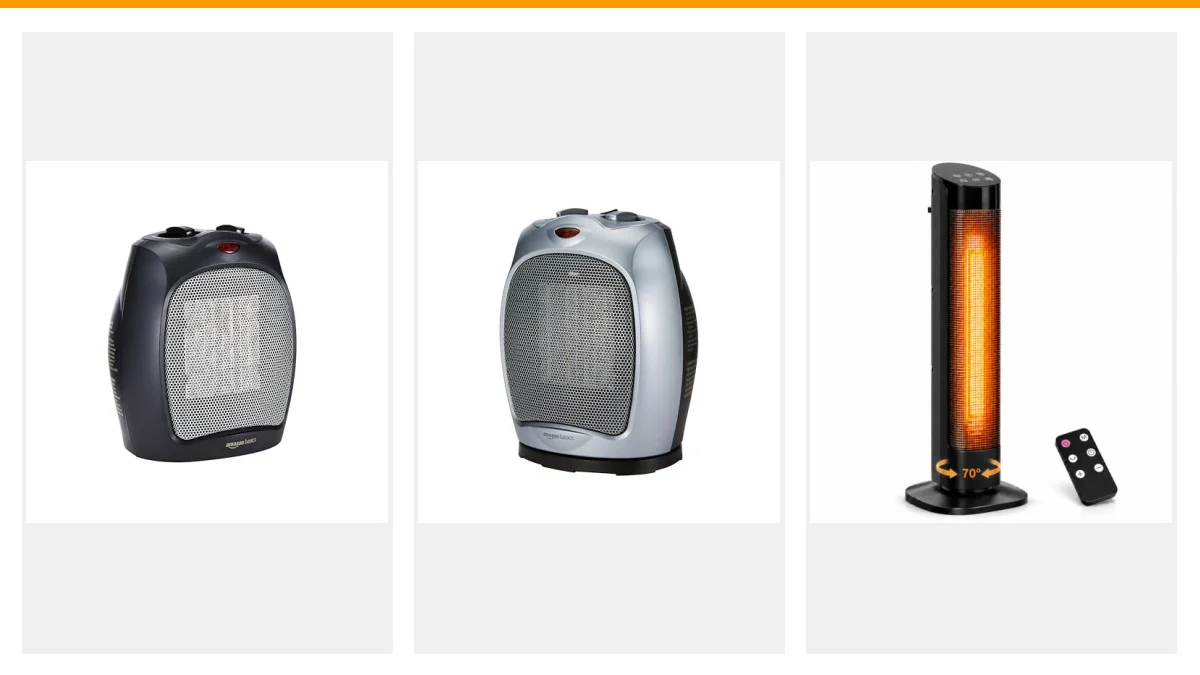
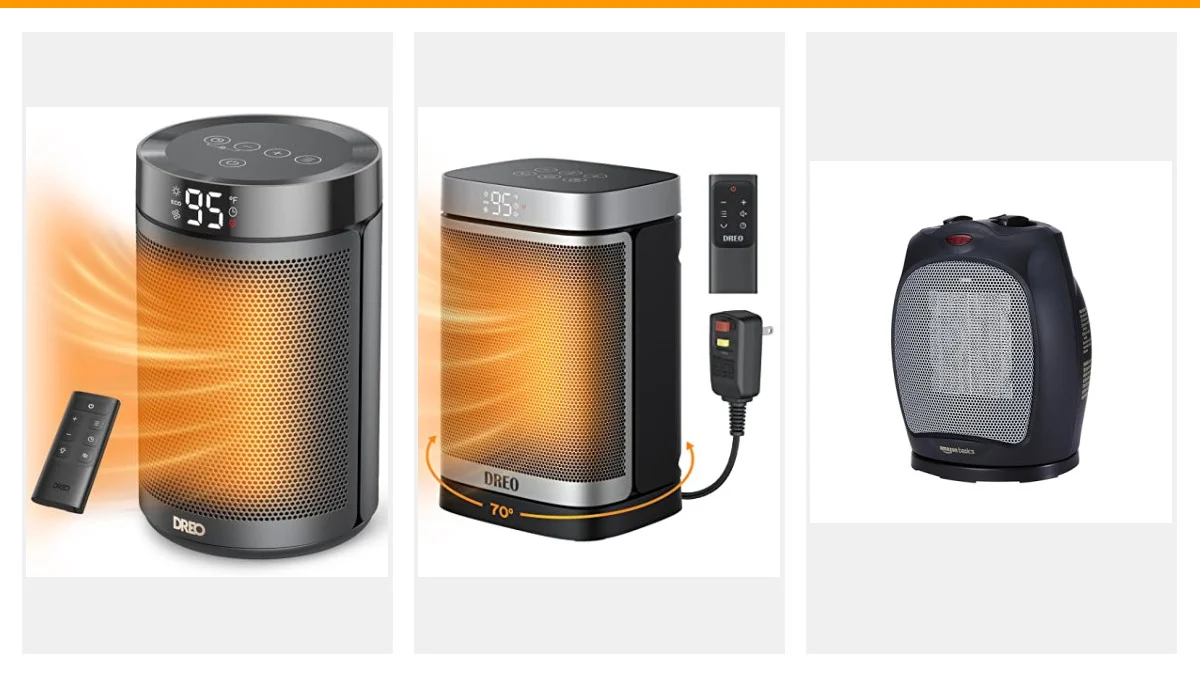
On a chilly winter evening, you might find yourself reaching for a ceramic heater to warm up your living space. These compact devices are popular for their efficiency and portability, making them ideal for both homes and offices. However, many people often wonder how many ceramic heaters they can run at once without risking safety or overloading electrical circuits. This article will provide insights into the factors that influence this decision and the best practices for using multiple heaters simultaneously.
You’ll leave this article with a clear understanding of how many ceramic heaters can safely operate together, the power requirements involved, and practical tips for maximizing their effectiveness. Additionally, we’ll touch on a noteworthy product: the Amazon Basics Ceramic Space Heater. This heater offers customizable heating options and built-in safety features, making it a reliable choice for those looking to heat their space efficiently.

Amazon Basics
Amazon Basics Ceramic Space Heater, Portable Indoor Heating Solution, With Overheat and Tip-Over Protection, Thermostat, Non-Oscillating, 1500W, Fast Heating, 7.52"D x 6.34"W x 9.45"H, Silver
- CUSTOMIZABLE HEATING OPTIONS: Choose from three settings to suit your needs - High (1500W), Low (900W), or Fan Only for air circul…
- COMPACT & PORTABLE: Weighing just 3 lbs and sized at 7.5“L x 6.3”W x 9.5“H, this space heater is easy to move and perfect for your…
- Built-in Tip-Over Protection, Overheat Protection, and a Power Indicator Light for safe operation.
 Oil-Filled vs Ceramic Heaters, Which Is Safer and Cheaper to Run?Watch on YouTube
Understanding Power Ratings
Before running multiple ceramic heaters, you need to understand their power ratings. Most ceramic heaters operate on two settings: high (typically 1500 watts) and low (around 900 watts). This means if you have a 1500-watt heater plugged into a standard outlet, it will draw the maximum power when in use. If you plan to use more than one heater, you must consider the total wattage.
For example, if you plug in two 1500-watt heaters into the same circuit, you will be drawing 3000 watts, which exceeds the capacity of a standard 15-amp circuit (which can handle about 1800 watts). This can lead to tripped breakers or even fire hazards. So, how many ceramic heaters can you run at once? The safe answer is typically one 1500-watt heater per standard outlet, or two if they are on separate circuits.
Calculating Circuit Capacity
Each circuit in your home has a specific amperage rating, commonly 15 or 20 amps. To calculate the wattage capacity, use the formula: Watts = Amps x Volts. In most homes, the voltage is 120 volts. So, a 15-amp circuit can handle about 1800 watts (15 amps x 120 volts). A 20-amp circuit can handle about 2400 watts.
Here’s how it breaks down:
- 15-amp circuit: Safe for one 1500-watt heater, or two 900-watt heaters.
- 20-amp circuit: Can comfortably handle one 1500-watt heater and one 900-watt heater, or two 1500-watt heaters if on separate circuits.
Knowing your circuit’s capacity helps prevent overloading and ensures safe operation.
Common Misconceptions
No, More Watts Doesn’t Mean Better Heating
A common misconception is that higher wattage means better heating. While it’s true that higher wattage can produce more heat, the efficiency of heating depends on the room size and heater placement. A single 1500-watt heater may suffice for a small room, while two such heaters may be too much for the same space, leading to uneven heating and unnecessary energy consumption. It’s essential to consider the heater’s specifications and your room’s size.
Yes, You Can Use Heaters in Different Rooms
Another misconception is that all heaters must be on the same circuit. You can run multiple ceramic heaters simultaneously in different rooms, provided each heater is plugged into a separate circuit. This distribution prevents overloading any single circuit and allows for efficient heating across your home.
Practical Tips for Running Multiple Ceramic Heaters
To maximize the effectiveness and safety of running multiple ceramic heaters, consider these tips:
- Use heaters with built-in safety features, like tip-over and overheat protection.
- Ensure heaters are plugged into outlets with sufficient amperage capacity.
- Keep heaters away from flammable materials and ensure proper ventilation.
- Turn off heaters when leaving the room to save energy and reduce fire risk.
Comparison of Ceramic Heater Options
| Heater Model | Power (Watts) | Safety Features | Portability |
|---|---|---|---|
| Amazon Basics Ceramic Space Heater | 1500W / 900W | Overheat, Tip-Over Protection | Compact, Lightweight |
| Dyson Hot + Cool | 1500W | Thermal Cut-Out | Portable, Oscillating |
| DeLonghi Ceramic Heater | 1500W | Anti-Freeze, Overheat Protection | Compact, Lightweight |
Frequently Asked Questions
How many ceramic heaters can I run at once on a 15-amp circuit?
You can safely run one 1500-watt ceramic heater on a 15-amp circuit. If you use two heaters, they should be 900 watts each to avoid overloading.
Can I plug multiple ceramic heaters into a power strip?
It’s not advisable to plug multiple heaters into a power strip. Heaters should be plugged directly into wall outlets to ensure safety and avoid overloading the circuit.
Do ceramic heaters consume a lot of electricity?
Ceramic heaters are energy-efficient compared to traditional heating methods, but they do consume electricity. Monitor usage to keep energy costs manageable.
Can I run a ceramic heater overnight?
Running a ceramic heater overnight is generally safe if it has safety features like tip-over protection. However, it’s wise to turn it off if you’re leaving the room.
What should I do if my circuit keeps tripping?
If your circuit trips frequently while using heaters, consider reducing the number of heaters or upgrading your electrical system. Consult an electrician for advice.
Final Thoughts
- Know the wattage of your ceramic heaters.
- Understand your circuit’s amperage capacity.
- Use heaters with safety features for peace of mind.
- Plug heaters directly into outlets, avoiding power strips.
- Consider room size when deciding how many heaters to use.
- Turn off heaters when not in use to save energy.
- For more tips on heater usage, check out this guide.