You bought a new water heater, wrestled it into the basement, and now you’re staring at the connections wondering if that braided hose from the hardware store will hold up. It’s a moment where bad information costs real money. Most online guides skip the details that actually matter – the stuff inspectors flag and plumbers curse.
This article covers the real decisions in an installation of a hot water heater: which connectors actually last, why gas and electric units have different failure modes, and how to read the nameplate so you don’t buy the wrong size. I’ve seen too many jobs where someone saved $20 on a connector and paid $2,000 for water damage six months later. You’ll walk away knowing exactly where to spend money and where to save.

TT FLEX
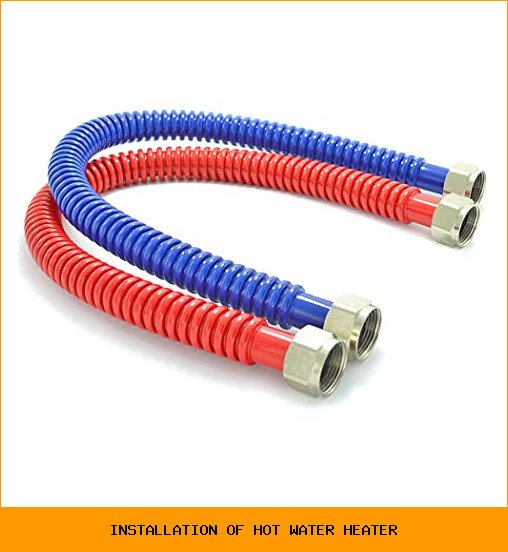
TTFLEX 24" Water Heater Hose 3/4" FIP Water Heater Supply Lines, 2 PCS | Hot & Cold Color Coded, 3/4" Flex Water Heater Connector, Stainless Steel Corrugated, Lead-Free, NSF-61, CUPC Listed
- SUPERB CRAFTSMANSHIP:This stainless steel water hose is a corrugated hose, more flexible and no kinking.Fits snugly, no leaks.Red…
- EASY INSTALLATION:Our corrugated stainless steel flexible water Line can easily connect to normal household water heaters. It has…
- DURABLE: This water heater connector 3/4" FIP is made of premium grade 304 stainless steel.It can withstand high pressure up to 25…
One part that often gets overlooked is the supply line connecting the heater to your home’s plumbing. The stock braided nylon hoses that come with some units or get picked up at the last minute can crack or burst under prolonged heat. A better option is a corrugated stainless steel flex line like the TTFLEX 24-inch water heater hose set. It uses 304 stainless steel, handles up to 250 PSI without bursting, and comes with the certifications (NSF-61, UPC) that code inspectors actually look for. The red and blue color coding helps avoid mixing hot and cold lines – a small thing that saves headaches later. You can check current pricing on Amazon.
The ‘Flexible Connector’ Lie Most People Fall For
Walk into any big-box store and you’ll see rows of braided nylon hoses labeled ‘for water heaters.’ They’re cheap, they’re flexible, and they fail. The rubber core inside expands as it heats, and over time the braided outer jacket rubs against the inner tube until it wears through. I’ve pulled three of these off burst water heaters in the last two years. Every time the homeowner said, ‘But it was brand new.’
Corrugated stainless steel connectors work differently. There’s no inner rubber tube to fail. The 304 stainless steel bellows handle both the temperature cycling and the constant pressure. The TTFLEX set I mentioned above uses a 3/4-inch female iron pipe thread on both ends, which matches almost every standard water heater and shutoff valve. The corrugated design means it bends without kinking – you can route it around a tight corner without worrying about flow restriction.
One catch: because they’re metal, they transmit vibration more than rubber hoses. If your water heater sits directly on the floor and rattles during operation, you might hear it through the line. A small piece of anti-vibration pad under the heater legs solves that. But the trade-off is worth it when you consider the burst pressure rating of 250 PSI versus the 150 PSI rating of most nylon braided hoses. City water pressure rarely exceeds 80 PSI, but thermal expansion inside the tank can spike pressure beyond 150. That’s when the cheap hose gives out.
Why Gas vs Electric Isn’t the Only Big Decision
Most homeowners focus on the fuel type and forget about three things that cause just as many callbacks: venting, clearance, and the temperature-pressure relief (T&P) valve.
Gas water heaters need a proper exhaust path. If you replace an old unit and the new one has a different flue diameter, you can’t just adapt it with a reducer. The draft hood and chimney must match the manufacturer’s specs to avoid carbon monoxide spillage. I’ve seen installers use a reducing coupling to make an 8-inch flue fit a 6-inch collar. That’s a code violation and a health hazard. Measure the existing flue size and buy the heater that matches it directly. If the flue is damaged or corroded, replace it – don’t patch it.
Electric water heaters don’t have venting issues, but they do have clearance requirements. The panels on top need room to be removed for element replacement. Most electric units require at least 6 inches of clearance above the tank for access. If you cram one into a low crawlspace, you’ll curse yourself the first time a heating element fails. Plan for that now.
The T&P valve is a safety device that gets ignored. It’s there to release pressure if the tank overheats. But if the valve’s discharge pipe is too narrow, too long, or pointed straight at the floor, it can cause scalding or water damage. Code says the discharge pipe must be the same size as the valve outlet, slope downward, and end between 6 and 24 inches above the floor. No threads at the end – it needs to drain visibly so you can see if it’s leaking. I recommend replacing the T&P valve during any water heater installation. They cost about $15 and corrode over time. Don’t reuse the old one.
The One Number on the Nameplate Nobody Reads
Every water heater has a yellow Energy Guide label with two numbers: the first-hour rating (FHR) and the recovery rate. Most people look at the gallon capacity and assume bigger is better. That’s not how it works.
The first-hour rating tells you how much hot water the tank can deliver in the busiest hour, accounting for recovery. A 50-gallon tank with a low recovery rate might only deliver 55 gallons before going cold. A 40-gallon tank with a high-recovery burner can deliver 70 gallons. If your household showers overlap, the FHR matters more than the tank size. Check it against your peak demand: count the number of showers (20 gallons each), the dishwasher (6 gallons), and laundry (15 gallons). Add them up. If your peak demand is 65 gallons, you want a unit with at least a 70-gallon FHR.
The recovery rate is tied to the BTU input on gas heaters or the wattage on electric heaters. But more watts doesn’t always mean faster recovery. Electric heaters are limited by the breaker size – most residential ones use a 4500-watt element on a 30-amp breaker. You can buy a 5500-watt element, but it needs a 40-amp circuit and heavier wiring. That’s a whole electrical job, not a swap. Gas heaters, on the other hand, can vary their BTU input by adjusting the gas pressure or the orifice size. But the burner efficiency matters. A 40,000 BTU unit at 90% efficiency delivers more usable heat than a 50,000 BTU unit at 70% efficiency. Read the recovery rating in gallons per hour at a 90-degree temperature rise. That’s the number that actually determines how fast you get hot water back.
Here’s a quick comparison of the common connector types for water heater installations:
| Connector Type | Material | Max Temperature | Burst Pressure | Typical Life | Code Approved |
|---|---|---|---|---|---|
| Braided Nylon | Rubber core + nylon jacket | 180°F | 150 PSI | 3–5 years | Some areas |
| Copper Sweat | Type L copper | 250°F | 400+ PSI | 20+ years | Yes |
| Corrugated Stainless | 304 stainless steel | 250°F | 250 PSI | 15–20 years | Yes |
| PEX Pipe | Crosslinked polyethylene | 200°F | 160 PSI | 10–15 years | Yes (with proper fittings) |
The corrugated stainless option offers a good balance of durability and ease of installation. Copper is permanent but requires soldering skills. Braided nylon is a gamble I would not take on a new installation.
How long does it take to install a hot water heater yourself?
A first-timer should budget four to six hours for a straight swap – same fuel type, same location. That includes draining the old tank, disconnecting the old lines, lifting the new unit into place, making the water and gas or electrical connections, and testing for leaks. If you need to change the venting or upgrade the electrical circuit, add two more hours. Plan for a helper during the lifting stage; an empty 50-gallon tank weighs about 130 pounds, and a full one is over 400 pounds.
Can I use Teflon tape on the water heater supply line connections?
Yes, but only on the male threads, and only two to three wraps. Over-taping can crack the fitting when you tighten it. For the TTFLEX connectors, the rubber gaskets inside the female ends create the seal – the tape just lubricates the threads and fills tiny gaps. Pipe dope also works. Never put tape or dope on the female threads; it does nothing there.
What size water heater supply line do I need?
Almost all residential water heaters use a 3/4-inch female iron pipe (FIP) connection. The TTFLEX hoses come in 3/4-inch FIP on both ends, which matches standard shutoff valves and heater inlet nipples. Buy 24-inch hoses unless your heater sits farther than 20 inches from the wall. 18-inch hoses exist but tend to pull tight – you want a slight droop in the line to allow for expansion and movement.
Do I need a drip leg on the gas line for a gas water heater?
Yes. Local codes typically require a sediment trap (drip leg) at the bottom of the gas supply line before the gas valve. It catches debris and moisture from the gas supply. The trap needs to be at least 3 inches long and accessible for cleaning. If you’re replacing an old heater and the existing drip leg is missing or too short, add one. It’s a simple tee fitting with a capped nipple and costs under $10.
Why does my new water heater make a popping noise?
That sound usually means sediment is building up on the bottom of the tank. The burner or heating element superheats water trapped under the sediment, which then pops as steam bubbles escape. It’s more common in areas with hard water. Flush the tank once a year by attaching a garden hose to the drain valve, opening it for a few minutes, and letting the water run until it’s clear. If the noise is loud and consistent, the drain valve might be clogged – replace it. The popping itself isn’t dangerous, but it shortens the heater’s life by reducing efficiency and causing hot spots.
What You Should Actually Do With This Information
- Replace any braided nylon supply lines with corrugated stainless steel hoses – the TTFLEX set is a solid choice that meets code and lasts.
- Measure your flue diameter before buying a gas water heater – mismatched venting is the most common installation error I see.
- Install a new T&P valve during the swap and verify the discharge pipe meets code (same size as valve, visible drain gap, no threads at the end).
- Read the first-hour rating, not the tank size, to match the heater to your household’s peak demand.
- Flush the tank annually to prevent sediment buildup – it keeps the recovery rate where it should be and prevents popping noises.
- Budget for a helper to move the tank – back injuries from DIY water heater lifts are more common than most people think.
- Check the current price of corrugated stainless hoses like the TTFLEX on Amazon before buying – they’re often cheaper than the braided nylon hoses from the big-box store.


