Introduction
Cold winter nights can be challenging, especially when your heating system struggles to keep up with the dropping temperatures. In such situations, portable heaters become essential. But how do you ensure that your heater operates safely and efficiently? The answer often lies in understanding the outlet rating for heaters, a crucial aspect that many overlook.
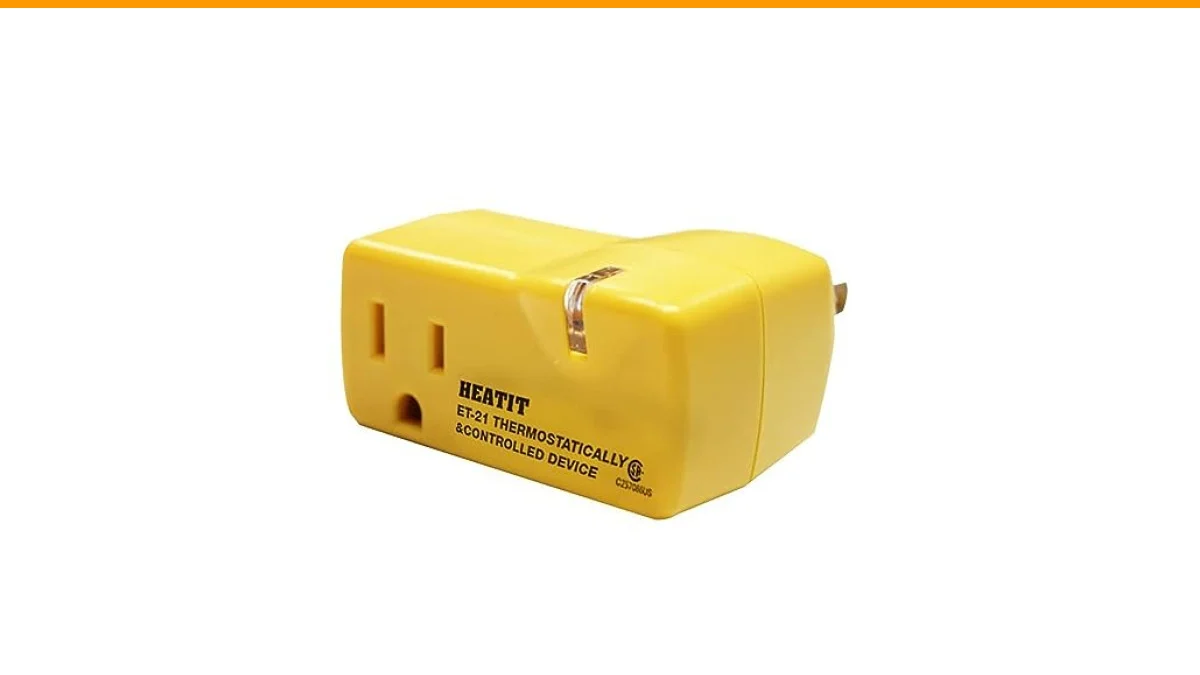
This article will walk you through the nuances of outlet ratings, helping you understand how to choose the right outlet for your heater. We’ll also review how devices like the HEATIT ET-21 Freeze Protection Thermostat Outlet can help maintain optimal temperatures without wasting energy.

HEATIT
HEATIT ET-21 Freeze Protection Thermostat Outlet, 38°F On/50°F Off 1PCS | For roof deicing and pipe heating cable, grounded outlet, durable weather-resistant housing, indoor/outdoor use
- Thermostat control outlet with the smart indicator light: The indicator light turns on when it's below 38 and it has energized the…
- Energize below 38℉(3℃) and to turn off automatically at approximately 50℉(10℃). Automatically turns power on and off according to…
- Easy installation: just plug this device into electrical outlet. Maximum 15 amps. CSA approved. Only for dry location.
The HEATIT ET-21 Freeze Protection Thermostat Outlet is a practical tool for managing heater performance. It intelligently controls the power to your heater based on the ambient temperature, turning on below 38°F and off around 50°F. This automatic control can save you money while ensuring your space remains warm when you need it most.
Understanding Outlet Ratings
Outlet ratings indicate how much power an outlet can safely deliver. Most household outlets in the U.S. are rated for 15 or 20 amps and run on 120 volts. To determine the maximum wattage an outlet can handle, you multiply the amperage by the voltage:
Wattage = Amperage x Voltage
For a 15-amp outlet, this means:
15 amps x 120 volts = 1800 watts
Similarly, for a 20-amp outlet:
20 amps x 120 volts = 2400 watts
When selecting a heater, ensure its wattage does not exceed the outlet’s capacity. Exceeding this limit increases the risk of tripped breakers or, worse, electrical fires.
No, More Watts Doesn’t Mean Better
A common misconception is that higher wattage equals better heating. While it’s true that higher wattage heaters can produce more heat, they may not be suitable for every space. A 1500-watt heater can warm a small room effectively, while a larger heater may be overkill. In such cases, you risk wasting energy and increasing your electricity bills.
Moreover, using a heater that draws more power than your outlet can handle can lead to dangerous situations. Always check the heater’s specifications against the outlet rating to ensure compatibility.
Choosing the Right Heater for Your Outlet
When selecting a heater, consider both the wattage and the outlet rating. Here are steps to help you choose:
- Identify the room size you want to heat.
- Calculate the required wattage using the formula: 10 watts per square foot is a general rule of thumb.
- Check the outlet rating to ensure it can handle the heater’s wattage.
- Consider additional features, like thermostatic control, which can enhance efficiency.
For example, a 150-square-foot room typically requires a heater with at least 1500 watts. Ensure your outlet can support this power draw safely.
Comparative Table of Outlet Ratings and Heater Types
| Heater Type | Typical Wattage | Required Outlet Rating |
|---|---|---|
| Small Portable Heater | 750-1500 watts | 15 amps |
| Medium Space Heater | 1500-2026 watts | 20 amps |
| Infrared Heater | 1000-1500 watts | 15 amps |
| Radiant Floor Heater | 100-1500 watts (depending on size) | 15 amps |
Frequently Asked Questions
What happens if I plug a high-wattage heater into a low-rated outlet?
Plugging a high-wattage heater into a low-rated outlet risks overheating, which can lead to tripped breakers or potential fires. Always match the heater’s wattage to the outlet rating.
How can I determine my outlet’s rating?
Check the circuit breaker panel in your home. Each circuit will have an amperage rating. Most standard outlets are either 15 or 20 amps. If you’re unsure, consult an electrician.
Can I use an extension cord with my heater?
Using an extension cord for a heater is generally not recommended due to the risk of overheating. If necessary, ensure the cord is rated for the heater’s wattage.
How do I know if my heater is energy efficient?
Look for heaters with energy-saving features like programmable timers or thermostats. Products like the HEATIT ET-21 can help manage energy use effectively.
What should I do if my heater trips the breaker?
If your heater frequently trips the breaker, it may be drawing too much power. Check the heater’s wattage against the outlet rating. If the numbers don’t match, consult an electrician for advice.
Final Thoughts
- Understand the wattage your heater requires and ensure your outlet can handle it.
- Don’t assume higher wattage equals better heating.
- Use the 10 watts per square foot rule for sizing heaters.
- Check your circuit breaker panel for outlet ratings.
- Consider energy-saving devices like the HEATIT ET-21 for better efficiency.
- Always consult professionals if unsure about electrical capacities.
- Prioritize safety to prevent potential fire hazards.



