Have you ever wondered why some appliances seem to devour energy while others are surprisingly efficient? Understanding power ratings can help demystify this aspect of home energy consumption. These ratings indicate how much energy an appliance uses, and knowing them can empower you to make smarter decisions about your electricity usage.
In this article, you will learn what power ratings are, why they matter, and how to measure them effectively. We’ll also discuss tools like the MECHEER Watt Meter Power Meter Plug, which offers a detailed look at your home electricity usage across various parameters.
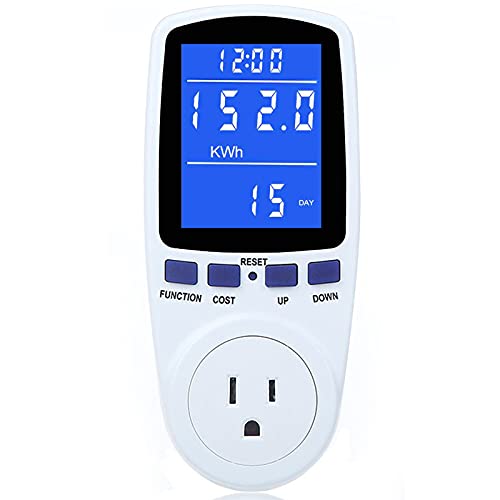
MECHEER
Watt Meter Power Meter Plug Home Electricity Usage Monitor 7 Modes Display | Upgraded, Electrical Usage Monitor Consumption, Energy Voltage Amps Kill Meter Tester, Backlight, Overload Protection
- Various Monitoring Parameters: The power meter plug can monitor the power (W), energy (kWh), volts, amps, hertz, power factor, cos…
- Upgraded LCD Display: With large screen size 2.36 inch x 1.85 inch, clearer monitor backlit, our electrical usage monitor can disp…
- Adjustable Backlight Time: Our upgraded watt meter has 5 options of backlight time. The default backlight time duration is 10 minu…
The MECHEER Watt Meter Power Meter Plug is a practical tool that provides insight into your energy consumption. It monitors a range of parameters including power in watts, energy in kilowatt-hours, voltage, and current, making it easier for you to evaluate how much energy your appliances consume.
What is Power Rating?
Power rating refers to the maximum amount of energy that an electrical device can use or deliver over a specific period. It’s usually measured in watts (W) or kilowatts (kW). For instance, a light bulb rated at 60 watts consumes 60 joules of energy every second it operates. This rating is crucial because it helps consumers understand how much energy an appliance will draw from the power supply, which directly affects electricity bills.
Power ratings can be categorized into several types:
- Active Power (W): This is the actual power consumed by an appliance for performing useful work.
- Reactive Power (VAR): This is the power used to establish electric and magnetic fields in devices like motors and transformers.
- Apparent Power (VA): This is the combination of active and reactive power, representing the total power consumed.
Why Power Ratings Matter
Knowing the power rating of your appliances helps in several ways:
- Cost Management: Understanding power ratings allows you to estimate energy costs, helping manage your electricity budget more effectively.
- Energy Efficiency: Identifying which appliances consume the most power guides you toward more energy-efficient options, reducing your carbon footprint.
- Safety: Knowing the power requirements of devices helps prevent overloads, which can lead to dangerous situations like fires.
For instance, if you notice that your refrigerator has a power rating of 200 watts, you can calculate its monthly energy consumption. If it runs 24/7, it will consume about 144 kWh (200W x 24 hours x 30 days) in a month.
How to Measure Power Ratings
Measuring power ratings can be straightforward with the right tools. Here are a few methods:
- Power Meter: Devices like the MECHEER Watt Meter Power Meter Plug can provide real-time data on energy consumption. They display multiple parameters, including watts, kilowatt-hours, voltage, and more.
- Manufacturer Labels: Many appliances have a label indicating their power rating, usually found on the back or bottom. This information can help you determine their energy consumption.
- Online Calculators: Various websites offer calculators where you input the appliance’s wattage and usage time to estimate energy consumption.
Using a watt meter like the MECHEER model allows you to monitor how much energy your appliances use in real-time, making it easier to identify energy hogs and adjust usage accordingly.
Comparing Power Measurement Tools
| Tool | Functionality | Best For |
|---|---|---|
| MECHEER Watt Meter | Monitors various parameters including power, energy, and cost | Home energy monitoring |
| Standard Power Meter | Measures total power consumption | Basic energy usage tracking |
| Smart Plugs | Tracks energy usage and can be controlled via apps | Remote monitoring and control |
| Energy Management Systems | Provides detailed analytics and monitoring across multiple devices | Comprehensive energy management |
How do I calculate the power rating of an appliance?
To calculate the power rating, check the label on the appliance for wattage. If it’s not available, you can use a watt meter to measure the actual consumption when the device is in use.
What is the difference between watts and kilowatts?
Watts (W) are a unit of power, while kilowatts (kW) equal 1,000 watts. For instance, a 1,500-watt heater is equivalent to 1.5 kilowatts.
Can I use a power meter for more than one appliance?
Yes, you can use a power meter to measure the energy consumption of any appliance. However, ensure that the total load does not exceed the power meter’s maximum rating.
What happens if I exceed the power rating of an appliance?
Exceeding the power rating can cause the appliance to overheat, potentially damaging it or creating a fire hazard. Always adhere to the specified ratings.
Are there any appliances that don’t have a power rating?
Most electrical appliances have a power rating. However, certain older or non-electrical devices may not have this information readily available.
Closing Thoughts
- Understanding power ratings helps you manage your energy costs effectively.
- Use tools like the MECHEER Watt Meter for accurate readings.
- Always check the power rating before plugging in new appliances.
- Consider energy-efficient appliances to lower your electricity bills.
- Regularly monitor your appliances to identify energy hogs.
- Educate yourself on the different types of power ratings for better decision-making.
- Safety first: never exceed the rated capacity of any device.



