You open the hot water tap and get hit with that rotten egg smell. Or you hear a rumbling from the tank that wasn’t there last month. Maybe you just pulled a corroded anode rod out of your water heater and it looks like a rusted wire hanger. If any of that sounds familiar, you’re already in the market for a replacement anode rod. But the choice isn’t just magnesium vs. aluminum anymore.
Powered anode rods have been around for over a decade, yet most homeowners still don’t know they exist. They plug into a wall outlet and use a small electric current to protect the tank instead of sacrificing a metal rod. That sounds like a gimmick until you understand how corrosion actually works. This article explains the real differences, the common myths, and whether a powered anode rod is worth the money for your specific water heater situation.
Corro-Protec
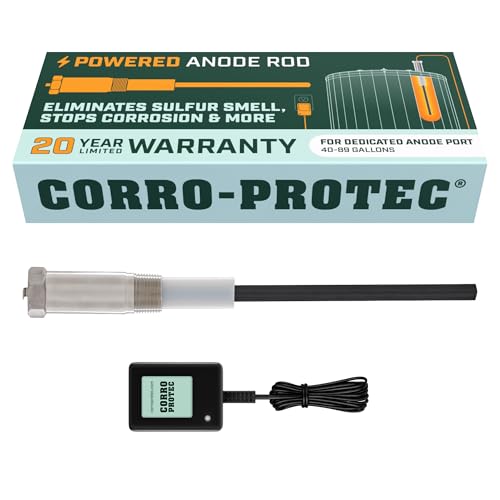
Corro-Protec Powered Anode Rod for Water Heater | 24-Hour Sulfur Smell Removal. Stops Corrosion & Reduces Sediment Buildup in Tank. 20-Year Warranty. WQA-Certified.
- HASSLE-FREE HOT WATER - Corro-Protec’s powered anode rod revolutionizes water heater maintenance with [1] permanent corrosion prot…
- EXTEND TANK LIFESPAN WITH TITANIUM - Forget replacing depleted magnesium or aluminum anode rods. Our titanium powered anode rod is…
- STANDARD INSTALLATION IN THE DEDICATED ANODE PORT [for all brands except Bradford White tanks] - This 40-89-gallon model installs…
You’ll walk away knowing exactly what to look for, what to avoid, and how to install one without making a costly mistake.
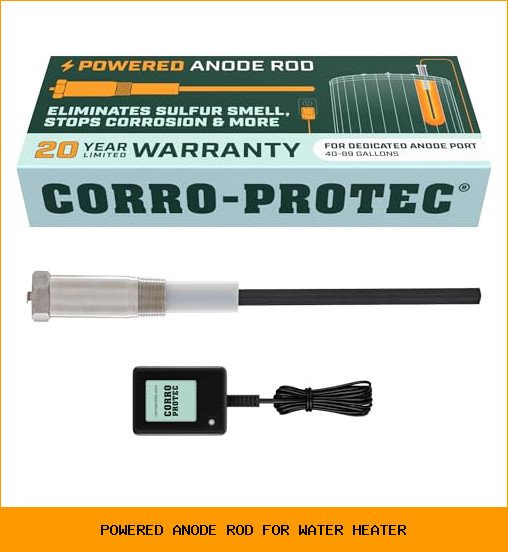
One product that keeps coming up in homeowner forums and plumbing groups is the Corro-Protec Powered Anode Rod for Water Heater. It’s designed to replace the standard hex head anode in 40-89 gallon tanks, and it plugs into a regular outlet. I’ll reference it throughout because it’s a solid example of what a powered anode rod should do, but the advice here applies to any brand you consider.
How a Powered Anode Rod Actually Works
A traditional anode rod is a metal core—usually magnesium or aluminum—wrapped around a steel wire. It’s called a “sacrificial” anode because it corrodes instead of the steel tank. The tank stays protected, but the rod itself slowly dissolves. That’s why you’re supposed to check it every few years. Most people don’t, and then the tank starts to rust from the inside out.
A powered anode rod flips that idea on its head. Instead of relying on a metal rod that wears away, it uses a small DC current to push electrons into the tank. The current forces the tank to act as the cathode (the protected side) and the anode (a small titanium rod) to act as the anode. The titanium doesn’t dissolve. So the protection is constant, and the rod doesn’t need replacing every few years.
The practical result: you install it once, plug it in, and forget about it for years. The Corro-Protec model, for example, comes with a 20-year warranty, which tells you they expect it to last that long. Most sacrificial anodes are lucky to last half that time in hard water.
But here’s the catch—it needs power. If the outlet fails, or you lose electricity, the tank is unprotected. A sacrificial anode still works even if you never touch it again (until it’s gone). So a powered anode isn’t a magic bullet; it’s a trade-off between convenience and a small dependency on electricity.
Myth #1: A Powered Anode Rod Only Fixes Smelly Water
That’s the most common reason people buy one. The rotten egg smell in hot water comes from sulfate-reducing bacteria that thrive in the tank. Those bacteria feed on the sulfates in water and produce hydrogen sulfide gas. A magnesium anode makes it worse because it creates an environment that those bacteria love. Switch to a powered anode, and the smell usually disappears within a few days because the electric current disrupts the bacteria’s ability to survive.
But that’s only half the story. The powered anode also protects the tank from corrosion, and it does that better than a sacrificial anode in three specific situations:
- Hard water: High mineral content eats through magnesium rods quickly. A powered anode doesn’t care about water hardness because it doesn’t dissolve.
- Softened water: Softened water is actually more corrosive to steel tanks because it lacks the minerals that buffer pH. Many plumbers have seen tanks fail prematurely in softened water systems with sacrificial anodes. A powered anode handles that fine.
- Long tank life: If you plan to keep your water heater for 15+ years, a powered anode keeps the tank intact long after a sacrificial rod would have given up.
So no, it’s not just about the smell. It’s about protecting the tank itself, which is the most expensive part of the heater.
Myth #2: All Powered Anode Rods Are the Same
I’ve seen cheap powered anodes fail within a year. The difference comes down to the control module and the titanium rod quality. A good powered anode has a microprocessor that monitors the tank’s corrosion potential and adjusts the current output. That’s how the Corro-Protec works—it varies the voltage based on water conditions. Cheap ones just pump a fixed current, which either under-protects or over-protects. Over-protection can cause hydrogen gas buildup and even accelerate corrosion in some cases.
Another difference is the rod material. Titanium is standard, but the coating matters. Some use mixed metal oxide (MMO) coatings that are more efficient and last longer. If a product doesn’t specify the coating, ask the seller. If they don’t know, that’s a red flag.
Also, check the warranty. A 20-year warranty tells you the manufacturer has confidence. A 1-year warranty means they expect it to fail soon. The Corro-Protec comes with a 20-year warranty, which is a good sign. But always read the fine print—some warranties only cover the rod, not labor or damage.
Comparing Powered vs. Sacrificial Anode Rods
| Factor | Powered Anode Rod | Sacrificial Anode Rod |
|---|---|---|
| Lifespan | 20+ years (electronic, no wear) | 3-7 years typical, less in hard water |
| Corrosion protection | Constant, adaptive current | Passive, decreases as rod dissolves |
| Rotten egg smell | Eliminates it in most cases | Can cause or worsen it (magnesium) |
| Water hardness | Unaffected | Hard water shortens rod life |
| Softened water | Works fine | Can corrode faster |
| Installation | Needs a nearby outlet, same port | Simple, no power needed |
| Cost | Higher upfront (check current price on Amazon) | Lower upfront ($30-$60) |
| Maintenance | None, just keep it plugged in | Inspect and replace every few years |
| Power dependency | Requires 110V outlet | None |
That table sums up the practical differences. The only real downside to a powered anode is the upfront cost and the need for an outlet. But if you factor in the cost of replacing a sacrificial anode every 3-5 years (plus the risk of tank failure if you forget), the powered option often pays for itself over the life of the water heater.
Installation: What You Need to Know
Most water heaters have a dedicated anode port on top, usually marked with a hex head plug. The Corro-Protec model fits that standard port. If your water heater is a Bradford White, the anode port is different—you’ll need a special version that installs in the hot water outlet instead. Don’t buy the standard model if you have a Bradford White; it won’t fit.
Installation steps are straightforward:
- Turn off the water heater and the cold water supply.
- Drain about 5-10 gallons from the tank to relieve pressure.
- Remove the old anode rod using a 1-1/16″ socket and a breaker bar. If it’s stuck, apply penetrating oil and wait 15 minutes.
- Wrap the threads of the new powered anode with Teflon tape.
- Screw it in hand-tight, then tighten with a wrench—don’t overdo it.
- Plug the power cord into a grounded outlet.
- Turn the water supply back on and refill the tank before restoring power.
One thing I learned the hard way: make sure the outlet is GFCI-protected. Water heaters are often in damp areas, and you don’t want an unprotected outlet near a potential leak. The Corro-Protec has a low-voltage DC output, so the risk is minimal, but it’s still smart to use a GFCI.
If your old anode is stuck and you can’t remove it, some powered anode models come with a kit to install in the hot water outlet instead. That’s a backup plan, but it means you lose the hot water outlet for the anode—which is fine because the anode doesn’t restrict flow much.
Real Questions Homeowners Ask
Will a powered anode rod work with any water heater?
Most gas and electric water heaters with a standard hex head anode port will work. The Corro-Protec model fits 40-89 gallon tanks. If your tank is larger or smaller, check the manufacturer’s specs. Bradford White water heaters need a special version because they use a different port size. Also, if your water heater is still under warranty, check the warranty terms—some manufacturers might object to aftermarket parts, though the U.S. Magnuson-Moss Warranty Act protects you if the part is compatible and doesn’t cause damage.
Does a powered anode rod really stop the rotten egg smell permanently?
In most cases, yes. The electric current kills the sulfate-reducing bacteria that produce the smell. It works faster than replacing a magnesium anode with aluminum, and it doesn’t reintroduce the problem later. But if the smell is coming from your well water or the water heater’s inlet, a powered anode won’t fix that—it only treats the tank. If the smell persists after a week, check your water source.
Can I install a powered anode rod myself?
If you’re comfortable using a socket wrench and working around a water heater, yes. It’s a 30-minute job. The hardest part is often removing the old anode if it’s corroded or seized. You’ll need a breaker bar and possibly some penetrating oil. If you’re not confident, a plumber can do it in under an hour. The cost of a plumber is usually $100-$200, which is still less than replacing a water heater.
Will a powered anode rod damage my water heater?
No, when installed correctly. It’s designed to protect the tank, not harm it. The only risk is if you install it in the wrong port or if the power supply fails and you don’t notice. Some cheap models might over-current and cause hydrogen gas buildup, which can lead to a popping noise. That’s rare with quality units like the Corro-Protec, which has a built-in control module that adjusts the current. If you hear popping, unplug it and check the installation.
How long does a powered anode rod last?
Most quality units are rated for 15-20 years. The Corro-Protec comes with a 20-year warranty, which suggests they expect it to last that long. The titanium rod doesn’t corrode, and the electronics are sealed. The only thing that might fail is the power supply, but it’s a simple DC adapter that can be replaced cheaply. Compare that to a sacrificial anode that needs replacing every 3-5 years, and the powered option saves you time and hassle in the long run.
What to Look For When Buying a Powered Anode Rod
Not all powered anodes are created equal. Here’s a quick checklist:
- Warranty: Look for at least 10 years, ideally 20. That shows confidence.
- Control module: Make sure it has automatic current adjustment, not fixed output.
- Titanium rod: Should be MMO-coated for efficiency.
- Compatibility: Check your tank size and port type. Bradford White owners need a special model.
- Certifications: Look for UL or CSA certification for safety.
- Customer support: A real company with a phone number and email, not just a listing page.
I also recommend checking the current price on Amazon because it fluctuates. The Corro-Protec is usually in the $150-$200 range, which is more than a $30 sacrificial anode. But you’re paying for the electronics and the warranty. If you plan to keep your water heater for more than a few years, it’s worth the extra cost.
Final Thoughts: Is It Worth It?
Here’s my honest take after seeing dozens of water heaters with failed sacrificial anodes: if you have hard water, softened water, or a smelly water heater, a powered anode rod is the best fix. It’s not just about convenience—it’s about preventing a $1,500 water heater replacement. The upfront cost is higher, but the protection is constant and the rod never wears out.
If you have a newer water heater with a fresh sacrificial anode and zero issues, you can wait. But if you’re replacing an anode for the second time, or you’ve already dealt with a smelly tank, the powered option is a no-brainer.
Just remember to check the warranty, confirm the port size, and make sure you have an outlet nearby. And if you have a Bradford White, get the special version—don’t try to force a standard one.
Here’s what to remember:
- Powered anodes stop rotten egg smell by killing bacteria, not just masking it.
- They protect against hard water and softened water better than sacrificial rods.
- Installation is DIY-friendly, but you need a GFCI outlet and the right port.
- Look for a 20-year warranty and automatic current control.
- Bradford White tanks need a special model—don’t buy the standard one.
- Check the current price on Amazon; it’s worth the investment if you plan to keep the tank.
- If your water heater is under warranty, a powered anode is still legal and won’t void it under the Magnuson-Moss Act.


