It’s January, your central heating just kicked on for the fifth time today, and you can hear the furnace rumble like it’s preparing for takeoff. You’re warm, sure, but you’re also mentally calculating next month’s utility bill. The usual solution people reach for is a space heater, but most of them are electric-hungry beasts that turn your bedroom into a sauna and your meter into a slot machine.
The truth is, some space heaters are dramatically more efficient than others. Not because they magically create more heat — they don’t. Every electric resistance heater puts out roughly the same amount of heat per watt. The real differences come down to how the heat is distributed, how precisely the thermostat controls it, and whether the heater is actually sized right for your room. This article walks you through those factors so you can pick a heater that keeps you warm without wrecking your budget.

DREO
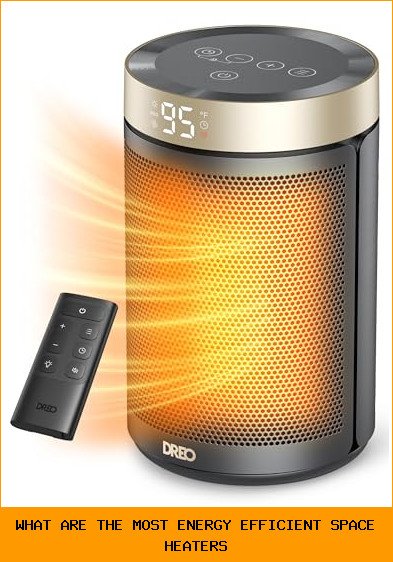
DREO Space Heater, Portable Electric Heaters for Indoor Use with Thermostat | 2026 Upgraded, 34dB Quiet, 12H Timer, 5 Mode, Remote, 1500W PTC Ceramic Fast Safety Heat for Office Bedroom Home, Gold
- Powerful heat that fits everywhere: DREO space heaters for indoor combines Hyperamics 1500W advanced PTC system with a new heat fu…
- Unbreakable safety:DREO goes beyond the unexpected to deliver peace of mind with every room heater. The innovative tilt-detection…
- Ultimate temperature control: The enhanced NTC chipset brings more precision to turn your space heater with thermostat into a smar…
You’ll learn about the three main heating technologies, what the efficiency numbers actually mean, and which features are worth paying for. You’ll also see a direct comparison table and answers to the questions people ask most often.
One option that handles the balance between warmth and energy use well is the DREO Space Heater. Its 1500W PTC system with a heat funnel design pushes warm air farther into the room, which means the thermostat reaches its set point sooner and cycles off more often. That cycling behavior is where the savings come from — a heater that spreads heat effectively doesn’t need to run constantly.
What “Energy Efficient” Actually Means for a Space Heater
Let’s clear up the biggest myth first: all electric resistance heaters are 100% efficient at converting electricity to heat. A cheap $20 coil heater and a $150 ceramic heater both turn every watt into heat. So when someone claims their heater is “more efficient,” they’re really talking about something else.
What they mean is that the heater uses its heat output more effectively. A heater with a fan spreads warmth across the room, so you feel comfortable at a lower thermostat setting. A heater with a precise thermostat stops heating when the room hits the target temperature, instead of overshooting by five degrees. A heater with a timer or ECO mode reduces runtime when you don’t need full power.
So the real question isn’t “which heater converts electricity best” — it’s “which heater maintains comfort with the least total runtime.” That’s a function of design, controls, and room matching. Keep that in mind as you read the rest of this.
Heating Technology: Ceramic, Infrared, or Oil-Filled?
Each type has a different personality, and the right one depends on how you use it.
Ceramic Fan Heaters
These are the most common portable heaters. They use a ceramic element that heats up fast, and a fan blows air across it. The fan is the key — it forces warm air out into the room, so you feel the heat within a minute or two. This makes them excellent for quickly warming a small office or bathroom.
For energy efficiency, the fan does double duty. It circulates air, which evens out the temperature so the thermostat doesn’t cycle on and off as frequently. The DREO model mentioned earlier uses a brushless DC motor and a winglet fan design specifically to move air farther with less noise. That’s a meaningful design choice, not marketing fluff — a quieter fan means you can run it in a bedroom without it being a nuisance.
Infrared Heaters
Infrared heaters warm objects and people directly, not the air. You feel the warmth almost instantly, like standing in a patch of sunlight. This is great if you sit still at a desk and want to feel warm without heating the whole room.
But there’s a catch: they only warm what’s in their line of sight. Turn your chair and you’re cold again. They’re also less effective in large rooms or spaces with furniture blocking the beam. For efficiency, they can be excellent if you’re the only person in the room and you’re staying put. If you move around, they waste energy on empty spots.
Oil-Filled Radiators
These look like old-fashioned radiators. They heat oil inside sealed fins, and the heat radiates outward slowly. They take 15-20 minutes to get warm, but they stay warm long after the power cycles off. That thermal mass is their efficiency trick — they smooth out temperature swings, so the thermostat doesn’t kick on as often.
They’re a solid choice for a bedroom you want to stay warm all night. The downside is the slow warm-up. If you want heat now, this isn’t your heater.
| Feature | Ceramic Fan | Infrared | Oil-Filled Radiator |
|---|---|---|---|
| Warm-up time | 1-3 minutes | Instant (line of sight) | 15-20 minutes |
| Best for | Small rooms, offices | One person, stationary | Bedrooms, overnight use |
| Heat distribution | Fan-forced, even | Direct beam only | Radiant, slow and steady |
| Energy behavior | Cycles on/off with thermostat | Stays on until target temp | Holds heat, cycles less |
| Noise level | Quiet to moderate | Silent | Silent |
| Typical wattage | 750-1500W | 400-1500W | 600-1500W |
That table gives you the quick version. The longer story is that your room size and habits matter more than the technology itself. A 1500W heater in a 200-square-foot room will cycle on and off constantly. A 750W heater in that same room might run continuously and never quite catch up. Neither is efficient — one wastes electricity, the other wastes your comfort.
Wattage, Thermostats, and the 10-Cent Rule
Here’s a simple way to think about running cost. A 1500W heater running for one hour uses 1.5 kilowatt-hours (kWh). At the national average of about 16 cents per kWh, that’s 24 cents per hour. Run it eight hours a day for a month, and that’s roughly $58. A 750W heater at half power costs half that.
So the most efficient heater is the one that lets you use fewer watts. That sounds obvious, but it has a practical implication: a heater with multiple power settings (like 750W/1500W) lets you match output to the room. If you only need a little warmth, run it on low. If the room is freezing, run it on high until it warms up, then switch to low to maintain.
Thermostat precision matters just as much. A heater with a 1-degree increment control (like the DREO’s 41-95°F range) can hold the temperature exactly where you want it. A heater with only High/Low settings will swing between too hot and too cold, wasting energy on the overshoot. Those swings add up over a season.
One more thing: look for an ECO mode. This typically runs the heater at a lower wattage and adjusts based on the difference between the current room temp and your target. It’s not magic, but it prevents the heater from running at full blast when a gentler output would do.
Smart Features That Actually Save Money
Not every bell and whistle is worth the extra cash. Here’s what genuinely reduces energy use, and what’s just convenience.
Programmable Timers
A timer that turns the heater off after 2 hours or on before you wake up prevents the classic mistake: leaving it running all day in an empty room. A 12-hour timer is common, and it’s one of the most effective energy-saving features you can buy. Set it to shut off an hour after you leave for work, and you’ve just saved hours of runtime.
Thermostat with a Wide Range
Some heaters only let you choose between “warm” and “hot.” That’s useless for efficiency. A thermostat that lets you set an exact temperature — say, 68°F instead of 70°F — makes a real difference. Each degree you lower the thermostat saves roughly 3% on heating costs. A heater with a 1°F increment gives you that control.
Remote Control and Memory Function
These are more about convenience than efficiency, but they help indirectly. A remote means you can adjust the temperature from bed instead of getting up and fiddling with controls. A memory function remembers your last settings, so you don’t have to reprogram it every night. The DREO includes both, plus a child lock and mute button — the mute is nice if you run it in a nursery or bedroom.
What’s Not Worth Paying For
Skip heaters that claim “advanced” heating elements or “patented” technology that promises to heat more with less energy. Remember, all resistance heaters are 100% efficient. The only real improvements come from better air circulation and smarter controls. If a heater costs twice as much but doesn’t have a better fan or thermostat, you’re paying for marketing.
Room Size and Placement: The Overlooked Variables
You can buy the most efficient heater on the market, and it’ll still waste energy if you put it in the wrong spot. Here are the practical rules.
Size the heater to the room. A general rule: 10 watts per square foot for rooms with average insulation. A 1500W heater covers about 150 square feet. If your room is 300 square feet, a single portable heater will run continuously and never satisfy you. You’re better off with a larger fixed unit or two smaller heaters in different zones.
Place it near the coldest wall. Heat rises, and cold air sinks along exterior walls. Putting the heater under a window or against an outside wall helps counteract that draft. Putting it in the center of the room just heats the air around it while the walls stay cold.
Give it breathing room. A heater shoved against a couch or under a desk will overheat and cycle off prematurely. It also trips its safety sensor, which shuts it down entirely — that’s a safety feature, not a malfunction, but it means the heater isn’t doing its job. Keep at least three feet of clearance on all sides.
Use the heater to supplement, not replace, central heat. The most energy-efficient strategy is to lower your central thermostat to 60-62°F and use a space heater in the room you occupy. That way you’re heating one room instead of the whole house. This approach saves far more money than any heater feature ever could.
Frequently Asked Questions
Are ceramic heaters more energy efficient than infrared?
Not inherently. Both convert electricity to heat at the same rate. The difference is how they deliver it. Ceramic heaters use a fan to distribute heat through the air, which works better for warming a whole room. Infrared heaters warm objects directly, which feels warmer at a lower wattage if you’re sitting still. For whole-room comfort, ceramic tends to cycle less and use less total energy. For one-person spot heating, infrared can use less power.
Is it cheaper to run a space heater or central heating?
It depends on your fuel source. If you have a natural gas furnace, gas is usually cheaper per unit of heat than electricity. But a gas furnace heats the whole house, while a space heater heats one room. In practice, you’ll save money if you turn the central thermostat down and use a space heater in the room you’re in. The savings come from heating less space, not from the heater being more efficient.
What size room can a 1500W heater heat?
Roughly 150 square feet with average insulation and 8-foot ceilings. That’s a typical bedroom or small office. If your room is larger, the heater will run continuously and struggle to reach the set temperature. You can still use it, but expect higher energy use and less consistent warmth.
Do space heaters with thermostats really save energy?
Yes, if the thermostat is accurate. A heater that cycles off at the set temperature uses less energy than one that runs continuously. The key is a thermostat with a narrow differential — meaning it doesn’t let the temperature swing 5 degrees before kicking back on. Look for heaters with digital thermostats and 1-degree increments. Those hold the temperature steadily and avoid wasteful overshoot.
Is it safe to run a space heater all night?
Modern heaters with tip-over protection, overheat sensors, and V0 flame-retardant materials are designed for overnight use. The DREO model, for example, has a tilt-detection sensor and overheat protection. That said, you should still follow basic rules: plug it directly into a wall outlet, not an extension cord, and keep it away from bedding and curtains. If you’re nervous, use the timer function to shut it off after a few hours.
What to Do With All This
You don’t need to be an HVAC engineer to make a smart choice. Here’s the short list worth remembering:
- All electric resistance heaters are 100% efficient at making heat — the efficiency difference comes from heat distribution and thermostat control.
- Ceramic fan heaters are the best all-around choice for most rooms because they spread heat evenly and cycle less.
- Infrared heaters work well for spot heating one person, but they waste energy if you move around.
- Oil-filled radiators are great for bedrooms but slow to warm up, so they’re not ideal for quick heat.
- Match the wattage to your room size — roughly 10 watts per square foot — or you’ll waste energy either way.
- Use the thermostat and timer features aggressively. Lower your central heat, heat only the room you’re in, and let the heater cycle off when it’s done.
- Skip gimmicky “high-efficiency” claims. Look for a precise thermostat, a quiet but powerful fan, and safety certifications.
If you want a heater that checks most of those boxes, the DREO Space Heater is a reasonable pick — it has the 1500W PTC system, a wide thermostat range, ECO mode, and a timer. But don’t take my word for it. Check the current price on Amazon and read recent owner reviews to see if it fits your specific room and habits.
The bottom line is simple: the most energy efficient space heater is the one that runs less often, heats the room you’re in, and lets you control the temperature precisely. Get those three things right, and you’ll stay warm without the bill to match.



