You pull the old anode rod out of your water heater, and the hex head is half-round, chewed up by a crescent wrench that slipped. Or worse – you bought a socket set and the largest socket you own is 3/4 inch, and the rod head looks like it belongs on a truck axle. You’re not alone. Water heater anode rod sockets are bigger than most homeowners expect, and getting the wrong one means a trip back to the store or a fight with a stuck rod.
This article covers the exact socket sizes you need for residential and RV water heater anode rods, when you need a different size for the heating element, and which tools actually make the job easier. No fluff, no guesswork.

Skoutag
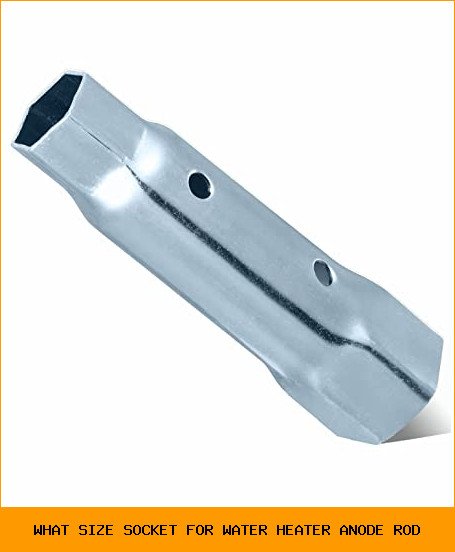
Skoutag RV Water Heater Element Wrench Socket, Dual Hex Wrench Removal Tool for Anode Rod, 1-1/16 in x 1-1/2 in x 6 in, Hex Socket for All Residential and RV Camper Travel Trailer Motorhome
- Skoutag dual hex socket wrench removal tool is made of quality Carbon Steel Galvanized, sturdy and anti-corrosion, specially desig…
- One end size 1-1/2" hex, fits most residential screw-in water heater elements.
- One end size 1-1/16" hex, fits all 3/4" thread anode rods.
If you service both the anode rod and the heating element, a tool that covers both sizes saves time. The Skoutag RV Water Heater Element Wrench Socket has a 1-1/16 inch hex on one end for the anode rod and a 1-1/2 inch hex on the other for the element, all in one carbon steel tube. It also has side holes so you can stick a screwdriver through for extra leverage — handy when the rod is seized.
The Standard Socket Size for Most Anode Rods
Nearly every residential water heater anode rod with a 3/4-inch NPT thread uses a 1-1/16 inch (1.0625 inch) hex head. That is the size you need for roughly 90% of water heaters made in the last 40 years. It covers brands like Rheem, Bradford White, AO Smith, State, and Reliance. Gas and electric models both use the same thread and head size on the anode rod.
Some small electric water heaters (2.5 to 6 gallon point-of-use models) use a 15/16 inch hex head. Those are uncommon in full-size tanks but show up in under-sink units. If you have a compact water heater, measure the hex head before buying a socket.
Residential Heating Elements Use a Different Size
Electric water heater elements typically have a 1-1/2 inch hex head. That is the size for the brass or stainless steel element body that screws into the tank. If you are replacing both the element and the anode rod, you need two sockets (1-1/16” for the rod, 1-1/2” for the element) or a dual hex tool that has both.
A few older or custom elements use a 1-3/8 inch hex, though that is rare. Always verify by looking at the element head before assuming 1-1/2 inch.
RV and Camper Water Heater Anode Rod Sizes
RV and travel trailer water heaters are a different animal. Most use a 3/4-inch NPT thread anode rod, same as residential, but the hex head on the rod itself can vary. Common sizes include:
- 1-1/16 inch (suburban and Atwood models)
- 15/16 inch (some older or smaller units)
- 7/8 inch (rare, usually on Dometic or aftermarket rods)
The safest approach for an RV is to measure the hex head with a caliper or a tape measure before buying. Many RV anode rods have an integrated drain valve plug, and the head can be shorter than residential rods, so socket depth also matters.
Socket Depth and Clearance – The Part Nobody Mentions
A 6-point deep socket is ideal because the anode rod head is often recessed into the tank or covered by a plastic access panel. Standard (shallow) sockets may not reach the hex if the rod has a long unthreaded neck. You want a socket that is at least 3 inches deep, or you will end up grabbing only the top few threads and rounding them off.
Tube spanners (like the Skoutag tool) are excellent for this because they are long hollow tubes that slip over the entire rod. They also provide better leverage when breaking a stuck rod free. An impact wrench on a deep socket works too, but be careful not to overtighten on reinstallation.
Table: Socket Size Guide for Water Heater Anode Rods and Elements
| Socket Size | Typical Use | Thread Type | Notes |
|---|---|---|---|
| 1-1/16 inch | Standard anode rod (residential and RV) | 3/4” NPT | Covers 90% of water heaters. Use 6-point deep socket. |
| 15/16 inch | Small tank anode rods, some RV rods | 3/4” NPT or 1/2” NPT | Measure before buying. Often found on 2.5–6 gal tanks. |
| 1-1/2 inch | Residential electric heating element | 1” NPT (element thread) | Standard size for most screw-in elements. |
| 1-3/8 inch | Rare older heating elements | Varies | Check element head. Aftermarket replacements may differ. |
| Dual hex (1-1/16” + 1-1/2”) | Anode rod + element in one tool | Both | Saves time. Tube spanner designs also give extra leverage. |
What If the Anode Rod Is Stuck? Tool Choice Matters
A corroded anode rod can take a breaker bar or a long cheater pipe to break loose. If you use a standard chrome socket on a long breaker, you risk cracking the socket or rounding the hex. Use a 6-point impact-rated socket or a forged tube spanner. The hex geometry of a 6-point socket grips the flats, not the corners, so it reduces the chance of slipping on a frozen rod.
Heat can help – a propane torch on the area around the rod (not on the rod itself) expands the tank nipple. But that is a last resort. Most rods come out with a good socket and steady leverage.
Frequently Asked Questions
Can I use an adjustable wrench instead of a socket for the anode rod?
Technically yes, but it is a bad idea. An adjustable wrench puts force on only two flats of the hex, and it tends to slip when you crank hard. Slipping rounds the corners, making the rod even harder to remove. A proper 1-1/16 inch socket costs less than a new anode rod, and it will save you an afternoon of frustration.
Do I need a special socket for an RV water heater anode rod?
Not a special socket, but you need the correct size. Many RV anode rods use a 1-1/16 inch hex, same as residential. But some use 15/16 inch or 7/8 inch. Measure the hex head with a ruler or caliper. The bigger difference is socket depth – RV rods often sit deeper in the tank, so a deep socket or tube spanner is necessary. A standard shallow socket may not reach.
Can I use a 1-inch socket on a 1-1/16 inch anode rod?
No. A 1-inch socket is too small to fit over the hex head. It will not even go on. Do not hammer it on – you will damage both the socket and the rod. Buy the right size.
What size socket for the water heater element?
Most residential electric water heater elements use a 1-1/2 inch hex head. Some older or stubborn elements take 1-3/8 inch. Check your element before buying. If you already have a 1-1/16 inch socket for the anode rod, you will still need a separate 1-1/2 inch socket or a dual tool like the Skoutag that covers both.
Should I use an impact wrench to remove the anode rod?
You can, but you risk snapping the rod or damaging the tank threads if you do not control the torque. An impact wrench with a 6-point deep socket is fine for loosening if you have it set to low power or you pulse the trigger. Hand tools with a breaker bar give you more feel and less chance of overtightening when you reinstall. If you do use an impact, go slow.
What You Need to Remember
- Most water heater anode rods use a 1-1/16 inch socket. Get a 6-point deep socket or a tube spanner.
- Small tanks and some RV rods use 15/16 inch – measure first.
- Electric heating elements need a 1-1/2 inch socket (separate tool unless you buy a dual hex tool).
- Cheap adjustable wrenches will round off the hex head. Do not use one.
- A stuck anode rod needs leverage – use a breaker bar or a tool with side holes for a cheater pipe.
- Inspect the old rod visually or with a caliper before buying a socket. Manufacturers sometimes change sizes.
- If you service both anode and element regularly, a dual hex tube spanner saves drawer space and hassle.


