You walk into the shower. Cold water. Not a trickle of warmth. You check the breaker, flip it, nothing. If you own a gas water heater or an RV unit, odds are a little fuse — often called a thermal cutoff — is the problem. These small safety devices sit inside the heater, and when they blow, the burner simply won’t fire. No warning. Just cold.
This article walks you through exactly where to find that fuse on common residential and RV water heaters. By the end, you’ll know what to look for, how to test it safely, and what to do when it’s blown. I’ll also cover a specific product that solves a common failure in Atwood RV water heaters — the TOMOON thermal cutoff kit. No fluff, just the spots you need to check.

TOMOON
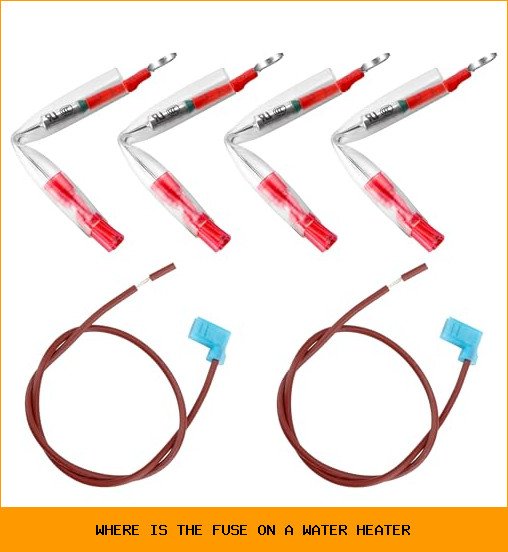
TOMOON Thermal Cut Off Fit for Atwood 93866 91447 RV Water Heaters 6 Pack | RV Water Heater Thermal Cut Off Fit for Atwood 93866 91447, Dometic Thermal Cutoff Fuse Fit GC6AA-10E Atwood Water Heater
- Overheat Protection: If the temperature exceeds the dometic thermal cutoff fuse's limit, it will blow to stop the flow of gas to t…
- Premium Material: 93866 91447 RV Water Heater Thermal Fuse is made of metal and designed to withstand a maximum of 98℃(208.4℉)
- Thermal Cutoff Kit: The 93866 thermal cut off kit contains all the parts you need to fix your Atwood RV water heater, including 2…
What Exactly Is the Fuse on a Water Heater? (And Why It Blows)
The fuse isn’t like the glass cylinder in your car’s stereo. For water heaters, the fuse is a thermal cutoff — a temperature-sensitive switch that opens if things get too hot. It’s a one-shot device: once it trips, it stays open and must be replaced. You can’t reset it.
On a gas water heater, the thermal cutoff sits above the burner compartment. It monitors the flue temperature. If the flue gets blocked or the draft fails, heat builds up inside the heater. The thermal cutoff detects that excess heat and cuts the gas supply. No gas, no flame, no explosion. That’s the safety game.
On an electric water heater, the high-limit thermostat acts like a fuse. It’s a disc-shaped button wired in series with the heating elements. If the water temperature spikes past around 180°F (82°C), the button pops open and kills power to the elements. Some have a manual reset button; others are automatic reset. But many older models use a simple thermal cutoff that must be replaced.
Both types fail for similar reasons:
- Blocked vent or flue — most common in gas units.
- Failed thermostat — lets water get dangerously hot.
- Loose wiring — causes arcing and heat at the connection.
- Manufacturing defect — rare, but happens.
So when you ask where is the fuse on a water heater, you are really asking where these thermal cutoffs live. Let’s find them.
Residential Gas Water Heaters: The Fuse Location
On a standard 40- or 50-gallon gas water heater (think Rheem, Bradford White, AO Smith), the thermal cutoff is inside the burner access panel. You’ll need a screwdriver and possibly a socket set.
Step-by-step to find it:
- Turn the gas control valve to OFF and let the heater cool for 15 minutes.
- Unscrew the burner access panel near the bottom of the tank. It’s the rectangular cover held by 2-4 screws.
- Pull away any insulation (if present) to see the burner and gas control valve.
- Look above the burner — there’s a small rectangular device wired in series with the gas valve. That’s the thermal cutoff. It’s about 2 inches long, white or beige plastic, with two wires going to it.
On some models, this fuse is mounted directly to the gas control valve, not above the burner. Check the manufacturer’s sticker inside the panel for a diagram. The key point: it’s always in the burner compartment, never outside the tank.
A quick test: disconnect one wire and use a multimeter set to continuity. If the fuse reads open (infinite resistance), it’s blown. No power = no gas flow. Replace it with an exact match — same temperature rating (usually 200°F or 93°C for gas units).
One thing I learned the hard way: if the fuse blows, don’t just swap it and walk away. Check the flue for blockages. A bird nest or a collapsed baffle will cause the new fuse to blow in days. Take five minutes to run a shop vac up the flue pipe.
Electric Water Heaters: Fuse vs. High-Limit Reset
Electric water heaters rarely have a disposable fuse. Instead, they use a high-limit thermostat that acts as a resettable safety switch. But many homeowners call it the fuse, so I’ll cover it.
The high-limit thermostat is located behind the two access panels on the side of the tank. There’s an upper and a lower panel. The upper one contains the upper thermostat and the high-limit device. On most brands (Rheem, GE, Whirlpool), it’s a round disc with a red button in the center. Push that button if you suspect it tripped. If you hear a click and the water starts heating again, that was your problem.
But some electric heaters from the 1990s and earlier used disposable thermal cutoffs instead of resettable ones. These look like two small metal discs with wires attached, often tucked inside a wire nut. You’d have to cut the old one out and splice in a new one. If that sounds like your unit, do yourself a favor — replace the entire thermostat assembly with a modern resettable type. It’s safer and easier to troubleshoot later.
If you have a newer electric water heater and the high-limit button won’t stay pushed, you have a bigger problem. That means the safety circuit is detecting an overheat condition that hasn’t cleared. Check the heating elements for shorts, and test the thermostats individually. A failed lower thermostat can cause the upper one to run continuously, overheating the water and blowing the high-limit.
RV Water Heaters: Where the Fuse Hides (and a Known Weak Point)
RV water heaters — especially the popular Atwood and Suburban models — use a very similar thermal cutoff fuse as residential units, but the location is different. On an RV, the entire heater is in a small box outside the vehicle (or in a compartment). The fuse is inside the burner area, which you access from outside the RV.
Atwood models (GCH6, GC6A, GH6, etc.): The thermal cutoff sits on a bracket above the burner tube. Open the exterior door, remove the screws holding the burner cover plate (usually 4 screws), and pull the cover toward you. Right there, clipped to a metal tab, you’ll see a small rectangular fuse with two spade connectors. On some models it’s white; on others it’s tan. That’s the device that protects your RV from overheating due to a blocked flue or failed fan.
Suburban models (SW6D, etc.): The thermal cutoff is similar but located on the back of the burner assembly, near the gas valve. You might need to unclip a wire harness to see it. Suburban uses a different connector — round pins instead of spade terminals — so the replacement fuse must match.
The common failure on Atwood RV heaters is the thermal cutoff. I’ve replaced dozens in campgrounds where someone forgot to open the bypass valves and the heater boiled dry. The TOMOON thermal cutoff kit (ASIN B0D668F9Z6) comes as a 6-pack with pre-crimped wires, perfect for those quick repairs on the road. It contains two tinned copper wires (about 14.5 inches each) and four fuses rated at 208°F (98°C). That temperature rating matches the original Atwood spec. If you own an Atwood GCH6-6E or similar, this kit is a direct fit.
One tip: label every wire before you disconnect. I use masking tape and a Sharpie. Those connectors are small, and if you mix up the 12V supply with the thermal cutoff wire, you’ll blow the fuse instantly when you turn on the propane. The TOMOON kit’s wires are color-coded, but your original wiring might not be. Labeling saves an hour of head-scratching.
Table: Comparing Water Heater Fuse Locations
| Heater Type | Fuse / Safety Device | Location | Replacement Notes |
|---|---|---|---|
| Residential gas | Thermal cutoff (one-shot) | Inside burner access panel, above burner | Must match temperature rating (200°F typical) |
| Residential electric (modern) | Resettable high-limit thermostat | Upper access panel, red button | Push to reset; replace if button won’t hold |
| Residential electric (older) | Disposable thermal cutoff (two metal discs) | Inside upper or lower element wire nut | Cut and splice; consider upgrading to resettable |
| RV Atwood (GCH6, GH6, GC6A) | Thermal cutoff (one-shot, 208°F) | Inside burner compartment on bracket above burner | Spade connectors; use 6-pack (TOMOON) for spares |
| RV Suburban (SW6D, SW10D) | Thermal cutoff (one-shot) | Behind burner assembly near gas valve | Round pin connector; check model-specific part |
5 Common Questions About Water Heater Fuses
1. Can I bypass the thermal cutoff to get hot water faster?
You can, but you shouldn’t. The fuse is there to prevent a fire or explosion. If the flue is blocked and you bypass the safety, the gas will keep burning until the metal casing melts or the RV burns down. Replace the fuse properly. It takes 15 minutes.
2. How do I test if the fuse is blown without a multimeter?
Not easily. You can try a visual inspection — a blown thermal cutoff sometimes shows a small crack or a burnt smell. But the only reliable test is a multimeter set to continuity. If you don’t have one, you can bridge the two wires with a jumper wire for a split second to see if the burner fires. But that’s risky: if the problem is a real overheat, you’ll get a flame without protection. Better to buy a $15 multimeter.
3. Why does my RV water heater blow the thermal cutoff every trip?
Most likely a blocked flue or a failed fan motor. In an RV, the exhaust pipe is short and can get clogged with mud daubers, spider nests, or carbon deposits. Remove the burner assembly and clean the flue tube with a brush. Also check the 12V exhaust fan — if it’s weak or seized, combustion gases don’t vent properly, and the heat builds up inside the heater, tripping the cutoff.
4. Will an electric water heater work if the high-limit fuse is blown?
No. The high-limit switch interrupts power to both upper and lower elements. The heater will be completely cold. If the switch tripped due to a momentary power surge, you can reset it. If it trips repeatedly, replace the thermostats and test the elements for grounding.
5. What temperature does a water heater thermal cutoff blow at?
Residential gas units typically blow at 200°F (93°C). RV Atwood units blow at 208°F (98°C). Electric high-limit switches open at around 180-190°F. Always check the rating stamped on the old fuse before buying a replacement — using a lower rating causes nuisance trips; a higher rating defeats the safety purpose.
Things to Do After You Find the Fuse
- Test the old fuse with a multimeter before buying a replacement. It’s the only way to confirm it’s blown.
- Check for root causes — a dirty flue, a failing thermostat, or a loose wire. Replacing the fuse without fixing the cause wastes your time.
- Keep a spare on hand. If you own an RV, carry a 6-pack of thermal cutoffs like the TOMOON kit. You never know when a campground hookup has low water pressure that lets the heater run dry.
- Use correct wiring. Match spade sizes (often 1/4-inch) and crimp connections securely. A loose wire creates resistance, which generates heat and blows the fuse.
- Don’t overspend on OEM parts. Many aftermarket thermal cutoffs meet or exceed the original spec. The TOMOON kit covers multiple Atwood models at a fraction of dealer cost. Check the current price on Amazon.
- Label everything before you disconnect. Take a phone photo of the wiring. That 30-second step saves hours of debugging.
- If the new fuse blows immediately, stop and call a professional. You likely have a gas valve that’s stuck open or a shorted element on electric. Don’t keep swapping fuses — that’s how fires start.
Knowing where the fuse lives on your water heater is one of those skills that pays off fast. A blown fuse is usually a quick fix: ten bucks and twenty minutes. But if you ignore it or bypass it, you’re asking for trouble. Next time you step into a cold shower, you’ll know exactly where to start looking.


