Heating your home or workspace can become a significant concern during colder months. With various heating options available, you might find yourself deciding between 120V and 240V heaters. The differences between these two types can affect not only your comfort but also your energy bills and safety. This article breaks down the essential aspects of 120V vs 240V heaters, helping you make an informed decision based on your specific needs.
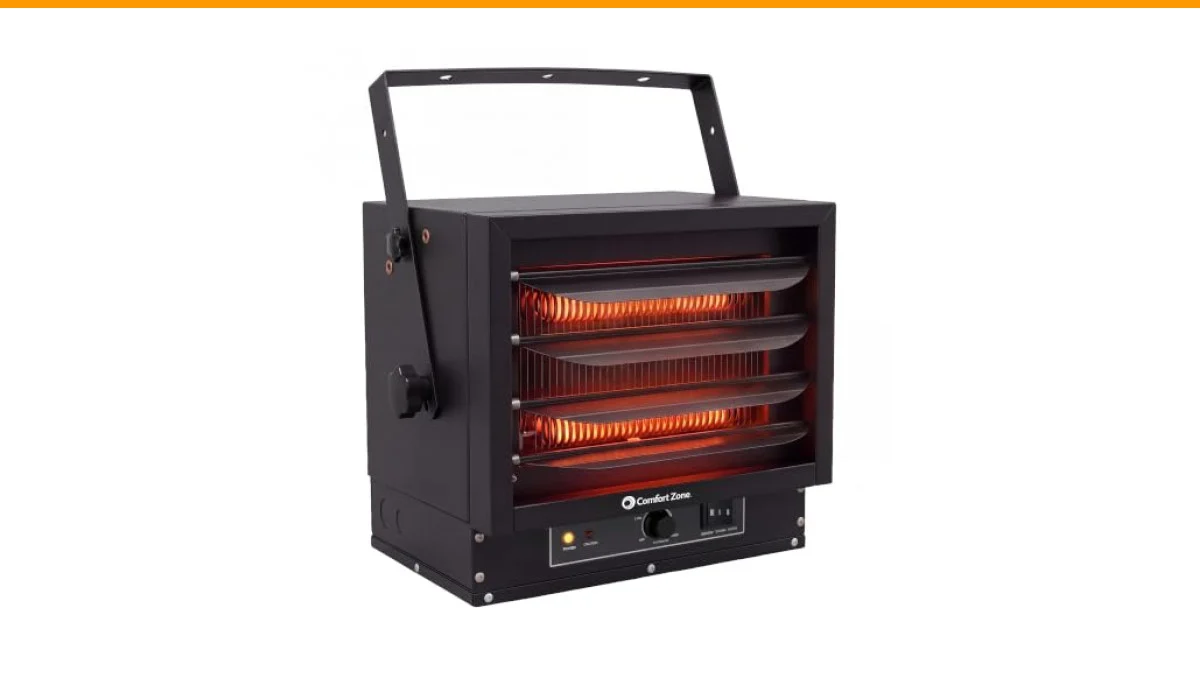
After reading, you’ll understand the key differences, advantages, and disadvantages of both heater types. For instance, if you need a robust heating solution for a garage or workshop, the Comfort Zone Hard-Wired Ceiling Mount Garage Electric Space Heater could be an excellent choice. This 5,000-watt, 240-volt heater efficiently uses overhead space to warm larger areas while providing safety features like an overheat protection system.

COMFORT ZONE
Comfort Zone Hard-Wired Ceiling Mount Garage Electric Space Heater, Fan-Forced, 5,000 watt, 240 volt, Overheat Protection, Thermal Cut-Out Switch, Ideal for Workshop & Garage, ETL Compliant, CZ220BK
- EFFICIENT CEILING MOUNT: With its ceiling-mount design and hard-wired installation, this fan-forced heater is perfect for spaces l…
- ROBUST STEEL CONSTRUCTION: Constructed from heavy-gauge steel, the body of this commercial heater exhibits exceptional durability,…
- PRECISE HEAT DISTRIBUTION: The inclusion of louvers and an adjustable mounting angle enables targeted heating, allowing you to dir…
Understanding Voltage Ratings
Voltage is a measure of electrical potential. In simple terms, it indicates the pressure that pushes electric current through wires. 120V and 240V are two common voltage ratings used in residential and commercial applications. The primary difference lies in the amount of power they can supply.
A 120V heater typically draws lower power, making it suitable for smaller spaces or specific heating needs. In contrast, a 240V heater can deliver more power, making it ideal for larger areas or situations requiring rapid heating. For example, a standard 120V heater may use 1,500 watts, while a 240V heater can range from 3,000 to 5,000 watts or more.
Efficiency and Power Consumption
Efficiency is crucial when choosing a heater. 240V heaters often provide higher efficiency because they can deliver more heat using less energy over time. A 240V heater can warm up a larger area faster than a 120V heater due to its higher wattage. This can translate to lower energy bills in the long run, especially in climates with extended cold periods.
For instance, if you have a 1,500-watt 120V heater running for 8 hours, it consumes 12 kWh (kilowatt-hours) of electricity. If you compare this to a 5,000-watt 240V heater running for just 2 hours, it would also consume 10 kWh. Thus, while the 120V heater can run longer, the 240V heater heats the space more quickly and efficiently.
Safety Considerations
Safety is a vital aspect when selecting a heater. Both 120V and 240V heaters have safety features, but they differ in their setup. Generally, 240V heaters require professional installation due to the higher voltage and potential for significant electrical hazards. Adhering to local electrical codes is essential for safety.
The Comfort Zone Hard-Wired Ceiling Mount Garage Electric Space Heater, for example, offers built-in overheat protection, ensuring safe operation in challenging environments. Users should also ensure their electrical system can handle the power load, as inadequate wiring can lead to overheating or fire hazards.
Comparative Summary Table
| Feature | 120V Heaters | 240V Heaters |
|---|---|---|
| Power Consumption | Up to 1,500 watts | 3,000 watts and above |
| Heating Speed | Slower, suitable for small spaces | Faster, effective for larger areas |
| Installation | Usually requires standard outlets | Often needs professional installation |
| Energy Efficiency | Less efficient, higher long-term costs | More efficient, lower long-term costs |
| Safety Features | Basic safety features | Advanced safety features recommended |
What are the main differences between 120V and 240V heaters?
The primary differences include power consumption, heating speed, installation requirements, energy efficiency, and safety features. 240V heaters generally offer more power and efficiency, making them suitable for larger spaces.
Which heater is better for a garage?
A 240V heater is often better for a garage, particularly if it’s a sizable area. Heaters like the Comfort Zone model can deliver sufficient warmth quickly and efficiently, making them ideal for workshops and garages.
Can I plug a 240V heater into a 120V outlet?
No, a 240V heater requires a specific outlet designed for higher voltage. Plugging it into a 120V outlet can damage the heater and create a significant safety hazard.
How do I know which heater to choose?
Consider the size of the space you need to heat, your budget, and your electrical system’s capacity. For smaller areas, a 120V heater may suffice. For larger spaces or quicker heating, a 240V heater is more suitable.
Are there any energy savings with a 240V heater?
Yes, 240V heaters tend to be more energy-efficient for larger spaces. Their higher wattage allows them to heat areas quickly, which can lead to lower energy bills over time.
Final Thoughts and Actionable Insights
- Assess the size of your space before choosing a heater.
- Consider energy efficiency to save on long-term costs.
- Prioritize safety features, especially for high-voltage systems.
- Consult a professional if unsure about electrical requirements.
- Look for heaters with built-in safety mechanisms.
- Review your electrical system to ensure compatibility with your heater choice.
- Explore options like the Comfort Zone heater for robust heating solutions in challenging environments.



