Your electric bill crept up $40 last month. The water heater runs three times a day. Your family grumbles about lukewarm showers. Sound familiar? Heat pump water heaters promise big savings, but you’ve heard conflicting things. Some say they slash bills by hundreds. Others claim they fail in winter. This article cuts through the noise. You’ll learn the real numbers, the actual trade-offs, and whether one makes sense for your home.
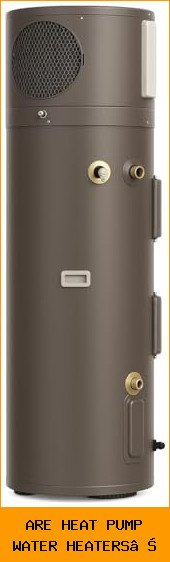
One example of this technology is the Senville Hybrid Heat Pump Electric Water Heater (50 gallon, Energy Star). It packs a heat pump into a standard tank form, with a 3.75 UEF rating and a 69-gallon first hour rating. It’s UL and AHRI certified. That matters because certification means independent testing backed those numbers. But before you buy any unit, understand the principles below.

Senville
Senville Hybrid Heat Pump Electric Water Heater, Energy Star, 50 Gallon | UL and AHRI Certified, 3.75 UEF, 69-Gal FHR, 189L, 4.5KW
- Energy-Saving Hybrid Water Heater – Advanced heat pump water heater technology extracts heat from the air to warm water efficientl…
- High Efficiency Performance – With a 3.75 UEF rating and a 69-gallon First Hour Rating (FHR), this hybrid water heater delivers re…
- 50 Gallon Electric Water Heater Capacity – Perfect for medium to large households, providing consistent hot water for showers, lau…
The Big Myth: Heat Pump Water Heaters Can’t Handle Cold Climates
This is the most common reason people skip heat pump water heaters. The logic feels solid: if a heat pump pulls heat from the air, what happens when the air is freezing? Modern hybrids solve this with a backup electric resistance element. Down to about 40°F ambient, the heat pump runs efficiently. Below that, the unit switches to resistance heating. You still get hot water — the efficiency drops but not to zero.
A study from several cold-climate utilities found payback still under four years for homes in Minnesota and Wisconsin. The key variable is where you install it. A heat pump water heater works best in a space that stays above 50°F year-round—basement, heated garage, or mechanical room. If your water heater sits in an unconditioned crawlspace that hits 30°F, expect less savings. The myth is half true: it’s not ideal for freezing spaces. But for most homes, it works fine.
No, Higher Wattage Doesn’t Mean Better Water Heating
Walk through a hardware store and you’ll see standard electric water heaters labeled 4,500 watts. People assume more watts means faster recovery. Heat pump water heaters use a compressor, not resistance coils, to move heat. They draw 500–700 watts in heat pump mode. That sounds weak — until you look at the real efficiency measure: UEF (Uniform Energy Factor). A standard electric heater has a UEF around 0.92. The Senville unit delivers 3.75. That’s nearly four times more efficient.
So yes, a heat pump water heater gives you 50 gallons of hot water using less electricity than a hair dryer. The wattage myth convinces people they won’t keep up. But look at the First Hour Rating (FHR). The Senville’s 69-gallon FHR means a family of four can take consecutive showers without running out. The wattage number alone tells you nothing about real-world performance.
Real-World Savings: What the Numbers Actually Say
Let’s put dollars on it. A typical electric water heater uses 4,000–5,000 kWh per year. At $0.13/kWh, that’s $520–$650 annually. A heat pump water heater uses about 1,200–1,500 kWh — roughly $156–$195. That’s a saving of $360–$455 each year. Over ten years, that adds up to $3,600–$4,550. The unit itself costs more upfront — typically $1,200–$1,800 installed. So payback lands around three to four years. After that, you’re saving.
Gas water heaters have lower operating costs in some regions, but natural gas prices swing. Heat pumps also qualify for a federal tax credit: 30% of the cost, up to $2,000. Many utilities offer additional rebates. Check your local programs. One caveat: if you have solar panels, the payback accelerates because you’re using your own electricity. The table below compares the three main types side by side.
| Feature | Heat Pump (HPWH) | Standard Electric | Gas Tank |
|---|---|---|---|
| UEF Rating | 3.5 – 4.0 | 0.92 – 0.95 | 0.60 – 0.70 |
| Annual Energy Cost | $150 – $200 | $500 – $650 | $250 – $400 |
| Lifespan | 10 – 15 years | 10 – 12 years | 8 – 12 years |
| Upfront Cost (installed) | $1,200 – $2,000 | $400 – $800 | $600 – $1,000 |
| Climate Sensitivity | Moderate – needs 40+F space | None | None |
| Noise Level | 40 – 50 dB (low hum) | Quiet | Burner noise |
Costs are estimates based on typical national averages. Your rates and rebates will differ. Always check the current price on Amazon and your utility website.
Installation Realities Most Articles Skip
You can’t just swap a heat pump water heater into the same spot as an old electric tank. It’s taller and wider. You need about eight inches of clearance around the unit for airflow — no tight closets. The noise is a constant low hum, like a refrigerator. If your water heater sits in a closet next to the living room, that hum might bother you. Plan to put it in a basement, garage, or utility room with a door.
The unit also condenses moisture and needs a drain or a condensate pump. If you don’t have a floor drain, you’ll need to install one or route the pump to a sink or laundry tub. Most heat pump water heaters require a 240V circuit — the same as standard electric. Wiring is straightforward if you have an existing outlet. The biggest gotcha: if your installation space is small and cold, the heat pump will struggle because it relies on ambient heat. That can make the compressor run longer and wear out faster. Pick a spot that stays above 50°F year-round.
Frequently Asked Questions
Are heat pump water heaters worth it for a family of four?
Yes, if you match the capacity. A 50-gallon unit like the Senville gives 69 gallons first hour — enough for three showers and some dishes. For heavy simultaneous usage (four long showers back-to-back), consider a 65- or 80-gallon model. The operating savings still apply.
How long do heat pump water heaters last?
Expect 10 to 15 years. The compressor is the most likely part to fail. The Senville backs its compressor with a 10-year warranty and a 7-year parts warranty. Standard electric tanks typically last 10 to 12 years, so the lifespan is comparable.
Do heat pump water heaters work with a tankless system?
No. Heat pump water heaters store hot water in a tank. They can run in different modes: heat pump only, hybrid (auto-switch), or electric-only. Tankless heaters use high-power gas or electric elements on demand. Different technologies entirely.
What maintenance do they need?
Two simple tasks. Clean the air filter every three months — it’s like a refrigerator coil. Flush the tank annually to remove sediment. That’s it. Neglect either, and efficiency drops.
Will a heat pump water heater save money if I have natural gas?
It depends on your utility rates. In most areas, electricity costs more per BTU than natural gas. But a heat pump is so efficient (UEF 3.5+) that it often breaks even or still saves a little. Use a payback calculator with your local rates. The federal tax credit applies only to electric heat pump water heaters — not gas.
Your Action Plan
- Look at your current water heater’s yellow Energy Guide sticker to estimate annual kWh usage.
- Measure your installation space: height, width, clearance for airflow, and access to a 240V circuit.
- Calculate total cost: unit price plus installation minus any rebates and the federal tax credit. Compare to your expected annual savings.
- Choose a unit with a UEF of 3.5 or higher. The Senville scores 3.75.
- Read the warranty details carefully – compressor and parts coverage vary by brand.
- Plan for noise. If the unit will be near bedrooms, install it behind a door or in a separate mechanical room.
- Run it in heat pump mode by default. Switch to electric backup only during extreme cold spells or heavy demand.


