You walk into the basement after a long shower. The water heater is standing there, doing its job. But the electric bill keeps creeping up, and you start wondering if there’s a smarter way to heat water. That’s when you hear about heat pumps. Can a heat pump actually replace a standard hot water heater? The short answer is yes, but the details matter a lot. By the end of this article you’ll know exactly how they work, what conditions they need to perform, and whether one makes sense for your home.
Heat pump water heaters (HPWHs) don’t generate heat directly with electric elements the way a traditional tank does. Instead they pull heat from the surrounding air and move it into the water. It’s the same technology your refrigerator uses — reversed. The big payoff is efficiency. A typical electric resistance heater has a coefficient of performance (COP) of 1.0 — one unit of electricity in, one unit of heat out. A heat pump water heater can hit a COP of 3.0 or higher. That means for every kilowatt-hour of electricity you pay for, you get three or more kilowatt-hours of heat moved into the tank.

Senville
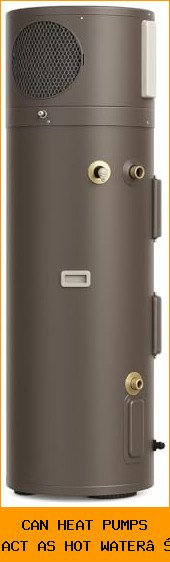
Senville Hybrid Heat Pump Electric Water Heater, Energy Star, 50 Gallon | UL and AHRI Certified, 3.75 UEF, 69-Gal FHR, 189L, 4.5KW
- Energy-Saving Hybrid Water Heater – Advanced heat pump water heater technology extracts heat from the air to warm water efficientl…
- High Efficiency Performance – With a 3.75 UEF rating and a 69-gallon First Hour Rating (FHR), this hybrid water heater delivers re…
- 50 Gallon Electric Water Heater Capacity – Perfect for medium to large households, providing consistent hot water for showers, lau…
But there are catches. They work best in certain climates and locations. They cost more upfront. And they make noise and produce condensate that needs to go somewhere. I’ll walk through all of that so you can decide if a heat pump water heater is the right move for your situation.
Products like the Senville Hybrid Heat Pump Electric Water Heater show what’s available today. It’s a 50-gallon unit with a 3.75 UEF rating and a 69-gallon first hour rating. That efficiency means it uses roughly 70% less electricity than a standard electric water heater. It’s Energy Star certified and backed by a 7-year parts warranty and a 10-year compressor warranty. I’ll refer to it as an example throughout this piece because the specs are representative of a good modern hybrid system.
How a heat pump water heater actually works
A heat pump water heater uses a compressor, evaporator coils, and a fan to extract heat from the air. The fan draws room air across cold refrigerant coils inside the unit. That refrigerant absorbs heat from the air — even air that feels cool — and evaporates. The compressor then squeezes the refrigerant, raising its temperature further. Hot refrigerant gas flows through a heat exchanger wrapped around the water tank, transferring that heat into the water. The refrigerant cools, condenses back to liquid, and cycles again.
This process works because the physics of phase change lets refrigerants absorb and release large amounts of energy at relatively low temperature differences. That’s why a heat pump can pull heat out of 50°F air and still produce 120°F water. It’s not magic. It’s thermodynamics.
Most hybrid models, including the Senville unit I mentioned, also have backup electric resistance elements. When demand spikes — say you have five people showering back-to-back — the system can switch to resistance heating to keep up. In normal operation you stay in heat pump mode and save the most energy. The unit decides automatically which mode to use based on tank temperature and incoming water temperature.
When does a heat pump water heater make sense?
Location matters more than you might think. A heat pump water heater needs to sit in a space that stays above about 40°F year-round. If you install one in an unheated garage that drops to 30°F in winter, the compressor has to work harder and the backup resistance elements will kick in more often. Efficiency drops. In extreme cold the system may run almost entirely on resistance heat, negating the savings.
An ideal location is a conditioned basement, a utility room, or a garage that stays within 50–90°F most of the time. The unit also needs enough air volume. It pulls heat from the room and exhausts cooler, drier air. In a small closet, the room can get cold enough that the heat pump struggles. Most manufacturers recommend a room volume of at least 1,000 cubic feet — roughly 10x10x10 feet — or you can add louvered doors or transfer grilles to allow air movement from adjacent spaces.
Climate also affects payback. If you live in a warm climate where your home already runs air conditioning for months, a heat pump water heater can actually help cool and dehumidify the space it sits in. That cuts your AC load slightly. In a cold climate, the unit extracts heat from the house during winter, forcing your furnace or heat pump to work a little harder to replace that heat. The net effect still saves energy because the water heater’s COP is higher than the backup furnace’s efficiency, but the savings are smaller.
Household size matters too. A 50-gallon tank with a 69-gallon first hour rating handles a family of three or four without problems. Larger families might need an 80-gallon tank or a hybrid unit with a faster recovery rate. The Senville’s 3.75 UEF means it recovers about 40 gallons per hour in heat pump mode — fast enough for most daily routines. If you regularly drain the tank with long showers and then need to do laundry, the backup elements cover the gap.
How it compares to other water heating options
Here is a direct comparison of the four main ways to heat water in a typical home. The numbers are based on average conditions with standard assumptions about electricity and gas prices in the U.S. Your actual results will vary by utility rates and usage patterns.
| Type | Efficiency (UEF) | Annual energy cost (est.) | Upfront cost | Lifespan | Best for |
|---|---|---|---|---|---|
| Standard electric resistance | 0.90 – 0.95 | $500 – $700 | Low ($400–$700) | 10–15 years | Mild climates, low hot water use |
| Heat pump (hybrid) | 3.0 – 4.0 | $150 – $250 | Moderate ($1,200–$2,000) | 10–15 years | Basement or conditioned space, moderate to high usage |
| Natural gas tank | 0.60 – 0.70 | $200 – $350 | Moderate ($600–$1,200) | 8–12 years | Homes with gas service, cold climates |
| Tankless electric | 0.95 – 0.99 | $400 – $600 | High ($1,000–$2,500) | 15–20 years | Small households, point-of-use, space saving |
The table makes a few things clear. A heat pump water heater saves the most money on electricity, but it costs more upfront than a standard electric tank. The yearly savings of $300–$500 typically pay back the price difference in 2–4 years. After that it’s pure savings. Gas water heaters have lower operating costs than electric resistance but higher than heat pumps in many regions — though gas prices are volatile. Tankless units last longer but require high electrical capacity and can struggle with simultaneous demand.
One trade-off I see a lot: people expect the same recovery speed as a gas tank. They don’t get it in heat pump mode. A typical gas unit can recover 50 gallons in 30–40 minutes. A heat pump in pure heat pump mode recovers about 40 gallons per hour. That’s fine for most households, but if you have back-to-back showers, you might need to let the tank catch up. The backup elements help, but they increase power draw. On the positive side, the Senville’s 69-gallon first hour rating means you can get about 69 gallons of hot water in the first hour of heavy use — enough for three decent showers plus a load of dishes.
Installation and maintenance gotchas
Heat pump water heaters are not a plug-and-play swap for a standard electric tank. They have a few extra requirements. The unit needs a 240-volt outlet with the right amperage — typically a 30-amp breaker. Most existing water heater circuits can handle that. But you also need space for the top-mounted compressor and fan. The Senville stands about 58 inches tall and 22 inches in diameter, similar to a standard 50-gallon tank.
Condensation is the biggest surprise for new owners. The heat pump removes moisture from the air and drips it into a built-in condensate pan. You need to run a condensate drain line to a floor drain, a utility sink, or outside. If you don’t have a drain nearby, you’ll need a condensate pump. In humid climates, a unit in an unconditioned space can produce several gallons per day of water. Plan for it.
Noise is another factor. The compressor and fan produce a constant hum in the 45–55 decibel range — about as loud as a modern refrigerator. It’s not disruptive in a basement, but you wouldn’t want one in a bedroom closet. The Senville model has a quiet operation mode, but it still makes some sound. If absolute silence matters, stick with a standard electric resistance tank.
Filter maintenance is simple. Most units have a washable air filter on the top or side. You should clean it every three months. A dirty filter reduces airflow and efficiency. It takes about two minutes. Set a calendar reminder.
Real questions people ask about heat pump water heaters
Will a heat pump water heater work in a cold basement?
Yes, as long as the basement stays above 40°F. Most basements in northern climates stay in the 50–65°F range, which is fine. The unit will still extract heat from that cool air. Below 40°F, the compressor may shut down and the unit runs entirely on resistance heat, losing efficiency. If your basement dips below freezing in winter, look for a model with a low-temperature operating mode or install it in a conditioned space.
How loud is a heat pump water heater?
It’s about as loud as a window air conditioner running on low. Typical sound levels are 45–55 dB. You can carry on a conversation in the same room without raising your voice. But if the unit is installed near a bedroom or living area, the constant hum might bother light sleepers. Some models have a ‘quiet mode’ that slows the fan further, but that reduces heating speed.
Do heat pump water heaters need a drain?
Yes. They produce condensate — water that drips from the evaporator coils, exactly like a central air conditioner. The unit has a port for a 3/4-inch drain hose. You need to route that to a floor drain, a sump pump basin, or a nearby sink. If gravity drain isn’t possible, you install a small condensate pump ($50–$80) that pumps the water up to a drain line.
Can a heat pump water heater replace a tankless unit?
It can replace a tankless electric unit, but there are trade-offs. A heat pump tank holds 50 or 80 gallons of stored hot water, so you never get the endless supply of a tankless. But it draws much less power — typically 1,500–2,000 watts in heat pump mode versus 18,000–27,000 watts for tankless electric. If your electrical panel is maxed out, a heat pump water heater is a much easier retrofit. The Senville draws about 1,500 watts in heat pump mode, which is less than a hair dryer.
Is the upfront cost worth it?
In most cases, yes, if you have the right installation location and your electricity rates are average or above. A heat pump water heater costs $1,200–$2,000 versus $500–$700 for a standard electric tank. The difference is about $700–$1,300. With annual savings of $300–$500, payback happens in 2–4 years. After that you save $30–$50 per month on your electric bill. Over a 10-year lifespan, total savings can exceed $3,000. Federal and state tax credits or utility rebates can cut the upfront cost further — check your local programs.
What to do next if you’re considering one
- Measure the available floor space and check that the room has at least 1,000 cubic feet of air volume and stays above 40°F year-round.
- Count the number of people in your household. A 50-gallon tank works for up to four people. Larger households should consider an 80-gallon model.
- Locate a nearby floor drain or plan a condensate pump installation before buying. Don’t skip this step.
- Check your electric panel for an available 240-volt 30-amp breaker. Most existing water heater circuits work.
- Compare the UEF rating and first hour rating of specific models. A UEF above 3.5 and an FHR of at least 60 gallons for a 50-gallon tank are solid targets.
- Look into utility rebates and federal tax credits before purchasing. Many states offer $300–$500 back.
- Choose a model with a good warranty. The Senville’s 7-year parts and 10-year compressor warranty is typical of quality units. Avoid brands with short compressor coverage.


