You’re in bed, the house is quiet, and then it starts—a high-pitched whistle coming from the basement or closet. It’s your water heater singing an unwanted song. That noise isn’t just annoying; it’s a signal something’s off inside the tank or the plumbing. Most people ignore it until it gets louder or the water stops getting hot. Don’t wait that long.
This article walks you through the most likely reasons your water heater whistles, from simple sediment buildups you can fix in an afternoon to more serious pressure or valve problems that might need a pro. You’ll learn what each sound means, how to check for it yourself, and when to throw in the towel and call a plumber. I’ll also share a portable backup solution that’s saved my skin more than once.
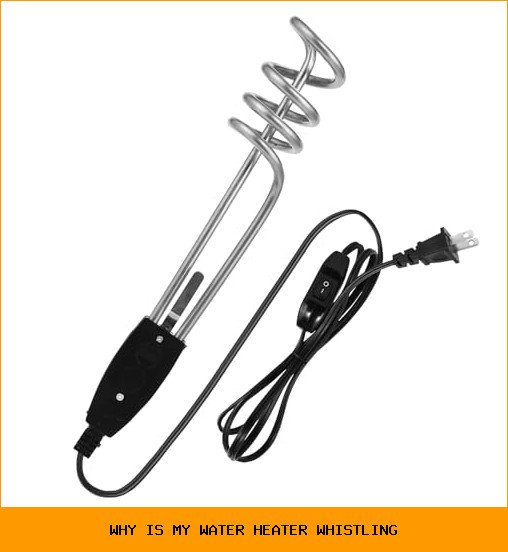
If your main heater is down for maintenance or you’re in a situation without hot water, a portable immersion heater like the WANPRECL 1000W unit can heat a 5-gallon bucket in minutes. It’s not a permanent fix, but it keeps you showered while you sort out the whistling beast. Now let’s get that noise diagnosed.
The Most Common Cause: Sediment Buildup
Hard water contains dissolved minerals like calcium and magnesium. Over time, these settle at the bottom of your water heater tank. A layer just half an inch thick can cause whistling. Here’s how: the heating element or gas burner heats the water, but the sediment insulates the bottom. Water trapped under the sediment layer turns to steam. Bubbles rise through the sediment, and the escaping steam makes that high-pitched whistle.
If your heater is more than five years old and you’ve never flushed it, sediment is the first thing to check. The sound often happens right after the water starts heating and fades once the water circulates. Set your thermostat below 140°F—higher temps speed up scaling. To flush, turn off power or gas, connect a garden hose to the drain valve at the bottom, and open a hot water faucet upstairs. Drain a few gallons until the water runs clear. Do this yearly.
One caveat: if you’ve never flushed a very old heater, the sediment may have hardened into a crust. Draining it all at once can dislodge chunks that jam the drain valve. Drain slowly and have a bucket handy.
High Water Pressure and the Expansion Tank Problem
Your home’s water pressure should be between 40 and 80 psi (pounds per square inch). Above 80 psi, water pushes hard against the heater’s valves and can make them sing. The pressure reducing valve on your main water line may be failing. Check with a cheap pressure gauge that screws onto a hose bib.
Even if your street pressure is fine, a closed plumbing system—caused by a check valve or backflow preventer—traps expanding water as it heats. That creates a pressure spike inside the tank. The fix is a thermal expansion tank installed above the water heater. It has an air bladder that absorbs the extra volume. If the expansion tank is waterlogged (no air inside), it can’t do its job, and you’ll hear a whistle from the cold water inlet pipe as water tries to escape. Tap the tank: a metallic clang means it’s full of water; a hollow thud means it’s working. Replace a waterlogged expansion tank or recharge the air side with a bicycle pump.
If your pressure consistently runs above 80 psi and you have no expansion tank, expect whistling and eventual valve failure. A pro can install a pressure reducing valve and expansion tank for around $300–$500.
Faulty Temperature and Pressure Relief (T&P) Valve
The T&P valve is a safety device that opens if temperature or pressure gets dangerous. A stuck or partially open T&P valve whistles as water or steam escapes past the seat. Look for water dripping from the discharge pipe—a clear sign. Sometimes the valve just needs a hand tighten, but if it’s damaged, replace it. Hot water systems are no joke; a failed T&P can let the tank explode.
To test: lift the test lever briefly and let it snap back. You should feel a gush of water. If it doesn’t reseat (still dribbles) or the whistling continues, buy a new valve that matches your heater’s BTU/temperature rating. Never cap or plug the discharge pipe. That turns your heater into a bomb. If you’re unsure, call a plumber—valves are cheap, but mistakes are expensive.
Loose Heating Elements (Electric) or Dirty Burner (Gas)
Electric water heaters have two heating elements. If one loosens over time, it can vibrate against the tank wall and whistle. You’ll hear the sound only when that element is actively heating. Turn off power at the breaker, remove the access panel, and use an element wrench to tighten the element. Don’t overtighten—snug is enough. If the gasket is cracked, replace it.
For gas heaters, the burner flame can whistle if the air shutter is misadjusted or the burner ports are clogged with dust. A blue flame with yellow tips means incomplete combustion. Clean the burner with a wire brush and adjust the air shutter per your manual. A whistling gas burner can also indicate high gas pressure—call the gas company if you suspect that.
| Cause | Tell-Tale Sound | Location | DIY Fix? | Call a Pro? |
|---|---|---|---|---|
| Sediment buildup | Whistle during heating, fades after | Bottom of tank | Flush yearly | Only if drain valve stuck |
| High water pressure | Constant whistle at inlet/valves | Cold water inlet | Check pressure, install pressure reducer | If over 80 psi persists |
| Faulty T&P valve | Whistle with water drip | Side or top valve | Tighten or replace | If unsure about replacement |
| Loose heating element (electric) | Vibration/whistle only during heating | Element flange | Tighten with wrench | If element needs replacement |
| Dirty burner (gas) | Flame whistles, yellow tips | Bottom burner compartment | Clean air shutter | If gas pressure suspected |
Why does my water heater whistle only when it’s heating?
That’s classic sediment. As the heater fires up, steam bubbles form under the sediment layer and escape upward, making a whistling noise. Once the water is fully hot and circulating, the steam stops and the noise fades. Flushing usually fixes it.
Can a whistling water heater explode?
Rare but possible if the cause is a faulty T&P valve combined with high pressure. The whistle itself isn’t explosive, but the underlying problem (stuck valve, overpressure) can lead to a rupture. If you see water leaking from the T&P or the pressure is above 80 psi, take it seriously.
Should I turn off my water heater if it’s whistling?
Not automatically. First try to identify the cause. If the whistle is accompanied by water dripping from the T&P valve or if you smell gas (with a gas heater), turn off the heater and shut the gas or electrical supply. For simple sediment whistling, no need to shut down—just plan a flush.
How do I flush sediment from my water heater?
Turn off power (electric) or gas. Attach a garden hose to the drain valve at the bottom. Run the other end to a floor drain or outside. Open a hot water faucet upstairs to let air in. Open the drain valve. Let water run until it’s clear (may take 5-10 gallons). Close valve, remove hose, turn power/gas back on. Do this once a year.
Will a water softener stop my water heater from whistling?
It helps by reducing mineral content, so less sediment builds up. But a softener won’t fix existing sediment—you still need to flush. And a softener can’t help with high water pressure or a faulty valve. It’s a preventive measure, not a cure for an already noisy heater.
Quick Fixes to Try Right Now
- Flush the tank if you haven’t in the last year. That solves 7 out of 10 whistling heaters.
- Check your water pressure with a $10 gauge. If it’s over 80 psi, install a pressure reducing valve or you’ll keep having problems.
- Listen for dripping from the T&P valve discharge pipe. If you see water, replace the valve—it’s cheap insurance.
- For electric heaters, tighten the heating elements with a proper wrench. Snug, not gorilla-tight.
- For gas heaters, clean the burner ports and adjust the air shutter until the flame is blue and quiet.
- Don’t ignore the sound for months. A whistle today can turn into a flood or a no-hot-water situation tomorrow.
- Keep a portable backup like the WANPRECL immersion heater for emergencies. It’s a lot cheaper than a hotel room when your main heater fails.


