You live somewhere that’s not Arizona. Maybe it’s cloudy, cold, or both. You’ve heard solar water heaters save money, but you keep wondering: will this thing actually work where I live? It’s a fair question. Solar water heating got its reputation in the sun belt, but the technology has changed. This article walks you through how different climates affect performance, what hardware choices matter most, and when the investment actually pays off. By the end you’ll know exactly what to look for in your area.
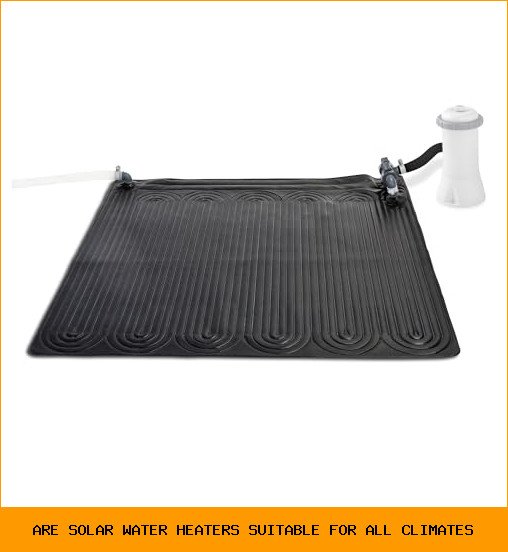
For pool owners, the same principles apply on a smaller scale. A product like the Intex 28685E Solar Pool Water Heater Mat uses an 11-square-foot black PVC surface to raise above-ground pool water by 5 to 9 degrees Fahrenheit, depending on sun and air temperature. It works with filter pumps up to 1/3 HP and includes hose adapters for standard connections. It’s not a whole-house system, but it shows how even a simple solar mat can extend your swimming season in most climates — as long as you get enough direct sun.

Intex
INTEX Solar Pool Water Heater Mat for Above Ground Swimming Pools | 28685E - Energy-Efficient Heating - Designed to work with INTEX Filter Pumps up to 2,000 GPH, 47.25" x 47.25"
- Solar heater mat uses solar technology to increase the temperature of the pool water by approximately 5 to 9 degrees depending on…
- Features an 11-square-foot surface to absorb the sun's rays to heat up above-ground pools; Dimensions (L x W): 47.25 x 47.25 inche…
- Simple and economical to use, compatible with filter pumps with up to 1/3 HP or a pump flow rate less than 2,000 GPH; Weight: 6.41…
So: Are Solar Water Heaters Suitable for All Climates? The Short Answer
Yes, but with honest caveats. A solar water heater will function in every climate, but it won’t deliver the same savings or reliability everywhere. The key metric is solar fraction — the percentage of your hot water load that the sun covers. In Phoenix that number might hit 90%. In Seattle it’s closer to 40–50%. The system still works, just not as dramatically.
The biggest variable isn’t temperature — it’s sunlight. A place like Fairbanks, Alaska, gets intense summer sun (20+ hours a day) that can actually make solar thermal viable for 4–5 months, even with winter temps of −40°F. Meanwhile, a cloudy coastal city like Vancouver gets milder winters but way less solar radiation year-round. Cold hurts efficiency (heat loss is greater), but modern evacuated tubes and freeze-protected flat plates handle it fine.
What matters more is how well your system is designed for your specific climate. You can’t throw the same collector and tank into every location and expect good results.
What Actually Determines Performance in Your Climate
Four factors control how much hot water your solar heater will produce:
- Solar insolation — the amount of solar energy hitting a square meter per day. Measured in kWh/m²/day. Most of the US gets 3.5–6.5. Above 4.5 is good for solar thermal.
- Ambient temperature — colder air increases heat loss from collectors, especially flat plates. Evacuated tubes are much less affected.
- Freeze risk — if temps drop below freezing, your system needs either drain-back or antifreeze (glycol) protection. Freeze damage is the #1 cause of early failure in cold climates.
- Backup heater strategy — every solar thermal system needs a backup (electric element, gas, or heat pump). In low-sun months, that backup picks up the slack. The smarter your controls, the less energy you waste.
Evacuated tube collectors hold a clear edge in cold, cloudy climates. They lose less heat to the air because the vacuum acts as insulation. Flat plates are cheaper and simpler but perform worse below about 40°F ambient — especially on overcast days. If you live in a place with long freezing winters, plan on evacuated tubes and a glycol loop with a heat exchanger.
Climate-by-Climate Breakdown – A Side-by-Side Comparison
Here’s how different climate types stack up for solar water heating. These numbers come from real installations and Solar Rating and Certification Corporation (SRCC) data.
| Climate Type | Typical Solar Fraction | Freeze Protection Needed? | Best Collector Type | Real-World Example |
|---|---|---|---|---|
| Hot & sunny (Desert Southwest) | 75–90% | Minimal (occasional freeze) | Flat plate or evacuated tube | Phoenix, AZ – system pays for itself in 5–7 years |
| Mixed/temperate (Mid-Atlantic, Midwest) | 50–70% | Yes – antifreeze or drain-back | Evacuated tube recommended | Denver, CO – good sun, cold winters; drain-back systems common |
| Cold & snowy (Northern states, Canada) | 35–55% | Yes – freeze-protected glycol loop | Evacuated tube (flat plate struggles) | Minneapolis, MN – works Nov–Mar but backup covers most load |
| Cloudy/maritime (Pacific NW, UK) | 30–45% | Yes (mild freeze, but damp cold) | Evacuated tube (handles diffuse light better) | Portland, OR – May–Sept is productive; winter is mostly backup |
Notice a pattern: no climate hits zero. Even cloudy regions get enough sun to justify the investment if you have a large household or high water usage. The trade-off is payback time — longer in low-sun areas, shorter in high-sun areas.
When Does It Actually Make Financial Sense?
For a family of four using about 60 gallons of hot water per day, a solar thermal system can cut water heating bills by 40–70%. In a sunny state, that’s $250–$500 saved per year. Your system costs $4,000–$6,000 installed (after federal tax credits). Payback is 8–12 years. In a cloudy state, savings drop to $100–$250 per year, pushing payback to 15–20 years.
But here’s the thing: those numbers shift if your backup fuel is expensive. Electric resistance water heating is the most expensive option per BTU. If you’re on electric, even a modest solar fraction saves real money. Gas is cheaper per BTU, so the savings are smaller. Heat pump water heaters are even more efficient than gas in mild climates — don’t pair them with solar unless you really want to reduce your carbon footprint.
I’ve seen people in cloudy climates say they regret going solar thermal because they expected too much. They saw glossy brochures showing 80% savings and got 35%. The disappointment wasn’t the hardware — it was bad expectations. So be honest with yourself: if you live above 45°N latitude or in a persistent fog belt, solar water heating is a supplementary system, not a replacement.
Five Questions People Actually Ask About Solar Water Heaters and Climate
Will my solar water heater freeze and burst in winter?
It can, if you don’t have the right freeze protection. Modern systems use one of two methods: drain-back (pumps stop, water drains into a tank inside the house) or glycol antifreeze loops. Both work fine down to −30°F. The biggest risk is a power outage during a freeze — if pumps don’t run and the system isn’t designed to drain, burst pipes are possible. Always get a system with a freeze-protection controller that has battery backup or a failsafe drain valve.
Do solar water heaters work on cloudy days?
Yes, but at reduced output. Even thick clouds let through some diffuse sunlight — typically 10–30% of full sun. Evacuated tube collectors perform better than flat plates under these conditions because they absorb diffuse light more efficiently and lose less heat. Most systems also include a backup heater that kicks in automatically when the tank temp drops below a set point, so you never run out of hot water.
Is a backup heater mandatory?
For 99% of homes, yes. Unless you live in the Sahara and never have a stretch of cloudy weather, you need a backup. It can be an electric element inside the solar storage tank, a tankless gas heater, or even a heat pump. The backup doesn’t need to be sized for 100% of your load — just enough to cover the difference. Many codes now require backup for safety (legionella prevention via periodic high-temp cycles).
Should I buy a cheap solar heater from a big-box store?
For seasonal pool heating, sure — a simple mat like the Intex 28685E works fine. But for year-round domestic hot water, cheap kits often cut corners on freeze protection, insulation, and controller quality. You’ll spend more in repairs than you saved on the initial purchase. Pay for a proper system from a company that has been in business a decade. The warranty (typically 5–10 years on collectors) matters more than the headline price.
Can I install a solar water heater myself to save money?
If you have plumbing and electrical experience, maybe. But most DIY jobs I’ve seen end up with poor tilt angles, undersized piping, or missing freeze protection. A poorly installed system can cost more in repairs than a professional install. Many states also require licensed contractors for permit approval. My advice: do your own research, but hire a pro for the installation. Use the money you saved to buy better collectors.
What You Should Actually Do With This Information
Here’s the honest bottom line on solar water heaters across climates — no sugarcoating.
- Check your local solar insolation before buying anything. The National Renewable Energy Lab (NREL) has free maps. If you’re below 4 kWh/m²/day on average, adjust expectations downward.
- Pick evacuated tubes if you deal with real winters (below 20°F regularly). Flat plates are fine for mild climates with occasional frost.
- Never skip freeze protection in any climate that sees 32°F or lower — even a few nights can burst a flat plate collector.
- Plan on a backup heater and size it so it covers 100% of your worst-case month load. Oversizing is safer than undersizing.
- Get at least three quotes from local installers, and ask every one for their own solar fraction estimate based on your address. Don’t trust a national average.
- For seasonal uses like pool heating, a simple solar mat (like the Intex 28685E mentioned earlier) is a cheap, low-risk way to get started. You can install it yourself in an afternoon.
- If you’re primarily motivated by environmental impact rather than payback, solar thermal still makes sense in any climate — it reduces fossil fuel use even at 30% solar fraction.


