Introduction to Garage Heating Options
As winter approaches, the need for reliable heating options in your garage becomes crucial. Maybe you’ve been working on a project, or perhaps you use your garage as a workspace or hobby area. Whatever the reason, keeping your garage warm and comfortable can enhance productivity and enjoyment. But what’s the best way to heat your garage? Should you choose an electric heater or a propane heater? This article will guide you through the pros and cons of both options, helping you make an informed decision.
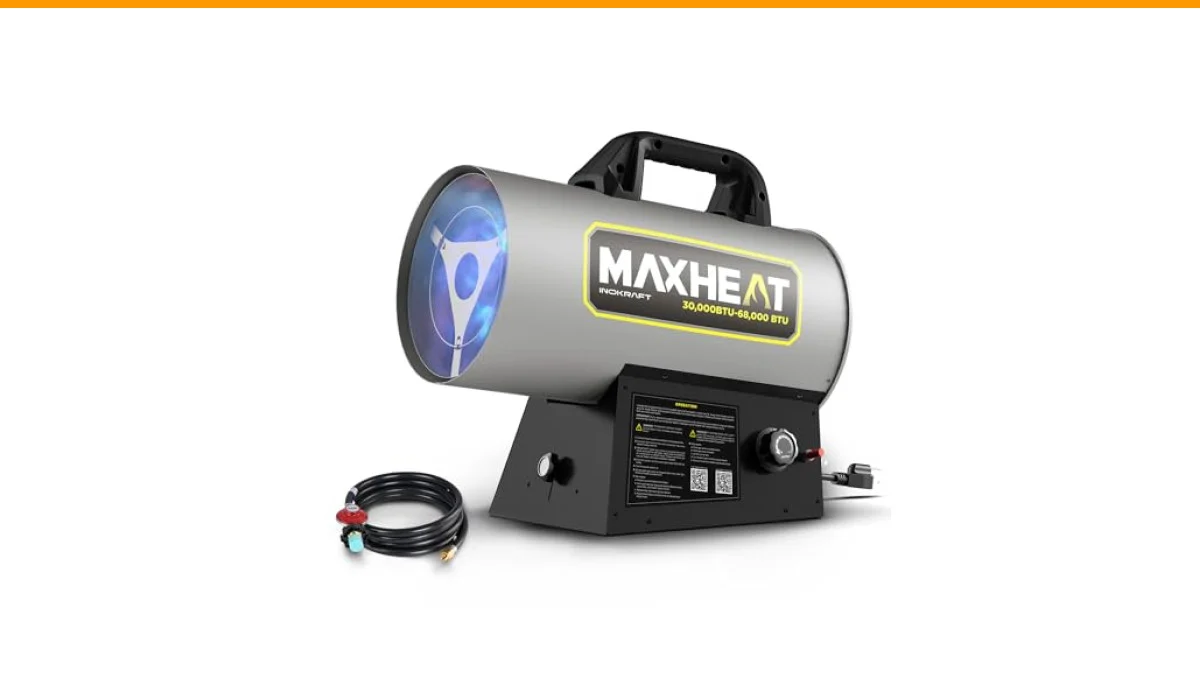
Both electric and propane heaters have distinct features, benefits, and drawbacks. Understanding these factors will allow you to determine which heating method aligns best with your needs. One option to consider is the InoKraft MAXHEAT MH68 68,000 BTU Forced Air Propane Heater. This heater offers fast heating, portability, and safety features, making it suitable for various garage situations.

InoKraft
InoKraft MAXHEAT MH68 68,000 BTU Forced Air Propane Heater, Torpedo Heater | Portable Garage Heater, Adjustable Liquid Propane Torpedo for Shop, Jobsite, Construction Sites, 10ft Hose & 4.9ft Power Cord
- Variable 30,000-68,000 BTU Output: This forced air heater provides 30,000-68,000 BTUs while heating an area up to 1600 sq. ft. Per…
- Fast Heating: Heavy-Duty Forced Air Fan, Significantly Raises Temperature in 10 Minutes. The fan-forced design distributes heat ac…
- Multi-Protection Safety Features: Ensure the area is well-ventilated to achieve economical, efficient, and clean burning without a…
Understanding Electric Garage Heaters
Types of Electric Garage Heaters
Electric garage heaters come in several types, each catering to different needs:
- Infrared Heaters: These heaters warm objects directly rather than heating the air. They work well in insulated garages.
- Fan Heaters: These distribute heat through a fan, quickly warming up the space. They are ideal for larger, less insulated garages.
- Radiant Heaters: Similar to infrared, these heat surfaces and objects, providing comfort without significant air movement.
Advantages and Disadvantages
Electric garage heaters offer several benefits but also come with drawbacks:
- Advantages:
- Ease of installation: Simply plug in and use.
- No need for ventilation: Electric heaters don’t produce fumes.
- Quiet operation: Most electric heaters operate silently.
- Disadvantages:
- Higher electricity costs compared to propane, especially in areas with expensive electricity rates.
- Limited heating power: Many electric heaters are less powerful than propane options.
- Dependence on electricity: In case of a power outage, these heaters will not function.
Understanding Propane Garage Heaters
Types of Propane Garage Heaters
Propane heaters also vary in type, including:
- Forced Air Heaters: These blow heated air into the garage and are typically portable, like the InoKraft MAXHEAT MH68.
- Convection Heaters: These work by heating the air, providing a more uniform temperature but may take longer to heat a space.
- Infrared Propane Heaters: They operate similarly to electric infrared heaters, providing direct warmth to objects and people.
Advantages and Disadvantages
Propane heaters have their own set of pros and cons:
- Advantages:
- Higher BTU output: Propane heaters can produce significantly more heat, making them suitable for larger spaces.
- Cost-effective in the long term, especially in areas where propane is less expensive than electricity.
- Portability: Many propane heaters are designed for easy transport and use in various locations.
- Disadvantages:
- Ventilation required: Proper ventilation is essential to avoid carbon monoxide buildup.
- Installation complexity: Connecting to a propane tank can be more difficult than simply plugging in an electric heater.
- Safety concerns: Propane heaters can pose safety risks if not used correctly, including fire hazards.
Cost Comparison: Electric vs. Propane
Initial Installation Costs
Initial costs can vary significantly based on the type of heater and installation requirements:
- Electric Heaters: Typically range from $100 to $500, depending on the model and features. Installation is usually straightforward—just plug it in.
- Propane Heaters: Can range from $200 to $800, factoring in the cost of the heater and installation of the propane line. Installation may require professional help, increasing initial costs.
Long-term Operating Costs
Operating costs are crucial for long-term budgeting:
- Electric Heaters: The cost of running an electric heater can be higher, especially in regions with high electricity rates. Expect to pay around $0.10 to $0.30 per kWh, depending on your location.
- Propane Heaters: Propane prices can fluctuate, but on average, propane costs about $2.50 to $3.50 per gallon. With efficient heaters, you can expect a cost of $0.75 to $1.00 per hour of use.
Safety and Ventilation Considerations
Safety is paramount when choosing a heating method. Electric heaters pose fewer risks, as they don’t produce carbon monoxide or require ventilation. However, they can overheat if not monitored.
Propane heaters require proper ventilation to avoid dangerous gas buildup. Make sure to install CO detectors in your garage if using propane. Regularly check for leaks and ensure proper maintenance.
Environmental Impact of Heating Options
Electric heaters generally have a lower environmental impact, especially if powered by renewable energy sources. However, the production of electricity can still contribute to greenhouse gas emissions, depending on how it’s generated.
Propane is a fossil fuel and does produce emissions when burned. However, it burns cleaner than other fossil fuels, making it a better choice than heating oil or coal. Still, propane’s environmental impact is a concern compared to electric options sourced from renewables.
Choosing the Right Heater for Your Garage
Factors to Consider (size, insulation, usage)
Several factors will help determine the best heating option for your garage:
- Size: Larger garages will benefit from the higher BTU output of propane heaters.
- Insulation: Well-insulated garages retain heat better, making electric heaters more effective.
- Usage: If you use your garage frequently, a propane heater’s faster heating might be preferable.
Recommendations for Specific Scenarios
Consider these scenarios:
- Small Insulated Garage: An electric heater may suffice, keeping costs and installation minimal.
- Large Garage or Workshop: A propane heater like the InoKraft MAXHEAT MH68 offers the power needed for quick heating.
- Occasional Use: If you only need heat sporadically, a portable propane heater is cost-effective.
User Experiences and Case Studies
User experiences can provide valuable insights. Many report that electric heaters work well in small, insulated garages, providing consistent warmth without higher energy bills. On the other hand, users of propane heaters appreciate the rapid heat-up time and the ability to maintain warmth in larger, drafty spaces. For instance, a user shared that the InoKraft MAXHEAT MH68 effectively heated their six-car garage within minutes, making it perfect for winter projects.
Final Thoughts and Recommendations
- Electric heaters are best for smaller, insulated spaces and for users needing lower running costs.
- Propane heaters are better for larger garages requiring quick heat and higher BTU outputs.
- Safety and ventilation must be a priority when using propane heaters.
- Consider your local energy costs and availability of propane when making a choice.
- Evaluate your garage’s size and insulation to determine the optimal heating solution.
