Your Water Heater Leaks at 2 AM – Now What?
Picture this: your basement floods because the water heater finally gave out. You file an insurance claim. The adjuster talks about ‘actual cash value’ and ‘FMV.’ You assume you’ll get enough to buy a brand new unit. Then the check arrives for half that. That’s the moment you realize FMV has nothing to do with replacement cost.
Fair Market Value (FMV) of an actual asset like a water heater is one of those terms people throw around without really understanding. It matters for insurance, selling used equipment, property taxes, and even divorce settlements. But most people get it wrong. They confuse it with replacement cost, book value, or what they paid five years ago.
This article walks through what FMV actually means for a physical asset, the three biggest myths, and how to calculate a number that holds up. You’ll walk away knowing exactly how to talk about FMV, whether you’re dealing with an adjuster, a buyer, or an accountant.
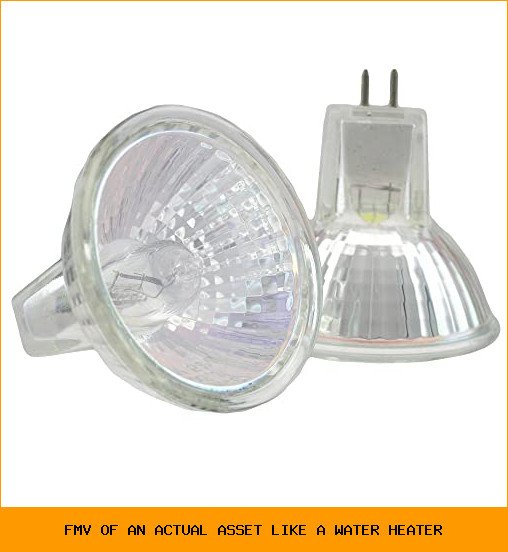
If you ever need to replace a specialty bulb – say, an Eiko FMV 35W MR16 narrow flood for a projector – the FMV is simple: it’s the price of a direct replacement. That’s why the Replacement for Eiko FMV, 35 Watt, 12 Volt, 2950K, 24 Degree Beam, MR16 Narrow Flood bulb (2-pack) from Industrial Performance is a straightforward purchase. For a water heater, it’s more complicated. Depreciation, condition, and local used markets all play a role.
Myth #1: FMV Equals Replacement Cost
This is the most common mistake. People think FMV means ‘what it costs to buy a new one.’ It doesn’t. FMV is the price a willing buyer and willing seller would agree on, with neither being forced to act. For a used water heater, that number is almost always lower than a new one.
A typical gas water heater costs $800 new and lasts 10 years. After five years, it has half its useful life left. A buyer won’t pay $800 for a five-year-old unit with potential scale buildup and unknown maintenance. They’ll maybe pay $300 to $400. That’s the FMV – not the $800 you’d see at Home Depot.
Insurance companies call this ‘actual cash value’ (ACV). It’s replacement cost minus depreciation. Depreciation usually follows a straight line over the expected life. So an 8-year-old water heater with a 10-year lifespan might be depreciated 80%. ACV would be 20% of replacement cost. That’s often far less than what a buyer would actually pay on the used market, but it’s the standard formula.
The takeaway: never assume FMV will cover a full replacement. If you want full coverage, you need ‘replacement cost’ endorsement on your policy.
Myth #2: Book Value or Tax Basis Is the Same as FMV
Business owners and landlords often confuse FMV with the depreciated value on their books. That number is an accounting convention, not a market reality. The IRS lets you write off a water heater over, say, 5 years using MACRS. After five years, the book value is zero. But the heater might still work fine. Its FMV could be $200 if it’s in good shape and someone needs a used unit.
Conversely, a water heater that’s only two years old might have a book value of $500 using straight-line depreciation. But if the brand has a reputation for leaks or the model was recalled, no one wants it. FMV could be $100. Book value is a number on a spreadsheet. FMV is what a real person hands you in cash.
For tax purposes, if you donate a used water heater to a charity, you can deduct its FMV at the time of donation. But you need an appraisal or comparables. The IRS doesn’t accept your own depreciation schedule as proof of value.
How to Actually Determine FMV for a Water Heater
There’s no single formula, but three approaches are commonly used:
- Market approach. Look at what similar used water heaters sell for on Craigslist, Facebook Marketplace, or used equipment dealers. You’ll see a range. A 5-year-old 50-gallon gas unit with a good brand might list for $300. That’s the best evidence of FMV.
- Cost approach. Start with the replacement cost new. Subtract depreciation based on age, condition, and remaining lifespan. Then adjust for functional obsolescence (old technology like pilot lights vs. electronic ignition) or economic obsolescence (if everyone in your area switched to tankless). This works well when there’s no active used market.
- Income approach. This is rarely used for a water heater unless it’s part of a rental property and you’re valuing the entire building. The heater alone doesn’t generate income, so this approach doesn’t apply.
For insurance, the cost approach is standard. Here’s a typical calculation:
| Item | Example | Notes |
|---|---|---|
| Replacement cost new | $900 | Includes installation and materials |
| Expected lifespan | 10 years | Manufacturer and industry averages |
| Age of unit | 6 years | Installation date to claim date |
| Depreciation percentage | 60% (6/10) | Straight-line method |
| FMV (ACV) | $360 | $900 minus 60% depreciation |
Note that this table reflects the standard insurance method. A real market transaction might yield a different number. For example, a well-maintained 6-year-old heater in a low-cost area might fetch $400 on Craigslist because buyers value not having to buy new.
When FMV Actually Matters
Three situations where getting FMV right matters most:
- Insurance claims. If your policy pays ACV, you’ll get FMV minus deductible. That check won’t buy a new heater unless you have replacement cost coverage. Check your policy language carefully.
- Selling used equipment. Landlords and contractors often sell old water heaters. Pricing too high (using replacement cost) means no sale. Pricing too low (using book value) leaves money on the table. The market approach works best here.
- Property tax appeals. Some jurisdictions assess personal property tax on business equipment. You can contest the assessed value by presenting FMV evidence. A 10-year-old water heater with a zero book value might still have $100 FMV, but that’s less than what the county might have estimated.
Frequently Asked Questions About FMV for Water Heaters
What is the fair market value of a water heater for insurance purposes?
Insurance uses actual cash value, which is replacement cost minus depreciation based on age and expected life. Most water heaters depreciate over 10–12 years. Adjusters apply a straight-line method unless the unit is in poor condition. You can request an independent appraisal if you disagree with their number.
Does the age of the water heater affect FMV?
Yes. Age is the biggest factor. A new water heater installed yesterday has FMV close to purchase price. After one year, FMV drops roughly 10–15%. By year 10, if the expected lifespan is 10 years, FMV is near zero for insurance, but a used buyer might still pay $50–100 if it still works and is free of rust.
Can I deduct FMV on my taxes if I donate a used water heater?
Yes, but only if the charity accepts it and you get a receipt. The deduction is the FMV at the time of donation. For items worth over $5,000, you need a qualified appraisal. For a typical $200 used water heater, a receipt and a photo usually suffice, but keep documentation of comparable sales.
What’s the difference between FMV and book value for a water heater?
Book value is the original cost minus accumulated depreciation per your accounting method (e.g., MACRS or straight-line). FMV is what someone would pay on the open market. They rarely match. A fully depreciated asset (book value $0) may still have FMV. A new asset with accelerated depreciation may have book value far below FMV.
How do I find comparable sales to estimate FMV for a used water heater?
Search local online marketplaces, used building material stores, and auction sites. Filter by capacity (40, 50, 75 gallons), fuel type (gas, electric), and age (years since manufacture date). Adjust for condition: rust, leaks, noisy operation, or missing parts reduce value. For a quick estimate, take replacement cost, subtract 10% per year of age, then adjust 20% up or down based on brand and condition.
What to Remember About FMV for Tangible Assets
- FMV is not replacement cost. Expect a lower number for used items.
- Insurance ACV is the standard method but doesn’t always match market reality.
- Book value from accounting is irrelevant for FMV. The market decides.
- When selling used, use market approach (Craigslist, auctions) for best price.
- For tax or donation purposes, document FMV with comparables or an appraisal.
- Specialty items like projectors or bulbs have simpler FMV – check current Amazon prices for the Replacement for Eiko FMV 35W MR16 bulb as a direct reference.
- If you rely on FMV for a claim or sale, get a second opinion from a licensed appraiser if the amount is significant.


