You walked into the basement with a tape measure, ready to replace that 20-year-old tank. Then you saw it – the new heater is six inches taller than the old one. Or maybe it’s shorter. Either way, that space between the top of the tank and the floor joists is tight, and now you’re stuck wondering if short vs tall water heater really makes a practical difference beyond fitting in the closet.
This article walks through the trade-offs: recovery time, first-hour rating, energy use, installation quirks, and the misconceptions that lead people to pick the wrong size. By the time you finish, you’ll know which height works for your household – and why the answer isn’t always the bigger tank.

HenSinTc
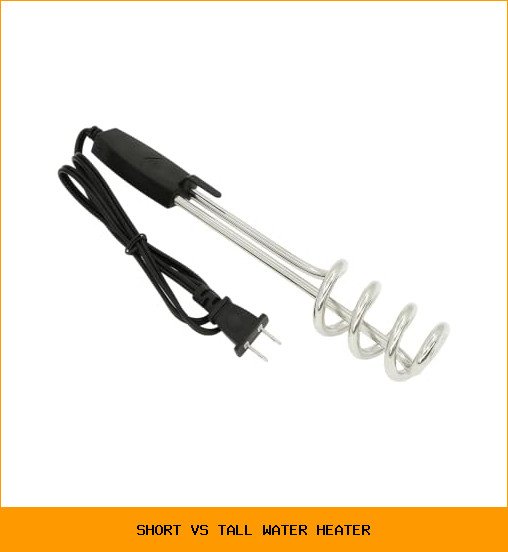
1000W-110V Immersion Water Heater for Camping,Bathtub, Water Bucket Heating | Portable Immersion Water Heater Element, 10in Calentador de Agua Electrico, Fast Efficient Heating Simple Operation Steps
- Heating Function:Rated at 110V and 1000W, this heater warms up water super fast. It works great for buckets, hot tubs, pitchers an…
- Mini Size, Easy to Store:This immersion heater is compact overall. Its total length is 10 inches. Lightweight and easy to carry, i…
- Sturdy structure: Made of high-quality stainless steel, the corrosion-resistant stainless steel casing prevents rusting and ensure…
Sometimes a standard tank just won’t work. That’s where a portable immersion heater can handle small tasks. The HenSinTc 1000W-110V Immersion Water Heater heats a bucket of water in minutes – useful for camping, a warm dog bath, or emergency backup. It’s not a replacement for a whole-house water heater, but it’s worth stashing when you need hot water in a pinch.
Myth: Taller Always Means More Hot Water
Most people assume a taller tank holds more gallons. That’s not always true. Short and tall water heaters can have identical tank capacities. The difference is the burner or heating element size, which affects how fast the water heats back up after use.
Manufacturers often squeeze a bigger heater element into a tall model. A 50‑gallon tall unit might have a 40,000 BTU burner, while a short 50‑gallon unit uses 36,000 BTU. That means the tall version recovers faster – about 5–10 minutes quicker to bring a full tank back to temperature. But if you never run the tank dry in one shower, that speed bump doesn’t matter.
Myth: Short Heaters Are Just for Small Spaces
Tall water heaters need about 60–65 inches of floor-to-joist clearance. Short ones fit under 50 inches. That’s the obvious reason to pick a short model. But short tanks also sit lower, which makes them easier to install in crawlspaces or attics where you’d struggle to stand a tall cylinder upright.
The trade-off is recovery rate again. Short tanks have less insulation volume on the sides, so they lose heat slightly faster. The difference is small – maybe 2–4% more standby loss. But in an uninsulated basement, that adds up over a year.
Recovery Rate vs First-Hour Rating – What Actually Matters
Two numbers on the energy guide label matter more than height: recovery rate (gallons per hour) and first-hour rating (FHR). Recovery rate tells you how fast the heater can reheat a full tank of cold water. FHR tells you how much hot water the tank can deliver in the first hour of heavy use – that’s the tank capacity plus the recovery contribution.
| Heater Type | Typical Recovery (GPH) | First-Hour Rating | Best For |
|---|---|---|---|
| Short 40‑gallon | 30–35 GPH | 65–75 gallons | 1–2 person household, tight clearance |
| Tall 40‑gallon | 38–43 GPH | 75–85 gallons | 2–3 person household, standard basement |
| Short 50‑gallon | 35–40 GPH | 80–90 gallons | 3–4 person household, low ceiling |
| Tall 50‑gallon | 42–48 GPH | 88–98 gallons | 3–4 person household, high usage |
Notice the short 50‑gallon has a first-hour rating close to a tall 40‑gallon. If your household peaks at 80 gallons of hot water in the morning, you can choose either a short 50 or a tall 40 – height becomes a space decision, not a performance one.
Installation Pitfalls Nobody Talks About
Measurement mistakes cost homeowners hundreds. People measure the current tank’s height and buy the same height – but the new short vs tall water heater might have a different top connection location, or the thermostat might be on the opposite side, requiring a pipe relocation.
Also, short tanks are wider. A 40‑gallon short model is often 2–3 inches wider than its tall counterpart to fit the same volume. That means clearance on both sides of the tank matters, not just overhead height. If your water heater closet is narrow, a short wide tank might not slide past the door frame.
Tall tanks require a rigid vent connector that slopes upward – that slope eats another 3–4 inches of vertical space. With a short tank, you have room to run a vertical vent pipe straight up, which is simpler and less prone to condensation issues.
Cold Basements and Insulation – Short Tank Owners Take Note
A tall tank has more surface area exposed to the cold air, but it also has more insulation. Short tanks have less surface area, so the heat loss per square foot is higher. In a basement that stays below 55°F, the short tank might cycle on and off more frequently. This increases annual energy cost by roughly $10–20 for a family of four – real but not a dealbreaker.
If your water heater is in a heated space (utility room in the living area), the difference is negligible. If it’s outside or in a garage, a short tank needs an insulation blanket more than a tall one does.
Real People Questions About Short vs Tall Water Heaters
Can I install a tall water heater in a basement with 62 inches of clearance?
Probably, but check three things: the tank’s actual height (most tall 50‑gallon tanks are 58–61 inches), plus the vent connector rise (another 4–6 inches), plus the gas line or electrical access clearance on top. If those combined exceed your 62 inches, a short model is the safer call.
Does a short water heater cost more to operate than a tall one?
Yes, but the gap is small – about 2–5% more standby loss. In dollars, that’s maybe $10–30 per year depending on your local energy rates. The bigger factor is the heater’s energy factor (EF) rating. Pick a unit with EF of 0.88 or higher regardless of height.
Is there a difference in lifespan between short and tall water heaters?
Not from height alone. Lifespan depends on anode rod quality, water hardness, and tank thickness. A short tank with a 6‑year warranty and a tall tank with a 6‑year warranty will age similarly if they have the same anode rod material. Tall tanks sometimes have easier access to the anode rod, which makes replacement simpler – that can extend life.
Can I swap a short tank for a tall tank in the same spot?
Yes, if the floor drain, gas line, and vent connector allow it. But you may need to relocate the water shutoff valve or the pressure relief drain line. Always check if the taller tank blocks access to nearby fixtures. A 2‑inch height difference rarely matters; a 10‑inch difference changes everything.
Do short water heaters fit under a standard 48-inch counter?
A few do. Some compact electric models designed for under-counter use are only 30–36 inches tall. Most gas short tanks are 48–50 inches tall, which won’t fit under a standard 36-inch kitchen counter. Those are meant for basements or closets with low overhead, not inside cabinetry.
What You Should Actually Do Next
- Measure clearance from the floor to any overhead obstruction – not just the current tank’s height. Subtract 6 inches for vent pipe and access.
- Look at your household’s peak hour usage, not just tank size. If you run back-to-back showers, a short tank may not recover fast enough.
- Check the tank’s width. A short tank is often wider. Measure the door opening and side gaps.
- Compare first-hour ratings between short and tall models of the same gallon size. A short 50 might match a tall 40 – size doesn’t always equal capacity.
- If you only need occasional hot water in a bucket or tub, skip the tank upgrade and grab a portable immersion heater like the HenSinTc 1000W unit. It’s a cheap fix for small jobs.
- Never buy on height alone. The energy factor and recovery rate have a bigger impact on your monthly bill and comfort.
- If you’re still torn, go tall when you have the space – the faster recovery and slightly lower standby loss make it a better bet for most families.


