You hear the gurgle. Then the pilot light won’t stay lit. Or maybe you step into a lukewarm shower on a cold morning. When a water heater dies, it almost always happens at the worst possible moment. You need a replacement fast, but you don’t want to overpay. And you definitely don’t want to pick a brand that’ll leave you cold again in three years.
That’s why this article exists. By the time you finish reading, you’ll know exactly what drives the cost of a Bradford White water heater installed, what a fair price looks like, and where people waste money. I’ll share specific numbers, honest trade-offs, and a few tricks you won’t get from the sales guy at the home center.

Bradford White
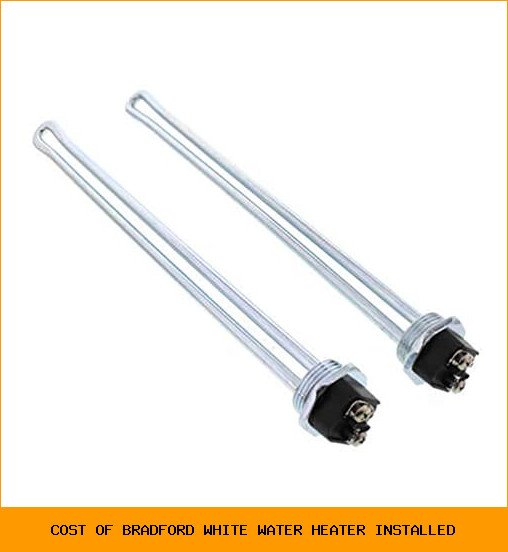
Bradford White Water Heater Parts Product 265-48642-00 (Original Version) (Original Version)
- Kit includes 2 elements 208V/3500W 240V/4500W and 2 gaskets
Bradford White is a solid brand — built in America, sold almost exclusively through plumbing supply houses. That last part matters more than most people realize. But before we dig into pricing, let me mention a part you might need even if you’re not replacing the whole unit. The Bradford White Water Heater Parts Product 265-48642-00 is an original replacement kit with two 208V/3500W / 240V/4500W elements and two gaskets. If your heater is running but not getting hot enough, a burned-out element is often the culprit. Having this kit on hand can save you an emergency service call — and that alone can run $200 or more. Check the current price on Amazon; it’s usually much cheaper than paying a plumber for a single element and trip fee.
What Actually Determines the Final Price
The sticker price on the water heater is only one piece of the puzzle. You can buy a 50-gallon Bradford White gas model for around $700 at a plumbing supply house, but the cost of a Bradford White water heater installed often lands between $1,200 and $2,500. Here’s where the money goes.
Unit cost. Bradford White doesn’t sell directly to consumers. You buy from a licensed plumber or a supply house. A 40-gallon electric tank runs about $500–$700. A 50-gallon gas tank is $700–$950. A 75-gallon commercial-grade unit can hit $1,400 or more. Those are supply-house prices, not what you’d see on a shelf at Lowe’s.
Labor. Most plumbers charge $150–$300 per hour, and a standard swap-out takes 2–4 hours. Some pros quote flat rates. Expect $400–$800 for labor on a straightforward replacement where everything lines up.
Permits and fees. Many cities require a permit for water heater replacement. That adds $50–$200. Some inspectors also want a seismic strap on the tank (especially in earthquake zones) and a drip pan with drain line. Those code items add maybe $50–$100 in materials and labor.
Removal and disposal of the old heater. Plumbers often include this, but some charge $50–$150 extra. Ask before you sign.
Unexpected surprises. The old gas line might be rusted. The vent pipe could have corroded. The shutoff valve might be seized. Any of those can add $100–$300.
So a typical job:
- 50-gallon gas heater — $800 supply house price
- Labor — $600
- Permit — $100
- Disposal — $75
- Total: $1,575
That’s a fair price in most markets. If your quote comes in under $1,200, either the plumber is cutting corners on permits or the unit is a low-end model. Over $2,500? Get a second opinion unless you’re doing a complicated tankless conversion or moving gas lines.
Gas vs. Electric & Tank vs. Tankless — How the Choice Affects Costs
The cost of a Bradford White water heater installed swings wildly depending on what you’re switching from and to. Let’s run through the common scenarios.
Electric tank replacement (same size, same power). This is the cheapest install. No gas line, no venting. Electric models cost less, and the labor is simpler. Expect $900–$1,300 total for a 40- or 50-gallon unit.
Gas tank replacement (same size, same location). More expensive because you’ve got gas piping, a flue, and code requirements for combustion air. $1,300–$1,800 is typical for a 40–50 gallon unit.
Tankless gas water heater. A 10-year high-efficiency Bradford White tankless runs $1,200–$1,800 retail. Installation is much more involved — you need larger gas pipe (often 3/4-inch), a stainless steel vent through the wall or roof, and sometimes a condensate drain. Total installed cost: $2,500–$4,500. It’s a big number, but the unit lasts 20+ years and saves on energy.
Tankless electric. These are simpler to install than gas tankless but still require heavy electrical work (often 120-amp or more). Expect $2,000–$3,500 installed.
Switching fuel types. If you want to go from electric to gas (or vice versa), add $500–$1,500 for new venting, gas line, or electrical panel upgrades. Most people are better off sticking with what they have unless they’re already planning a major renovation.
One thing I see people trip on: buying a tankless unit online and then begging a plumber to install it. Most pros charge more for customer-supplied equipment because they can’t warranty the unit. You might pay $1,000+ labor on a $1,500 heater you bought on sale — and end up with no warranty on the install. Bad deal.
Comparing Your Options: Where to Buy and How to Install
Not all installs are created equal. The table below breaks down the four common approaches and what you’ll actually pay.
| Approach | Typical Cost Range (installed) | Pros | Cons |
|---|---|---|---|
| Big-box store (Lowe’s/Home Depot) with their installer | $1,100–$1,800 | Convenient; financing often available; simple flat price | Subcontracted labor — quality varies; often no Bradford White models; limited model choices |
| Local plumber buys unit from supply house | $1,300–$2,200 | Bradford White units available; plumber stands behind everything; better warranty coverage | Higher upfront price than buying unit yourself; need to vet their reputation |
| Buy unit online, hire plumber for labor | $1,100–$1,900 | Can get deals on the tank; you pick the exact model | No install warranty; plumbers often charge premium rates; risk of damage in shipping |
| DIY install (if you have skills & permits) | $500–$950 (unit + materials only) | Lowest cost; you control quality | Gas work is dangerous; no recourse if it leaks; permit process is a headache; void warranty on some models |
My opinion: unless you’re a licensed tradesperson, avoid DIY on gas water heaters. One cracked heat exchanger can fill your house with carbon monoxide. Electric swaps are safer for a handy homeowner, but you still need to pull a permit and follow local code. For most people, the local plumber route gives the best balance of price and peace of mind — especially if you want a Bradford White, because big-box stores rarely stock them.
5 Real Questions People Ask About Bradford White Installation Costs
Is Bradford White really better than Rheem or AO Smith?
It depends on what “better” means. Bradford White builds their tanks with a porcelain enamel lining and magnesium anode rods that resist corrosion well. They also have a unique “self-cleaning” dip tube in many models that stirs sediment. Compared to Rheem, I’d say Bradford White units are built to a slightly higher standard, but you pay for it. Rheem is fine for most homes and often cheaper. If you plan to stay in your house for 15+ years, the extra $100–$200 for a Bradford White is worth it. If you’re flipping the house, go Rheem.
Can I save money by installing the water heater myself?
Possibly, but the risk is real. A gas water heater installed wrong can kill you. An electric water heater installed wrong can electrocute you or burn out elements fast. You’ll also have to pull permits yourself, haul the old tank, and possibly deal with code violations when you sell. I’ve seen DIY installs that cost more in the long run because the homeowner messed up a valve and caused a $5,000 flood. If you’re confident and experienced, go for it. If you’re “pretty handy,” hire a pro.
Do I really need a permit for a water heater replacement?
In most cities, yes. A permit allows a city inspector to check the work. If you skip it and something goes wrong, your home insurance may deny the claim. Some plumbers will try to talk you out of a permit to save $50 or speed things up. Don’t agree to that. A permit costs $50–$200 and protects you. It also means a paper trail if you ever sell the house.
What about that element and gasket kit — should I buy it ahead of time?
The Bradford White parts kit is useful if your current heater is still working but the water isn’t getting hot enough. The elements are the most common failure point. Having the kit means you can swap them yourself in 30 minutes instead of calling a plumber who charges $200 just to show up. It’s also a smart buy if you’re doing a new install — keep the kit near the unit for future repairs. The price is usually under $30, which is a no-brainer compared to an emergency service call.
How long does a professional Bradford White installation take?
A straight swap — same model, same location, gas or electric — takes 2 to 4 hours. A tankless installation can take 6 to 8 hours because of venting and pipe upgrades. If the installer has to run a new gas line or upgrade your electrical panel, add another half day. Most plumbers schedule a morning or afternoon slot and are done by early afternoon. Ask for an estimated time window and whether they’ll haul away the old unit.
What to Do Next — Seven Actionable Takeaways
- Get at least 3 written quotes from licensed plumbers. Compare not just the total but the breakdown — unit cost, labor, permit, disposal.
- Ask each plumber if they stock Bradford White or can order it. Supply-house prices are typically 10–20% lower than what you’d see at a big-box store.
- Budget $1,200 to $2,000 for a standard gas replacement and $900 to $1,400 for electric. Anything above $2,500 should trigger a second opinion.
- Do not buy a tankless water heater online and then try to find a plumber to install it. The total cost often ends up higher than buying through a pro, and you lose warranty coverage.
- Keep the Bradford White element/gasket kit on hand. If your water goes lukewarm, it’s likely an element, and swapping it yourself costs $30 and an hour instead of $250 for a plumber.
- Pull a permit. Yes, it costs a little extra now, but it saves major headaches with insurance and resale. Ask the plumber to include it in the quote.
- If your current water heater is more than 10 years old, replace it before it fails. Emergency installs almost always cost more — you are paying a premium for same-day service and limited choice of models.


