You turn on the hot water tap for a shower. Nothing. Or just cold. Then you walk over to your tankless unit and see it: a red light blinking in a steady, unsettling rhythm. Your first thought is usually panic — the heater is broken, you need a new one, or you’re facing an expensive service call.
That blinking red light is actually a diagnostic tool. Nearly every modern tankless water heater uses an LED indicator to tell you exactly what’s wrong. The pattern matters. One flash vs. three flashes means two completely different problems. Once you know how to read the code, most issues are fixable in under ten minutes without a single tool.

forimo
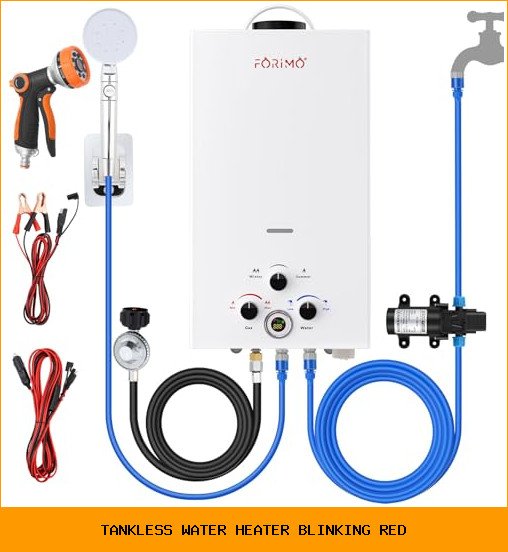
Tankless Water Heater Propane,3.18GPM 12L Outdoor Portable Water Heater,with 2 GPM Water Pump, Instant Propane Water Heaters with Digital Display Multi-Protection for Camping Trips
- 【Propane Water Heater】 - This tankless water heater includes a CSA-approved regulator and multiple safety features such as a flame…
- 【Portable Design】 - Our portable hot water heaters are compact and lightweight with folding handles for easy portability. Our Prop…
- 【Efficient & Energey Saving】-The on demand hot water heater propane exchanger and main burner are desinged with advanced combustio…
This article covers the exact flash patterns you’ll see, what each one means, and the step-by-step fixes that work. You’ll also learn why some myths about the blinking red light cost people money they didn’t need to spend.
A product like the Forimo Tankless Water Heater Propane 3.18GPM 12L Outdoor Portable Water Heater handles those error codes well. Its digital display shows clear error messages alongside the red light, so you don’t have to guess. Multiple sensors — flame failure, anti-freeze, overheating — trigger specific flashes that are easy to trace in the manual. That extra clarity saves time when you’re camping or working off-grid.
Myth #1: A Blinking Red Light Means the Water Heater Is Dead
This is the most expensive mistake people make. They see red, assume the unit is toast, and either buy a replacement or call a technician. Nine times out of ten, the red light is triggered by a temporary issue or a safety lockout.
Example: you run out of propane while washing dishes. The heater tries to light, fails, and goes into lockout. The red light flashes three times. Fill the tank, reset the unit, and you’re back to hot water. No repair needed.
Another common cause: a brief power interruption that scrambles the control board’s memory. Unplug the heater for 30 seconds, plug it back in, and the light often goes solid green. If you’d called a plumber, you’d pay $150 for that reset.
Bottom line: always attempt a power cycle and a fuel check before you Google repair shops. The red light is designed to communicate, not to terrify you.
Myth #2: All Blinking Red Patterns Mean the Same Thing
Some people see one blink and treat it the same as five blinks. That’s like treating every dashboard light in your car as a ‘check engine’ warning — it ignores the nuance that saves you time and money.
Manufacturers assign specific flash counts to specific faults. A single slow blink often means the unit is in standby mode or waiting for a call for heat. Two flashes usually indicate an ignition failure. Three flashes point to a thermistor or temperature sensor issue. Four or five flashes relate to flame detection or overheating.
If you watch the pattern carefully and count the blinks before the pause, you can diagnose the problem without removing any panels. That’s not guesswork — it’s reading the heater’s built-in language. The manual for your specific model lists these codes. If you can’t find yours, search online for the brand name plus ‘error codes’.
The Forimo unit’s digital display takes this a step further. It shows a numeric error code (like E1, E2) right next to the red light, so you don’t have to count blinks. That’s a genuine advantage in the field when ambient light makes blink counting tricky.
Common Red Light Patterns and What They Actually Mean
Below is a table matching the most frequent flash patterns to their root causes and the simplest fix. These apply to most propane and electric tankless heaters, but always check your specific manual for exact codes.
| Flash Pattern | Likely Cause | Simple Fix |
|---|---|---|
| Continuous slow red (on for 2–3 seconds, off for 2–3) | Normal standby mode; unit is powered but not heating | Turn on a hot water tap; if still no heat, check water flow |
| 2 flashes, then a pause | Ignition failure — gas didn’t light | Check gas supply is on, propane tank has fuel, and bleed air from gas line |
| 3 flashes, then a pause | Thermistor/temperature sensor fault | Clean the sensor with a soft cloth; if damaged, order replacement part |
| 4 flashes, then a pause | Flame detection error — flame sensor dirty or flue blocked | Clean flame rod with fine sandpaper; clear any debris from exhaust vent |
| 5 flashes, then a pause | Overheating or anti-freeze protection engaged | Turn unit off and let it cool 15 minutes; reset and verify water flow is adequate |
| Rapid blinking (no pause) | Control board fault or short circuit | Power cycle the unit; if persists, contact support or replace board |
That covers about 90% of the red-light issues I’ve seen on job sites and in campgrounds. The two-flash ignition failure is by far the most common — usually because someone forgot to open the propane tank valve all the way.
How to Reset a Tankless Water Heater After a Blinking Red Light
Before you do anything else, try a full reset. This clears temporary lockouts and restores normal operation more often than any other step.
- Turn off the breaker or unplug the unit from the power source. If it runs on D-cell batteries (like the Forimo outdoor model), remove the batteries.
- Wait at least 60 seconds. That lets residual charge drain from the control board.
- Restore power or reinstall batteries. The red light will probably flash once or twice during the startup self-test — that’s normal.
- Turn on a hot water tap and see if the burner ignites. If the light goes solid green (or steady blue on some models), you’re fixed.
- If the red light returns with the same pattern, move to the specific fix in the table above.
One caution: never bypass a safety lockout by repeatedly cycling power. If the red light keeps coming back, there’s an underlying problem that needs actual repair. Forcing the heater to run with a flame sensor fault can lead to gas buildup or carbon monoxide issues.
5 Real Questions People Ask About the Blinking Red Light
Why does my tankless water heater blink red even when it’s not in use?
That’s normal standby mode. Most units keep the control board powered to monitor for freezes or to maintain a pilot light (on some models). The blinking is usually a slow, steady pulse — not a rapid flash. If the light is blinking fast or in a distinct pattern while no water is running, check for a stored error code that didn’t clear after the last use. A power reset will clear those ghost codes.
Can a dirty filter cause the red light to blink?
Yes, indirectly. On many tankless water heaters, low water flow due to a clogged inlet filter will prevent the flow sensor from triggering the burner. The unit tries to light, fails because the flow switch isn’t satisfied, and throws an ignition fault (2 flashes). Cleaning the filter — usually a small mesh screen at the cold water inlet — is a five-minute fix that solves a surprising number of blinking red issues.
My heater blinks red after heavy rain. Is that related?
Possible. If your outdoor tankless unit has an exposed flue or pressure relief vent, heavy rain can blow moisture onto the flame sensor or inside the combustion chamber. That moisture interferes with flame rectification, causing a 4-flash error. Let the unit dry out with the panels open for a few hours, then try a reset. If you live in a rainy climate, a weather cover is worth the investment.
Do portable propane water heaters (like the Forimo) have different blink patterns?
Portable units use simpler control boards, so the blink patterns are fewer but still meaningful. The Forimo heater, for example, uses a combination of flashing red and numeric codes on the digital display. A single red flash on startup is normal; two flashes indicate a gas supply issue; three flashes mean a sensor error. Because portable units run on D-cell batteries, a rapidly dimming red light can also signal low battery voltage — swap in fresh batteries before chasing other causes.
Should I call a professional if the red light blinks after I cleaned the system?
Not right away. After cleaning, the heater needs a few startup cycles to recalibrate. If you cleaned a burner or sensor, there may be slight moisture or residue that dries out after three or four ignition attempts. Give it five minutes. If the blinking persists with the exact same pattern after that, then contact support. For units under warranty, avoid opening the combustion chamber yourself — that can void coverage. The Forimo model’s manual clearly labels user-serviceable parts, so you know exactly which screws you can safely remove.
What to Do Next — Seven Things to Remember
- Count the blinks. Write down the number of flashes before the pause. That number is your diagnostic code.
- Power cycle first. Unplug or remove batteries for 60 seconds before doing anything else. This fixes half of all lockouts.
- Check fuel and flow. Two out of three red-light calls I see are simply empty propane tanks or a closed valve. Verify fuel is on and water flow is at least 0.5 GPM.
- Clean the inlet filter. A $1 part causes $200 service calls. Remove it, rinse it, put it back.
- Don’t ignore rapid blinking. If the light blinks faster than once per second with no clear pattern, the control board may be failing. That’s a repair, not a reset.
- Keep the manual handy. Stick it inside the heater’s cover or save a PDF on your phone. The exact code definitions are there.
- Consider a model with a digital display. Units like the Forimo outdoor water heater show error codes in plain numbers alongside the blinking light, cutting guesswork to zero.