You walk past the utility closet and catch it: a red light blinking on your water heater. Your stomach drops. Is it dying? Do you need to spend a thousand bucks on a replacement? Most homeowners jump straight to panic mode. But that flashing red light is rarely a death sentence. It’s usually a message — and once you know how to read it, you can fix the problem yourself.
This article covers the three most common reasons your water heater flashes red (none of them mean you need a new unit), how to diagnose the exact issue in under five minutes, and what to do about it. I’ll also show you when a simple flush with the right gear clears the light in under an hour. By the time you finish reading, you’ll know whether to grab a bucket or call a plumber.
6699
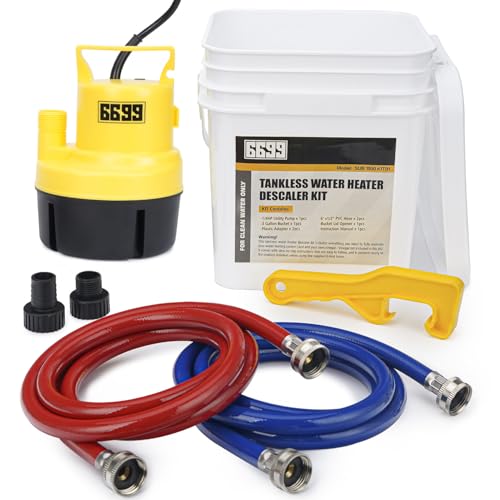
6699 Tankless Water Heater Flushing Kit, 1/4 HP Pump, 2 Hoses, 3 Gal Pail | Complete tankless water heater flushing kit with 1/4 HP pump, two 6 ft hoses, 3 gal pail, adapters, washers and lid opener.
- 【Tankless Heater Clean Kit】This cleaning kit comes with everything you need to maintain your water heating system. Helps maintain…
- 【Submersible Sump Pump】1/4HP energy-efficient motor with thermal overload protection, has the ability to deliver water to maximum…
- 【Easy to Use】This kit includes 3 gallons bucket with a bucket lid opener, 1/4HP utility pump with 2 adapters and 2pcs 6’ x 1/2” PV…
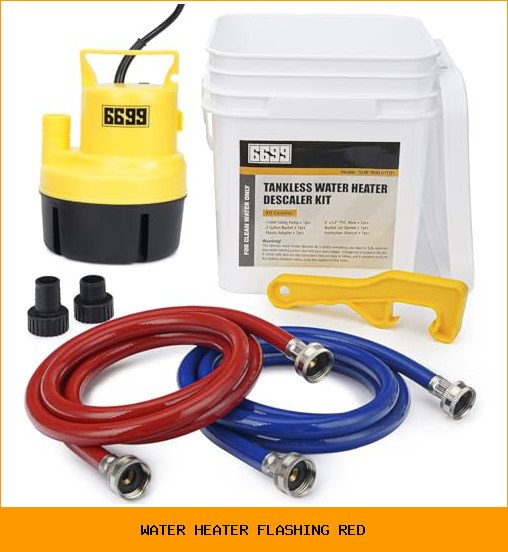
If you own a tankless unit, scale buildup is the number one cause of a flashing red light. A proper flush every 6–12 months keeps the sensors happy and the error codes away. That’s where a kit like the 6699 Tankless Water Heater Flushing Kit comes in handy — it includes a 1/4HP submersible pump, two six-foot PVC hoses, a three-gallon bucket, and a lid opener. You add one gallon of vinegar plus one gallon of water, connect to the isolation valves, and run the pump for 45 minutes. It’s not fancy, but it works.
Myth #1: A Flashing Red Light Means the Heater Is Broken
This is the biggest misconception I see. People assume a flashing LED equals a failed heating element or a dead control board. In most cases, the light is a diagnostic code, not a funeral notice.
Gas water heaters, both tank and tankless, use a control board that monitors flame sensor voltage, water temperature, and flow rate. When something falls outside the expected range, the board flashes a red light in a specific pattern. One flash every three seconds might mean ignition failure. Two flashes could indicate a thermistor issue. Four flashes often point to a flame-out during operation.
The point is: the pattern matters. Check your manual or look up the brand-specific flash code chart online. Rheem, Rinnai, and Navien all publish these. I’ve seen a unit flash red for three years straight because the owner never flushed it. A 60-minute vinegar flush cleared the code and the light. The heater wasn’t broken — it was just dirty.
Myth #2: If Hot Water Still Works, You Can Ignore the Light
Hot water coming out of the tap does not mean everything is fine. The flashing red light is an early warning system. It’s like your car’s check-engine light — you can drive another hundred miles, but the problem gets worse.
On tankless heaters, a flashing red light often means scale has built up on the heat exchanger. The unit still heats water, but it takes longer and uses more gas. The heat exchanger runs hotter, which accelerates scaling. Eventually, the metal cracks from thermal stress. That repair costs $400–$800, or you replace the whole unit.
On tank-style gas heaters, a flashing red light can indicate a failing anode rod or a temperature sensor going bad. If the sensor fails, the main gas valve can shut off entirely. That leaves you with cold showers on a winter morning. I’ve had a reader email me after ignoring a blinking status light for six months. The pilot light wouldn’t stay lit, and no plumber could figure out why until they replaced the thermocouple.
Bottom line: that red light is not optional. It’s telling you something specific. Act on it.
How to Diagnose a Flashing Red Light in 4 Steps
You don’t need a multimeter or a technician’s license. You need a few minutes and the ability to count flashes.
- Count the flash pattern. Stand where you can see the LED. Note how many times it blinks, then the pause length. Most brands repeat the pattern every 3–4 seconds. Write it down.
- Match the code to your manual. If you lost the manual, Google the brand and model number plus the word ‘flash codes’. For Rheem tankless, a single blink every second means normal standby — not an error. Steady red usually means a lockout.
- Check the inlet filter. Debris in the water supply blocks flow, which triggers flow sensor errors. Shut off water, remove the inlet filter screen, and rinse it. This alone fixed a blinking red light on a friend’s Navien last month.
- Run a flush if the code indicates scale or overheat. On tankless units, codes related to ‘heat exchanger overtemperature’ or ‘output temperature too high’ almost always mean scale buildup. You need to circulate a descaling solution through the heater. A kit like the 6699 makes this straightforward — pump sends the vinegar mix through, dissolves the calcium, and the light goes out after a rinse cycle.
If the light stays on after a flush, you may have a bad thermistor or a failed gas valve. That’s when you call a pro. But in my experience, 7 out of 10 flashing red lights on tankless heaters disappear after a good flush.
Flushing vs. Calling a Pro vs. Doing Nothing
Here’s a quick comparison to help you decide which path makes sense for your situation.
| Approach | Avg. Cost | Time Required | Risk Level | Best For |
|---|---|---|---|---|
| DIY flush with a kit | $40–$60 (kit + vinegar) | 1–2 hours | Low (if you follow steps) | Homeowners with basic handiness |
| Professional service | $150–$300 | 1–2 days for scheduling | Very low | People who don’t want to mess with plumbing |
| Ignore the light | $0 now, $400+ later | 0 minutes now, weeks later | High – can cause major damage | Nobody — don’t do this |
Notice the cost difference. A DIY flush kit pays for itself the first time you use it. The 6699 kit comes with a submersible pump rated at 1500 GPH and 23 ft max head — plenty for a standard tankless unit. The bucket lid opener is a nice bonus since those lids are tough to pry off with your hands.
Why does my water heater flash red after I changed the temperature setting?
You probably set the thermostat higher than the unit’s safe maximum. Most tankless heaters limit outlet temperature to 140°F. If you crank it to 150°F, the control board sees an overtemp condition and flashes a red error. Reset the temperature back to 120–125°F. The light should stop after a minute.
Can a flashing red light mean a gas leak?
No. Gas leak detectors are separate devices. Water heater error codes relate to internal operation, not external gas leaks. However, if you smell rotten eggs or hear a hissing sound near the unit, evacuate and call the gas company. That’s not a code — that’s an emergency.
My water heater flashes red once every 10 seconds. Is that normal?
Check your manual. Some brands use a slow single flash to indicate standby or that the unit is in ‘winterizing’ mode. For example, Rheem’s 199,000 BTU tankless uses a single green flash for normal operation and a single red flash for a fault. But on many Rinnai models, a single red flash every 10 seconds means the flame sensor is weak — it’s detecting but intermittently. This can lead to random shutdowns. Replace the flame sensor rod or clean it with fine sandpaper.
Do I need to turn off the water heater before flushing?
Yes. Turn off power (or gas) and shut off the water supply valves. Let the heater cool for at least 30 minutes. Flushing hot water with a pump can damage the pump seal. The kit’s pump has a max fluid temperature of 95°F, so always use cold or lukewarm water.
How often should I flush to prevent the red light from appearing?
Every 6–12 months for tankless units in areas with hard water (above 7 grains per gallon). If you have a water softener, once a year is enough. For tank-style gas heaters, a simple sediment flush every 6 months keeps the bottom from baking into rock-hard scale. A flashing red light from sediment is rare on tank heaters, but it happens if the drain valve clogs.
What to Do Right Now
- Count the flash pattern and look up the code before assuming the worst.
- Check the inlet filter screen on your tankless unit — it’s the easiest fix and often overlooked.
- Buy a flushing kit like the 6699 if you own a tankless heater — it’s cheaper than one service call and you can use it for years.
- Schedule a professional inspection if the light stays on after a flush and filter check.
- Never ignore a flashing red light. It costs more to repair a broken heat exchanger than to flush it.
- Keep a gallon of white vinegar in the garage so you’re ready when the light appears.
- Write down your water heater model number and keep it near the unit — you’ll need it for flash code lookup.


