You wake up on a 14-degree morning, turn on the kitchen faucet, and nothing comes out. The pipes froze overnight. Your first instinct might be to grab a space heater, point it at the wall, and hope for the best. I’ve been there, and I’ll be honest: it’s a gamble.
Space heaters can keep a small, enclosed area above freezing, but they’re not designed for pipe protection. They blow hot air in one direction, leave cold spots behind, and pose a fire risk if left unattended. This article breaks down when a space heater actually helps, when it’s a waste of electricity, and what you should use instead to protect your pipes.

JDZKOMKE
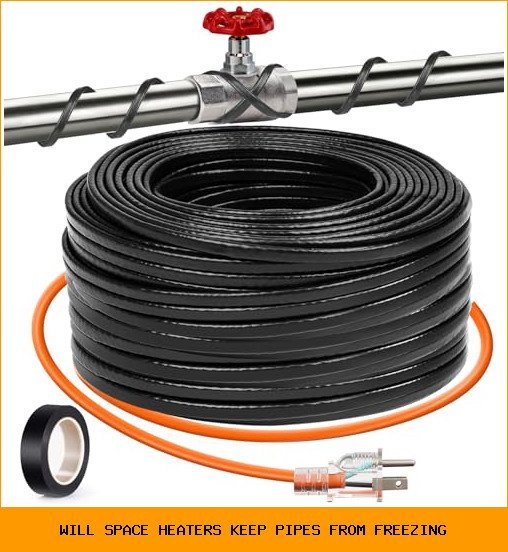
50FT(3FT-200FT) Pipe Heating Cable for Pipe Freeze Protection | Heat Cable for Water Pipes(Metal and Plastic), Pipe Heat Tape Keeps Water Flowing at -40°F 5w/ft, 120V Plumbing fixture
- 【Cable Certified】Unlike plug-only certified cables, our ENTIRE heating cable meets standards. Aluminum alloy shield (70% coverage)…
- 【-40°F Freeze Protection】For water-filled metal/plastic pipes (copper, PVC, PEX). 5W/FT output prevents ice at -40°F. WARNING: Do…
- 【Industrial-Grade Construction: Pure Core + Triple-Layer Armor】 Multi-layer protection exceeds standard heating tapes: Layer 1: Ox…
You’ll walk away knowing the exact temperature thresholds, the best placement strategies, and the tools that work reliably — including a pipe heating cable like the JDZKOMKE 50FT model that handles the job far better than any space heater.
The Truth About Space Heaters and Frozen Pipes
Space heaters can keep pipes from freezing — but only under very specific conditions. If the pipe is in a small, well-sealed space like a crawlspace or a cabinet under the sink, and the heater is placed close enough, it can raise the air temperature above 32°F. That’s the magic number. Once the air around the pipe stays above freezing, the water inside won’t ice up.
The problem is that most homes don’t have that setup. Pipes run through walls, attics, and uninsulated basements where heat dissipates quickly. A space heater rated for 1,500 watts can warm a 12×12 room, but it loses that battle in an open, drafty crawlspace. The air near the heater might be 60°F, while the pipe on the other side of the joist sits at 28°F.
Another issue: space heaters cycle on and off. They have thermostats that shut them down when the surrounding air reaches a set point. That’s fine for keeping a room comfortable, but it means the heat isn’t constant. If the heater cycles off for 20 minutes during a cold snap, the pipe can drop below freezing. Heat tape and heating cables don’t cycle that way — they maintain a steady output.
There’s also the safety factor. The National Fire Protection Association reports that space heaters cause 43% of home heating fires. Placing one near flammable materials like insulation, wood, or paper is a recipe for disaster. You’d be trading a frozen pipe for a house fire.
Myth: More Watts Always Means Better Protection
People assume a 1,500-watt space heater will outperform a 500-watt one. That’s true for warming a room, but not for pipe protection. The wattage only matters if the heat actually reaches the pipe. A high-wattage heater placed 10 feet away from the pipe does nothing, while a low-wattage heat tape wrapped directly around the pipe keeps it at 40°F all night.
Heat transfer is about contact, not raw power. A heating cable sits on the pipe surface and transfers heat directly through conduction. A space heater relies on convection — warming the air, which then warms the pipe. Convection is slow and inefficient in enclosed spaces. That’s why a 5-watt-per-foot heating cable can outperform a 1,500-watt space heater in a crawlspace.
Think of it this way: you wouldn’t try to warm a cup of coffee by turning on a hair dryer across the room. You’d put the mug in the microwave. Same logic applies here. Direct contact wins every time.
When a Space Heater Makes Sense (and When It Doesn’t)
There are a few scenarios where a space heater is a legitimate tool for pipe protection:
- Small, enclosed spaces: A cabinet under a sink, a small pump house, or a tiny crawlspace with good vapor barrier. If the volume is under 100 cubic feet and the heater is placed near the pipe, it can work.
- Short-term emergency: A sudden cold snap hits and you need a temporary fix while you install something better. A space heater can bridge the gap for a few hours.
- Supplemental heat: You already have heat tape or insulation, but the space is still borderline. A space heater can add a few degrees of buffer.
But for long-term protection, space heaters are a poor choice. They’re not weatherproof, they’re not designed for continuous unattended operation, and they don’t distribute heat evenly. If the power flickers or the heater tips over, you’re back to square one.
Here’s a better approach: use a space heater only as a stopgap, and invest in a proper solution for the winter. A pipe heating cable is designed for exactly this job. It wraps around the pipe, provides consistent heat even at -40°F, and runs safely for months. The JDZKOMKE model I mentioned earlier has a triple-layer jacket that resists moisture and UV, so it works in exposed or buried locations.
Comparing Your Options: Space Heater vs. Heat Tape vs. Insulation
To make the right call, you need to compare the actual methods available. Here’s a breakdown based on cost, effectiveness, and safety:
| Method | Cost to Run (per month) | Effectiveness | Safety Risk | Best For |
|---|---|---|---|---|
| Space heater (1,500W) | $40–$60 | Low in open spaces; moderate in small enclosures | High if left unattended | Temporary emergency use |
| Heat tape / heating cable (5W/ft) | $10–$20 | High — direct contact keeps pipe above freezing | Low if installed correctly | Long-term protection in any location |
| Pipe insulation (foam or fiberglass) | $5–$10 | Moderate — slows heat loss but doesn’t add heat | None | Mild climates or as a supplement |
| Heat lamp | $15–$25 | Low — heats a small area but not reliable | Medium — fire hazard | Small crawlspaces, short-term |
The numbers tell the story. A space heater uses more electricity and delivers less reliable protection. Heat tape costs less to run and works directly on the pipe. Insulation alone won’t prevent freezing if the ambient temperature drops far enough — it just slows the process. You need active heat for extreme cold.
One caveat: heat tape has a learning curve. You have to wrap it correctly — no overlapping, no sharp bends. The JDZKOMKE cable allows straight, spiral, or overlapping installation, but check the instructions for your specific pipe diameter. It’s not difficult, but it’s not as simple as plugging in a space heater.
Myth: Running Water Prevents Freezing (So You Don’t Need Heat)
You’ve probably heard that letting a faucet drip can keep pipes from freezing. That’s partially true. Moving water has less chance to ice up because the constant flow brings warmer water from the ground. But a drip only helps if the water is actually moving. A slow trickle might not be enough in sub-zero temperatures.
Here’s what happens: the water in the pipe cools to freezing, but the flow keeps it just above 32°F. If the temperature drops to -10°F, the trickle can slow to a crawl. The water near the pipe wall freezes first, forming a crust that narrows the pipe. Eventually, the flow stops, and the whole pipe freezes. A drip is a delaying tactic, not a solution.
You also waste water — about 2 gallons per hour with a steady trickle. That’s 1,440 gallons a month if you leave it running. In a drought-prone area, that’s irresponsible. And if the power goes out, the drip stops, and you’re back to square one.
Heat tape doesn’t rely on water flow. It works even when the power is on and the water is still. That’s why it’s the standard for winterizing pipes in cold climates.
Real Questions People Ask About Pipe Freezing
At what temperature do pipes freeze?
Pipes start freezing when the air temperature around them drops below 20°F. But that’s a rough guideline. The actual threshold depends on the pipe’s location, insulation, and exposure. An uninsulated pipe in a crawlspace can freeze at 25°F, while a well-insulated pipe in a heated basement might survive at 10°F. The safest rule: if it’s below 32°F, take precautions.
Can I use a space heater in the basement to keep pipes warm?
Yes, but only if the basement is small and sealed. A space heater can keep a 200-square-foot basement above freezing if it runs continuously. But most basements have drafts, open vents, and cold walls that steal heat. You’d need a heater with a thermostat and a lot of electricity. A heating cable on the pipes is more reliable and cheaper to operate.
How long does it take for pipes to freeze?
It depends on the pipe material, water temperature, and ambient conditions. A copper pipe with standing water can freeze in 2 to 4 hours when the air around it is 20°F. A PEX pipe might take longer because it expands slightly. But once the water reaches 32°F, ice crystals form quickly. The key is to act before the temperature drops overnight.
Will heat tape work on plastic pipes?
Yes, if it’s rated for plastic. Some older heating tapes used high wattage and could melt PVC or PEX. Modern self-regulating cables adjust their output based on temperature, so they stay safe. The JDZKOMKE cable works on copper, PVC, PEX, and stainless steel, but always double-check the product specs for your pipe type.
Should I leave a space heater on all night?
No. Space heaters are not designed for unattended operation. They can overheat, tip over, or short-circuit. If you need continuous heat, use a heater with a tip-over switch and a thermostat, and place it away from flammable materials. But even then, it’s not a long-term solution. Set up heat tape or pipe insulation first, and use the space heater only as a backup.
What to Do This Winter (Practical Steps)
You don’t need to overthink this. Here’s a straightforward plan:
- Identify your vulnerable pipes — those in crawlspaces, attics, garages, and exterior walls.
- Insulate them with foam pipe sleeves. It’s cheap and takes 10 minutes per pipe.
- Install a heating cable on pipes that are most at risk. Wrap it in a spiral or straight line, and plug it in before the first freeze.
- Seal air leaks around the house. Cold air infiltrates through gaps in the foundation, vents, and windows.
- Keep the garage door closed if you have exposed pipes in there.
- Open cabinet doors under sinks to let warm air circulate.
- Know where your main water shut-off valve is. If a pipe does freeze, shut it off immediately to prevent bursts.
One more thing: don’t wait until the forecast says 20°F. Install your protection before the cold arrives. Once the pipe freezes, you’re dealing with a mess — thawing it, repairing it, and possibly replacing drywall.
Space heaters have their place, but they’re not the answer for pipe protection. A heating cable costs less to run, works in any weather, and doesn’t keep you up at night worrying about fires. If you’re serious about protecting your home, spend the $30 on a quality cable and sleep easy.



