You step into the shower, turn the handle, and wait. Nothing. Cold water. Then, a minute later, it blasts scalding hot and you jump back. That swing between freezing and burning is a classic sign your water heater thermostat is set wrong — or the tank has other issues. Most people never touch that dial after installation, which is a mistake. The setting affects your energy bill, your family’s safety, and how long the tank itself lasts.
This article walks you through the actual numbers: what temperature to set, why 120°F is the standard for most homes, when you might need 140°F, and how to check what you’ve got right now. You’ll also see a comparison table that lays out the trade-offs at a glance. By the end, you’ll know exactly what to do with that dial on your water heater — and what not to do.

Winters Instruments
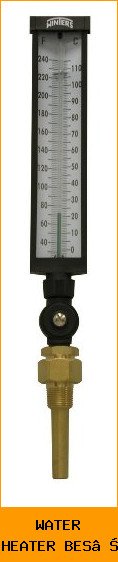
Winters TIM Series Dual Scale Valox Industrial 9IT Thermometer, 3-1/2" Stem, 3/4" NPT with Thermowell, 30-240 F/C Range
- Widely specified in the industrial and commercial plumbing trade
- Includes a separable thermowel
- 3-1/2" Stem
If you want to verify the temperature at the tap rather than trusting the dial, a simple thermometer helps. The Winters TIM Series Dual Scale Valox Industrial 9IT Thermometer is a rugged option with a 3-1/2 inch stem and a thermowell, so you can measure water temp directly at a faucet or tank drain. It’s not a household gadget — it’s a real industrial tool — but it gives you a precise reading instead of guessing.
What Is the Best Water Heater Temperature Setting?
The short answer: 120°F (49°C). That’s the number the U.S. Department of Energy recommends, and it’s what most plumbers will tell you to use. It’s a balance — hot enough for comfortable showers and effective dishwashing, but not so hot that it wastes energy or puts anyone at risk of scalding.
At 120°F, a typical family of four uses about 5% to 10% less energy than they would at 140°F. That doesn’t sound like much, but over a year, it adds up to roughly $30 to $60 in savings on most electric or gas bills. The trade-off? You might run out of hot water sooner during back-to-back showers, because the tank has to mix in more cold water to hit your target temperature at the tap.
There’s also a safety angle. Water at 140°F can cause a third-degree burn in about 5 seconds. At 120°F, it takes roughly 10 minutes of continuous exposure to cause the same injury. For households with kids, elderly residents, or anyone with reduced sensation (like diabetics), that difference is life-changing.
Why 140°F Still Makes Sense for Some Homes
So when should you ignore the 120°F guidance? Two situations come up often.
First, if you have a dishwasher without a built-in heating element. Many older models rely on the water heater to hit 140°F to properly sanitize dishes and melt grease. If your dishwasher has a booster heater (most made in the last 15 years do), you can stick with 120°F. Check the manual or the bottom of the unit — if there’s a heating coil visible, you’re fine.
Second, if you have a weakened immune system or someone in the home undergoing chemotherapy, organ transplant recovery, or living with HIV. The CDC recommends a tank temperature of 140°F in these cases to kill Legionella bacteria, which cause Legionnaires’ disease. The bacteria thrive in warm water between 77°F and 113°F. At 140°F, they die quickly. At 120°F, they can still survive.
If you go with 140°F, you must install anti-scald valves on all shower heads and faucets. These mixing valves blend cold water with the hot water coming out, so the water at the tap stays around 110°F. They cost about $20 to $50 each and take an hour to install if you’re handy. Skip this step and you’re asking for a trip to the ER.
How to Check Your Water Heater’s Actual Temperature
Most people assume the dial on the tank matches the water coming out. It doesn’t. The dial is often inaccurate by 5 to 10 degrees, and the temperature at the tap is lower than the tank temperature because of heat loss in the pipes. So before you change anything, measure what you’ve got.
Here’s the simple method:
- Run the hot water at the farthest faucet from the heater for a full two minutes. This clears the cold water sitting in the pipes.
- Fill a glass or a mug with that running hot water.
- Put an instant-read thermometer in the glass. Leave it for 30 seconds.
- Write down the number. That’s your real tap temperature.
If you have a tankless water heater, the process is the same, but the temperature is set digitally on the unit’s control panel. You’ll likely see a readout of the current setting, so no thermometer needed.
For tank-style heaters with a dial, you’ll find it near the bottom of the unit, behind an access panel. Use a flathead screwdriver to turn it. Wait six to eight hours for the tank to fully reheat, then test the tap again. It’s a slow process — don’t expect instant results.
One honest caveat: if your heater is more than 10 years old, the thermostat may be drifting. I’ve seen tanks where the dial says 120°F but the water comes out at 130°F. If your readings are wildly off, consider replacing the thermostat or the whole unit. A thermometer like the Winters unit mentioned above helps you catch that drift early, because it’s accurate to within 1 percent.
Comparing Temperature Settings: A Quick Reference
Here’s the practical breakdown of what each setting means for your home. Use this table to decide based on your priorities.
| Temperature | Best For | Risks & Trade-offs | Energy Impact |
|---|---|---|---|
| 120°F (49°C) | Most households with children, elderly, or anyone sensitive to hot water | May not sanitize dishes in older dishwashers; slightly shorter hot water supply | Lowest — saves 5-10% vs 140°F |
| 130°F (54°C) | Homes with mild scald risk but want a bit more hot water capacity | Still burns in about 30 seconds; not enough to kill Legionella reliably | Moderate — about 3-5% more than 120°F |
| 140°F (60°C) | Immunocompromised households, older dishwashers without boosters | Scalding risk in under 5 seconds; requires mixing valves | Highest — adds $30-60 per year vs 120°F |
| 150°F+ (65°C+) | Commercial kitchens, industrial use only | Severe burn risk; accelerates tank corrosion and mineral buildup | Very high — not recommended for homes |
Notice that 130°F doesn’t really buy you much. It’s a middle ground that still poses burn risk and doesn’t kill bacteria. Pick 120°F or 140°F — flip-flopping in between just confuses things.
What About Vacation Mode and Turning It Down?
You might have heard that turning your water heater down to 90°F or turning it off entirely while on vacation saves money. It does, but only if you’re gone for more than a few days. The heater will spend several hours reheating the tank when you return, which eats into the savings.
For trips under 3 days, leave it alone. For longer trips, set it to the ‘vacation’ or ‘low’ setting if your unit has one. That keeps the pilot light or heating element active enough to prevent the tank from freezing in winter, but keeps energy use minimal.
One thing I’d avoid: turning the unit completely off at the breaker or gas valve. If you do that in cold weather, the pipes can freeze and burst. Even in summer, the tank can develop a stale odor from stagnant water. Use the vacation setting if you have it, or just lower the dial to 90°F.
Frequently Asked Questions
Is 120°F hot enough for a shower?
Yes, for most people. The water at the tap is usually a few degrees cooler than the tank, so you’ll get around 115°F to 118°F in the shower. That’s actually the ideal range for a comfortable, hot shower without scalding. If you prefer a very hot shower, you might find 120°F slightly weak — in that case, bump it to 125°F, but don’t go past 130°F without mixing valves.
Will a higher temperature make my hot water last longer?
Yes, but not the way you think. A higher tank temperature means you mix in more cold water at the shower valve to get your desired temperature. So a 50-gallon tank at 140°F effectively delivers more usable hot water than the same tank at 120°F. The trade-off is energy use — you’re paying to heat that extra water, whether you use it or not.
How often should I check the temperature setting?
Once a year is plenty. Do it at the start of winter, when you’re relying on hot water more and the incoming cold water temperature drops. If you notice the water getting hotter or colder than usual between checks, test the tap temperature immediately — that’s a sign of a failing thermostat.
Can I adjust the temperature on a tankless water heater the same way?
No, and that’s a good thing. Tankless units have digital controls with precise temperature readings, usually adjustable in 1-degree increments. Set it to 120°F and it stays there. You don’t have to wait for the tank to reheat, and the reading is much more accurate than a dial. Just note that tankless units have a maximum flow rate — if you run two showers at once, the temperature may drop regardless of the setting.
Does the temperature setting affect how long the water heater lasts?
It does. Higher temperatures accelerate mineral scale buildup inside the tank, especially in areas with hard water. This scale insulates the heating element or gas burner, making it work harder and eventually fail. Keeping the tank at 120°F reduces scaling and can add a few years to the unit’s lifespan. If you do run at 140°F for health reasons, flush the tank every six months to clear out sediment.
What to Do Right Now
Here’s a short list of actions you can take today, in order of importance.
- Test your tap temperature using the method above. Don’t trust the dial.
- Set the dial to 120°F unless someone in the home is immunocompromised or your dishwasher lacks a booster heater.
- If you choose 140°F, install anti-scald mixing valves on every faucet and shower that delivers hot water.
- Wait 6-8 hours after adjusting, then re-test the tap temperature to confirm the change.
- Flush your tank once a year to remove sediment — this keeps the thermostat accurate and extends the unit’s life.
- Consider a thermometer like the Winters TIM Series if you want reliable readings for annual checks. It’s built for industrial use, so it won’t give up after a few months.
- Mark the date on your calendar for next year’s check. A 5-minute test once a year prevents most temperature-related problems.
The water heater temperature setting is one of those things that’s easy to ignore and easy to get wrong. But it’s also one of the simplest adjustments you can make to your home — no tools needed, no parts to buy, just a dial turn and a little patience. Get it set right, and you’ll stop thinking about your water heater entirely, which is exactly how it should be.


